
Last updated November 15, 2026
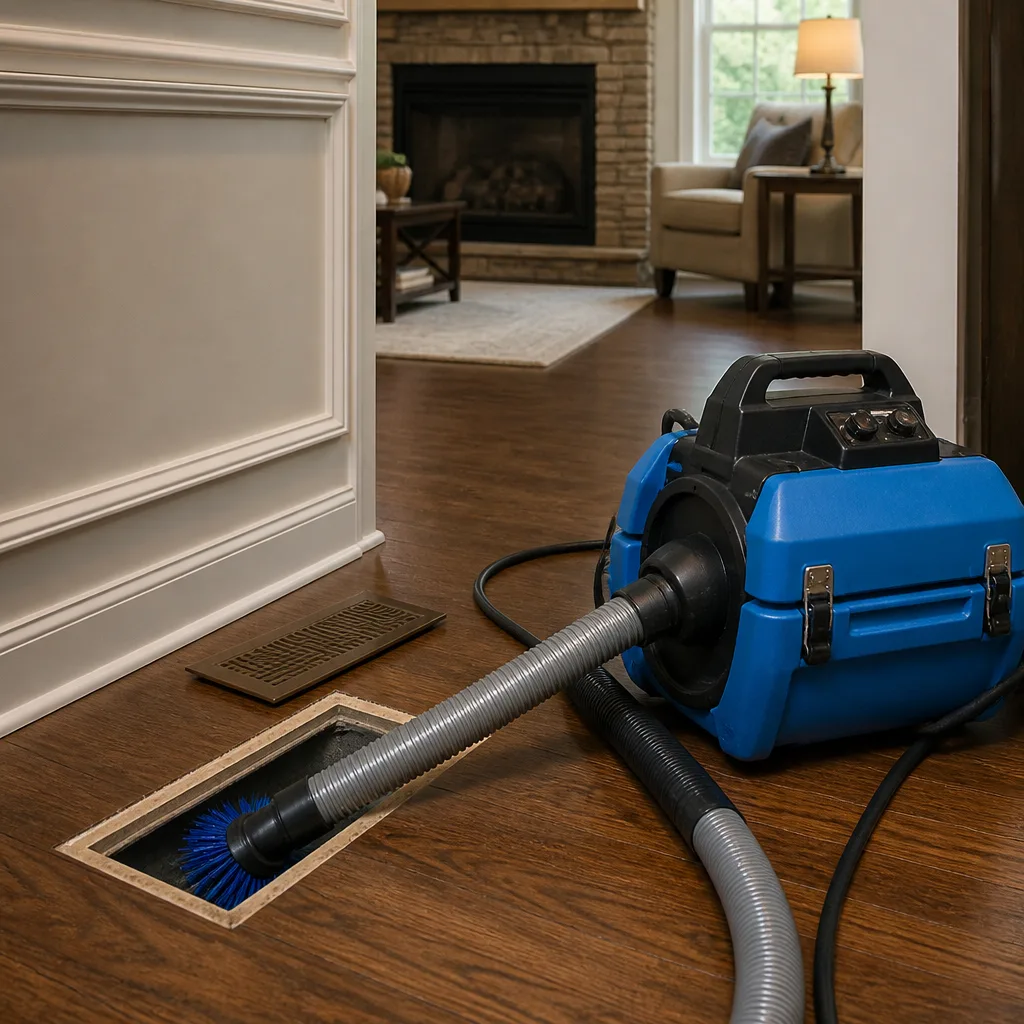 Whole-home duct cleaning
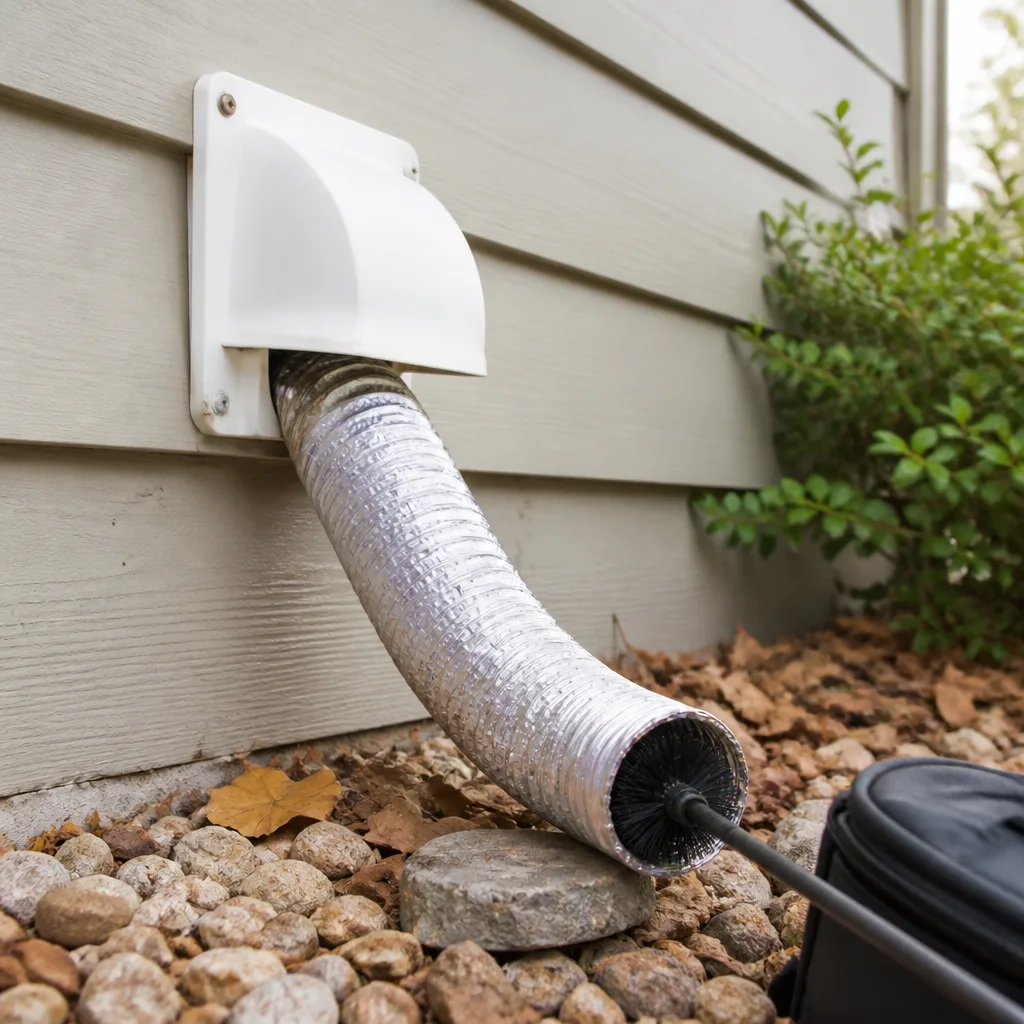 Dryer vent cleaning
 Camera inspection
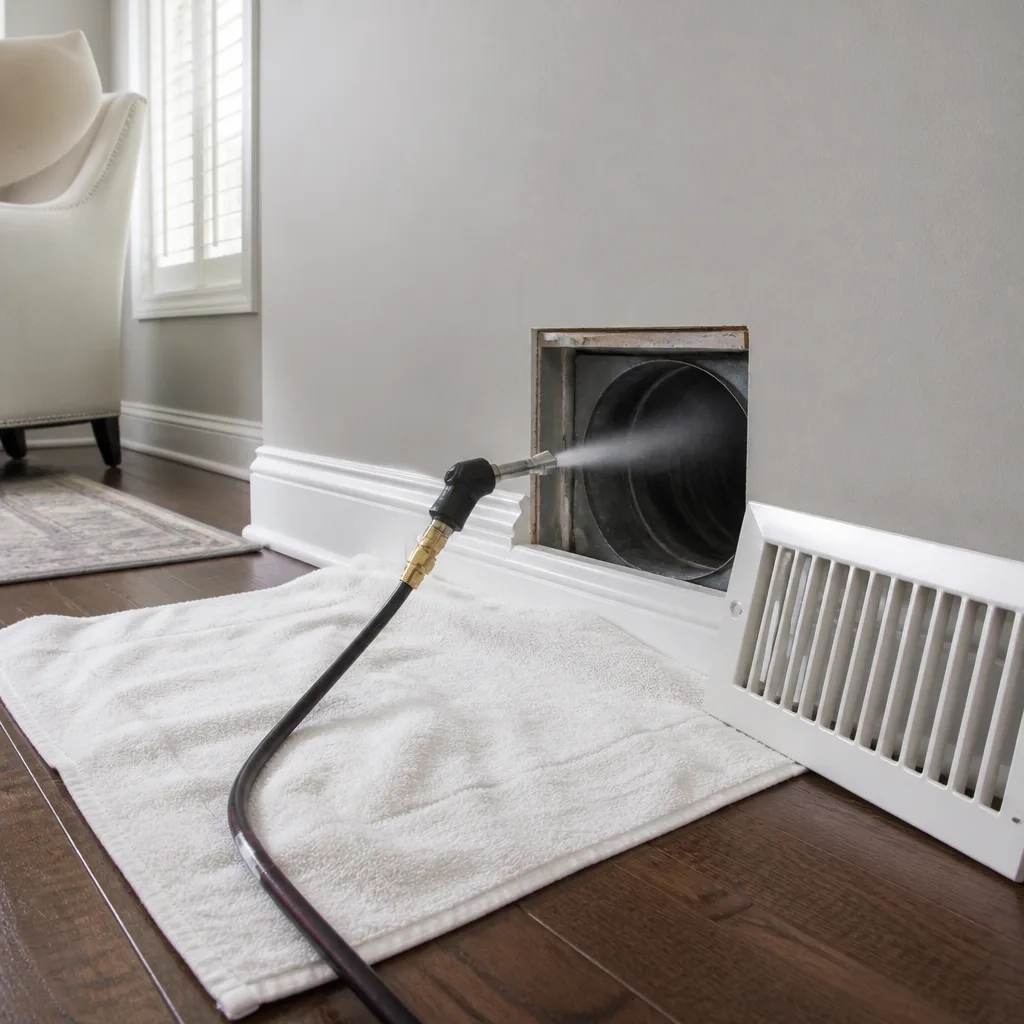 Sanitizing & deodorizing
Whole-system duct and dryer vent check with before-and-after photos - you see exactly what came out of your vents
That "$99 whole-house special" is a bait ad - the real number appears once they are in your hallway, or the "clean" is a shop-vac at the register. We photograph the inside of your ducts before and after instead.
Air Duct Cleaning Maintenance Schedule: What to Do and When
The most common piece of duct-cleaning advice on the internet is “every three to five years,” and in College Station it’s close to useless. Our humidity doesn’t behave like the dry climates that advice was written for, and a house with two shedding dogs isn’t on the same clock as a house with none. The EPA’s own guidance – clean “as needed” – was drafted before tight modern construction and high internal moisture loads became normal in places like this. What that leaves you with is a real question: what does “as needed” actually mean for your house? This guide replaces the calendar rule with a system your home’s conditions build for you.
Quick Answer
There’s no universal interval. In College Station, most homes should have ducts inspected every 2-3 years and cleaned when a trigger shows up – post-renovation dust, confirmed filter bypass, visible mold at a register, rising static pressure, or heavy pet and occupant load. Homes with fiberglass-lined flex duct in our humidity often need cleaning sooner than sheet metal systems because the liner holds moisture and debris.
Styles & brands we work with
- Whole-home duct cleaning
- Dryer vent cleaning
- Camera inspection
- Sanitizing & deodorizing
Table of Contents
- Why a Calendar Interval Fails in College Station
- How Our Humidity Changes the Cleaning Clock
- The Triggers That Should Start a Cleaning
- Fiberglass Liner vs. Sheet Metal: Different Timelines
- What to Do Between Professional Cleanings
- Building a Home-Specific Schedule
- The Dryer Vent Is on Its Own Schedule
- When Cleaning Turns Into Repair
Why a Calendar Interval Fails in College Station
A single “clean every 3-5 years” number treats every house the same. That assumption breaks down fast. Duct debris isn’t a steady drip – it accumulates based on what your system pulls in and how well it keeps it out. Two homes on the same street, built the same year, can be on wildly different schedules.
What actually drives accumulation:
- Construction and renovation dust. A kitchen or room addition pushes fine drywall and wood dust into the return side for months. That’s not a gradual build – it’s a spike.
- Pet load. Fur and dander settle in the duct walls, and shedding season is more concentrated here than in cold climates because pets spend more time indoors against the heat.
- Return filter bypass. A filter that doesn’t seal to its frame lets air slip past unfiltered. You change the filter on schedule and still load the ducts, because the air never went through it.
- Humidity cycles. Warm, moist air against cool duct surfaces is a microbial growth setup. College Station lives in that cycle most of the year.
So the schedule isn’t a date on a calendar. It’s a set of conditions you watch and respond to. That’s why we think of air duct cleaning as condition-based, not clock-based.
How Our Humidity Changes the Cleaning Clock
College Station averages relative humidity above 70% across much of the year. That single fact moves the cleaning timeline more than anything else for homes with flex duct. Here’s the mechanism, without the hand-waving.
Flex duct has a fiberglass liner wrapped in a plastic jacket. The liner has texture – millions of tiny pockets. When the system cycles off, the duct interior can stay cooler than the surrounding air, and any moisture that gets in condenses on that textured surface. Once it’s damp, dust that settled there becomes food for microbial growth. That’s why a flex system in a humid College Station home can look visibly soiled at the registers in a fraction of the time a sheet metal system in a dry climate would.
Sheet metal doesn’t absorb moisture the same way and its surface is smooth, so debris releases more cleanly and growth has less to grab. It still gets dirty, but the clock runs slower.
What this means practically:
- Flex duct in a humid home often warrants inspection every 2 years and cleaning sooner than the national advice.
- Registers that show a dark ring or a musty smell are a signal, not a cosmetic issue.
- Moisture control at the source – a properly sized system, sealed returns, and a filter that fits – buys you time between cleanings.
This is where our deeper College Station conditions matter: the humidity isn’t a season here, it’s the baseline. Plan around it.
The Triggers That Should Start a Cleaning
Skip the calendar. Watch for these and act when one shows up.
- Post-renovation. After any drywall, flooring, or cabinetry work, schedule a cleaning once the dust has settled – literally. Fine construction dust reaches the return and coats the ducts.
- Confirmed filter bypass. Pull the filter and look at the frame. If you see a gap or dirty air slipping around the edges, your ducts are loading faster than the filter suggests. Fix the seal, then clean.
- Visible mold at a register. Peek behind a supply grille with a flashlight. Dark spotting or a musty odor is a trigger, not something to air out and forget.
- Measured static pressure increase. A technician can read static pressure across the system; a rising number over time means the ducts are offering more resistance and it’s time to clean.
- Pest or debris intrusion. Rodent droppings, insects, or construction debris found in the duct is a cleaning trigger regardless of the last service date.
- New occupant with allergies or asthma. Sensitivity raises the bar – clean earlier and keep it cleaner.
A professional-grade cleaning is the response to a trigger, not a subscription. If your system is fine, we’ll tell you that.
Fiberglass Liner vs. Sheet Metal: Different Timelines
The material inside your ducts sets the maintenance rhythm. Know which one you have.
Fiberglass-lined and flex duct: Textured, moisture-holding, and prone to holding debris. In College Station’s humidity, it’s the material that needs the shortest interval and the most careful cleaning. It also needs professional equipment – a consumer-grade shop vacuum will damage the liner. Remediation-class negative-air and HEPA extraction, the same class of tools used in mold abatement work, is what you want for lined duct because it captures the dislodged material instead of pushing it back into the living space. We run Abatement Technologies equipment for exactly this reason.
Sheet metal: Smooth surface, debris releases more cleanly, moisture doesn’t soak in the same way. It still needs cleaning, but the interval is longer and the job is more forgiving.
Either way, the tooling matters more than the label. Professional mechanical cleaning systems – the kind commercial contractors use – agitate the duct walls and pull the loosened material out. That’s the standard we hold to.
What to Do Between Professional Cleanings
You can stretch the interval with a few habits. None of them replace a professional cleaning, but they keep the system from loading up.
- Upgrade your filter – and fit it right. Use the highest MERV rating your blower can handle without starving it of airflow, and check that it seals to the frame. A great filter with a bad seal is a bypass in disguise.
- Seal the returns. Duct tape that’s peeling off a return boot lets attic or wall-cavity air in. Seal it properly and you cut infiltration.
- Inspect the coil on a schedule. A dirty evaporator coil re-introduces debris and moisture stress. Have it checked during routine HVAC service.
- Keep the air handler filter change honest. In our dust and pollen load, change it on the manufacturer’s schedule, not when you remember.
- Fix moisture problems at the source. A leaking pan, a sweating duct, or a humid crawlspace all feed the ducts. Address them.
For whole-home air quality, the downstream equipment matters. We work with Honeywell and Aprilaire air-quality platforms because understanding filtration and humidity control is part of understanding the duct system – not separate from it.
Building a Home-Specific Schedule
The right interval for your house comes from answering a few questions. Here’s how to build one.
- Count the pets and note shedding level. Two heavy shedders push you toward a shorter interval than a house with none.
- Note occupant sensitivity. Allergies or asthma lower the threshold – clean earlier.
- Check construction age and type. Newer tight-built homes trap moisture and dust differently than older leaky ones; fiberglass flex needs more frequent attention than sheet metal.
- Track recent work. A renovation in the last year is a cleaning trigger.
- Watch static pressure and register condition. Rising resistance or visible soiling is a signal.
- Set a review point, not a rigid date. For many College Station homes with pets and flex duct, that’s an inspection every 2 years; sheet metal homes with no pets can often stretch longer.
If you’re not sure where you land, that’s a good reason for a professional inspection. Call (833) 588-6184. We answer 24/7. Fast dispatch from 7am to 7pm, Sunday through Friday.
The Dryer Vent Is on Its Own Schedule
Your dryer vent isn’t part of the HVAC system, but it’s the same category of problem and often the more urgent one. Lint accumulation in a dryer vent is a documented fire hazard, and it builds faster than most homeowners expect. Treat dryer vent cleaning as a fire-risk reduction task, not an optional add-on.
Signs the vent needs attention:
- Clothes take longer than they used to, or need a second cycle to dry.
- The dryer gets hot to the touch on the outside.
- Lint is visible around the outside vent flap or the machine’s lint trap housing.
- The vent run is long, has sharp bends, or is partly hidden behind the machine.
Clearing the vent is a mechanical job with real consequences if half-done. We treat it with the same professional-grade tooling we use on ducts. If you haven’t had it looked at recently, that’s the call to make first.
When Cleaning Turns Into Repair
Sometimes the problem isn’t dirt – it’s the duct itself. Disconnected sections, crushed flex runs, torn liners, and joints that have never been sealed properly all show up during cleaning. Cleaning a duct that’s broken doesn’t fix the airflow, it just moves the symptom around.
Watch for these repair signals:
- Weak airflow at one register while others are fine.
- Duct sections that have come apart at a joint, or flex that’s been crushed or kinked.
- Torn or exposed liner.
- Visible gaps at boots where the duct meets the floor or wall.
That’s why we offer Bedrock Air Duct Cleaning as complete system care: cleaning, drying vent clearing, and actual duct repair. A single-service visit that leaves a broken connection in place isn’t a complete job. Our technicians have up to 10 years of experience, and the work is done right the first time or it isn’t done.
Common Mistakes to Avoid
- Treating the calendar as the rule. “Every 3-5 years” ignores your pets, your renovation dust, and our humidity. Watch conditions instead.
- Changing the filter without checking the seal. A high-MERV filter that bypasses its frame gives you a false sense of clean ducts. Check the fit every time.
- Hiring a blower and a shop vacuum. Consumer-grade equipment won’t clean lined duct and can damage it. Insist on professional mechanical cleaning systems.
- Skipping the dryer vent. Most homeowners clean ducts and forget the vent that’s the bigger fire risk. Put it on the same review.
- Cleaning but not repairing. A disconnected or crushed duct will re-soil immediately. Fix the connection.
- Ignoring a musty smell at a register. In our humidity, that smell tends to grow into a visible problem. Address it early.
- Judging a job by the price alone. A low quote with consumer equipment often leaves the system dirtier than it started.
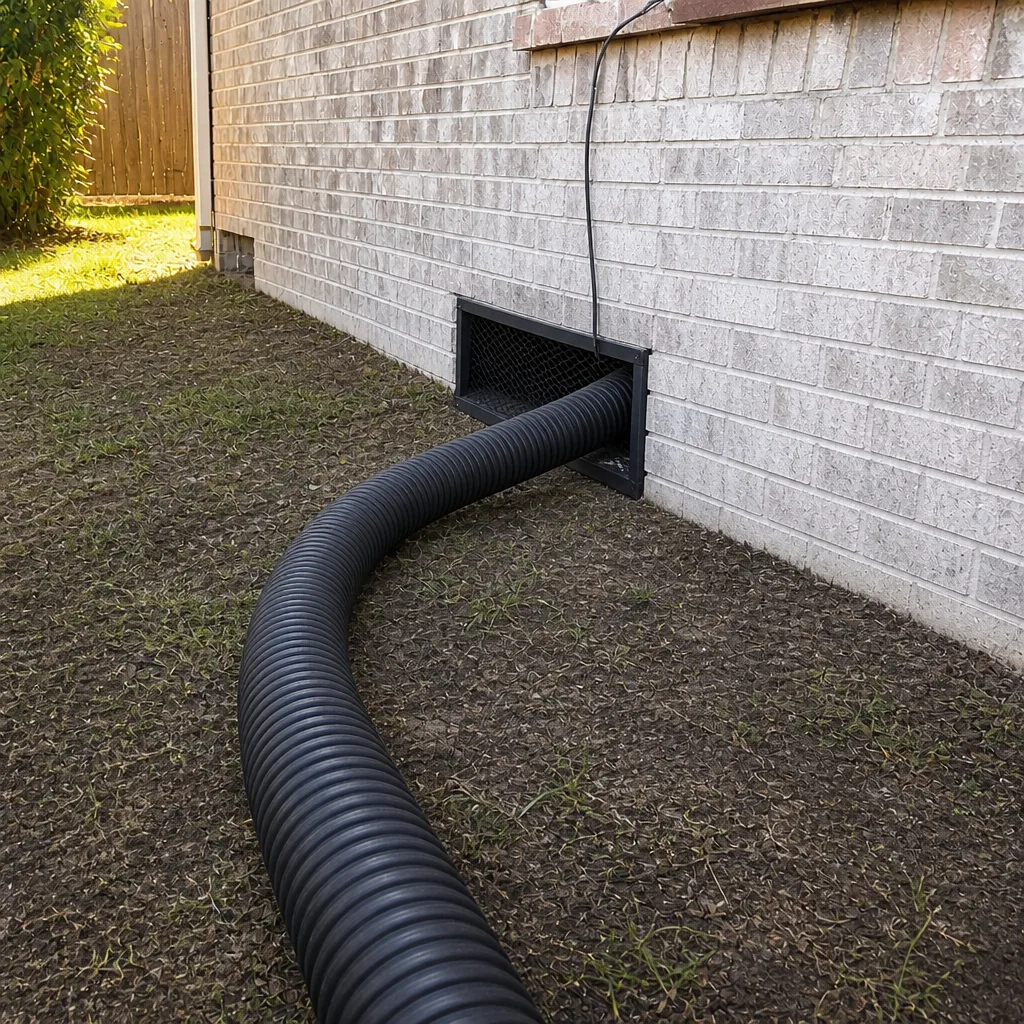
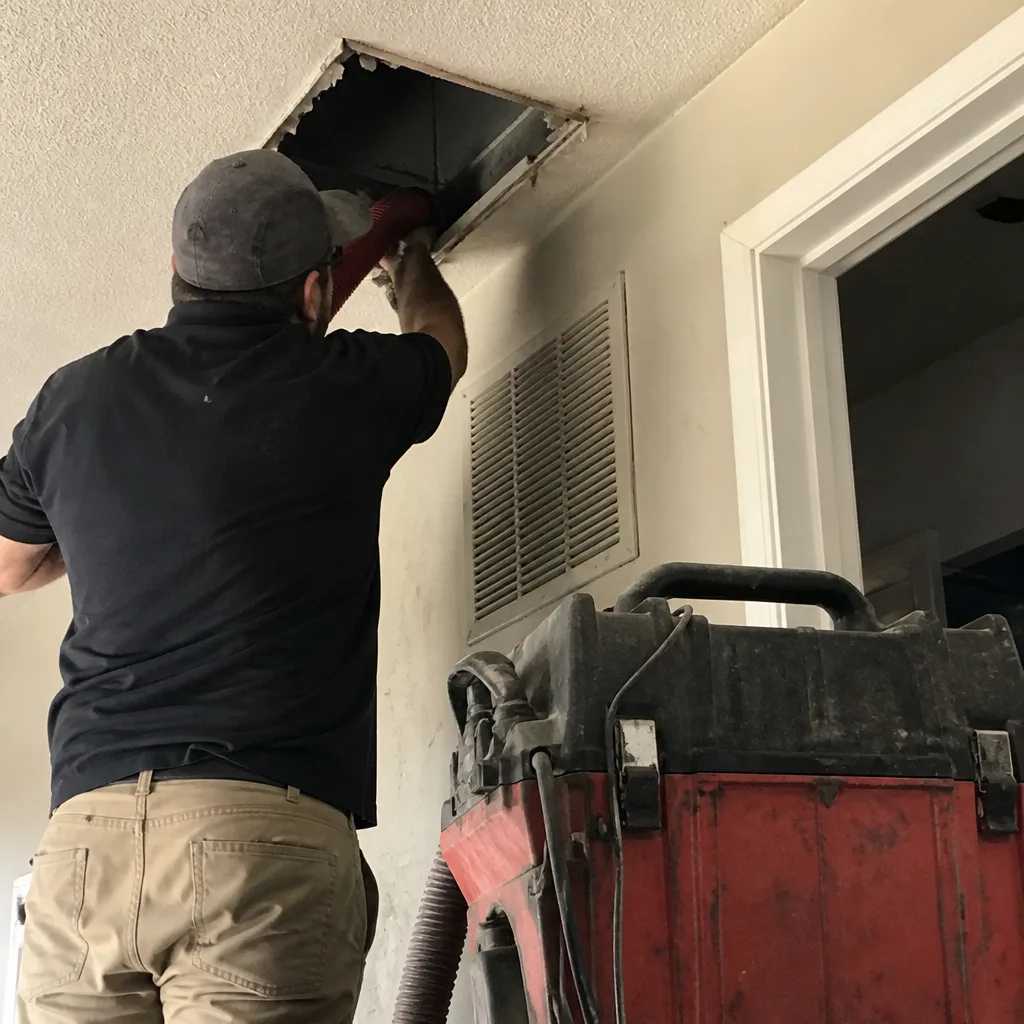
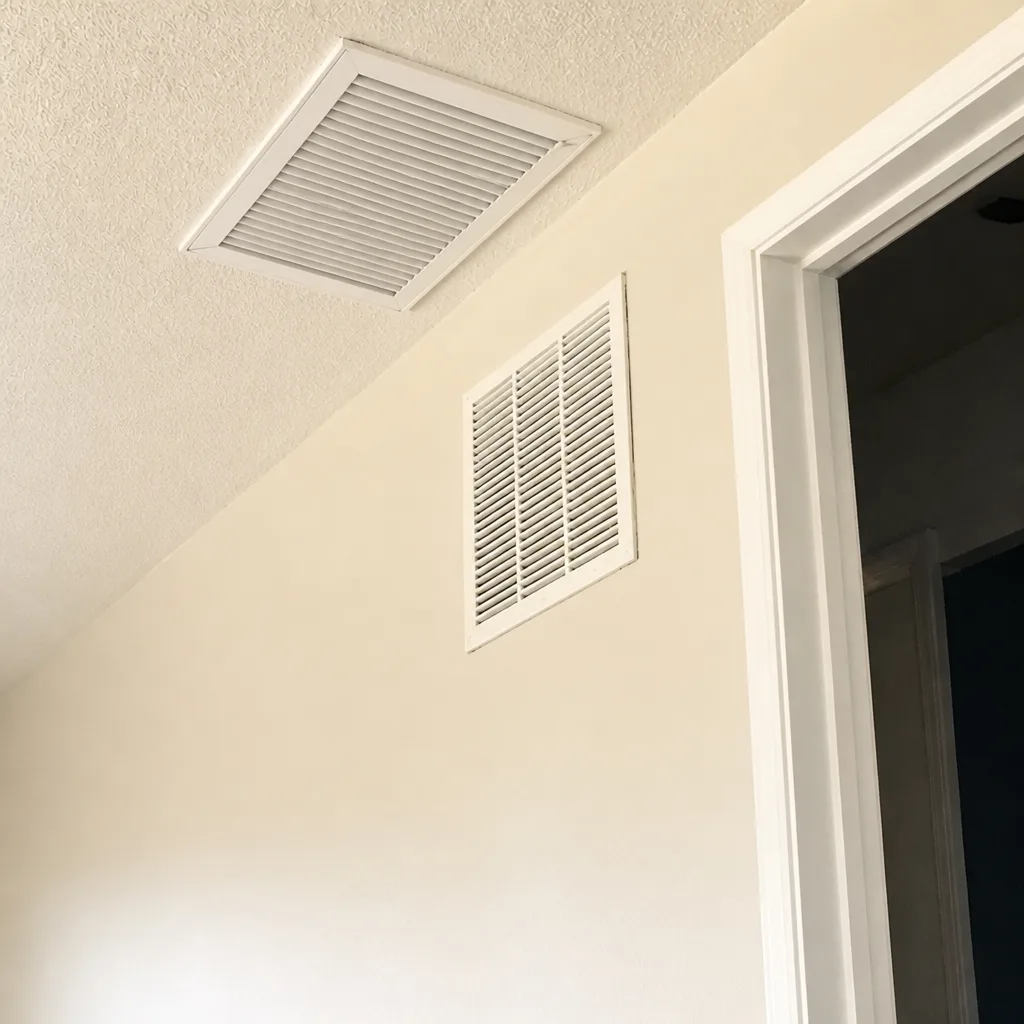
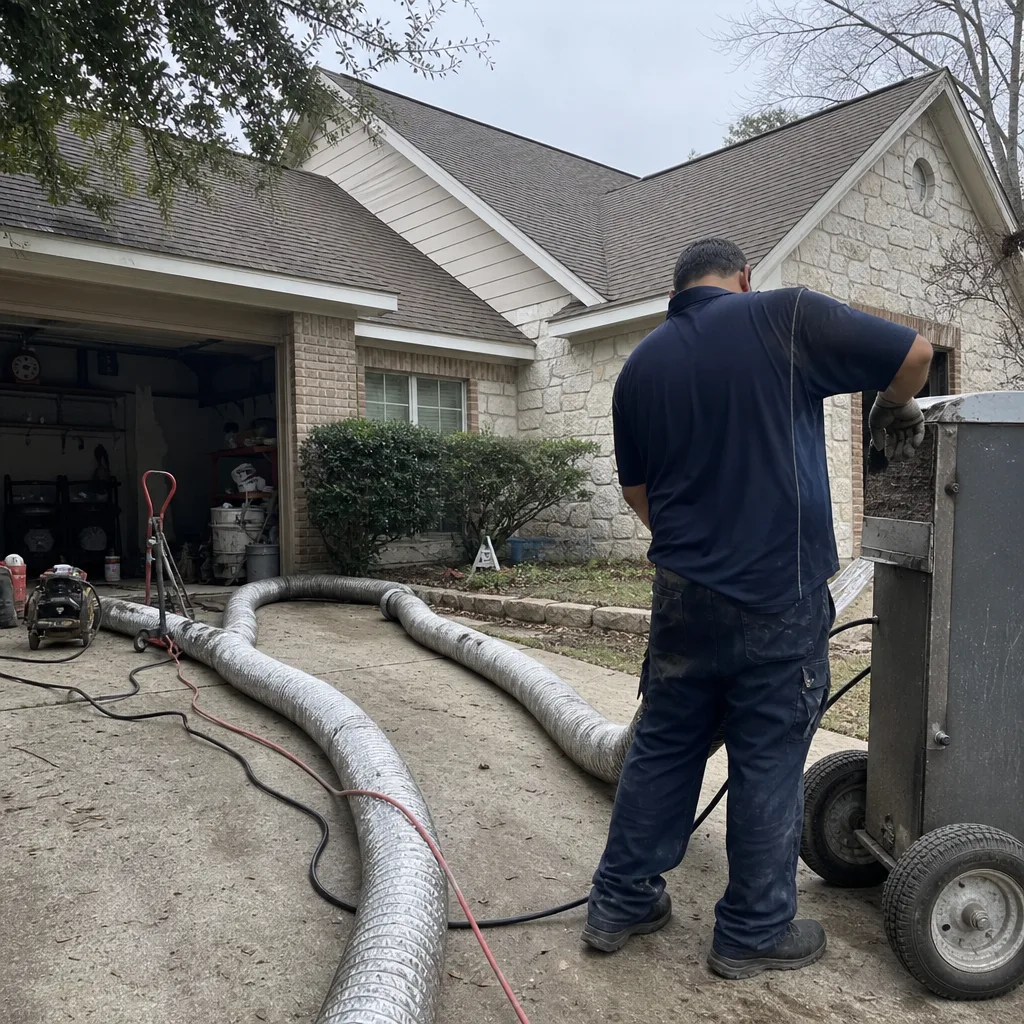
See the difference
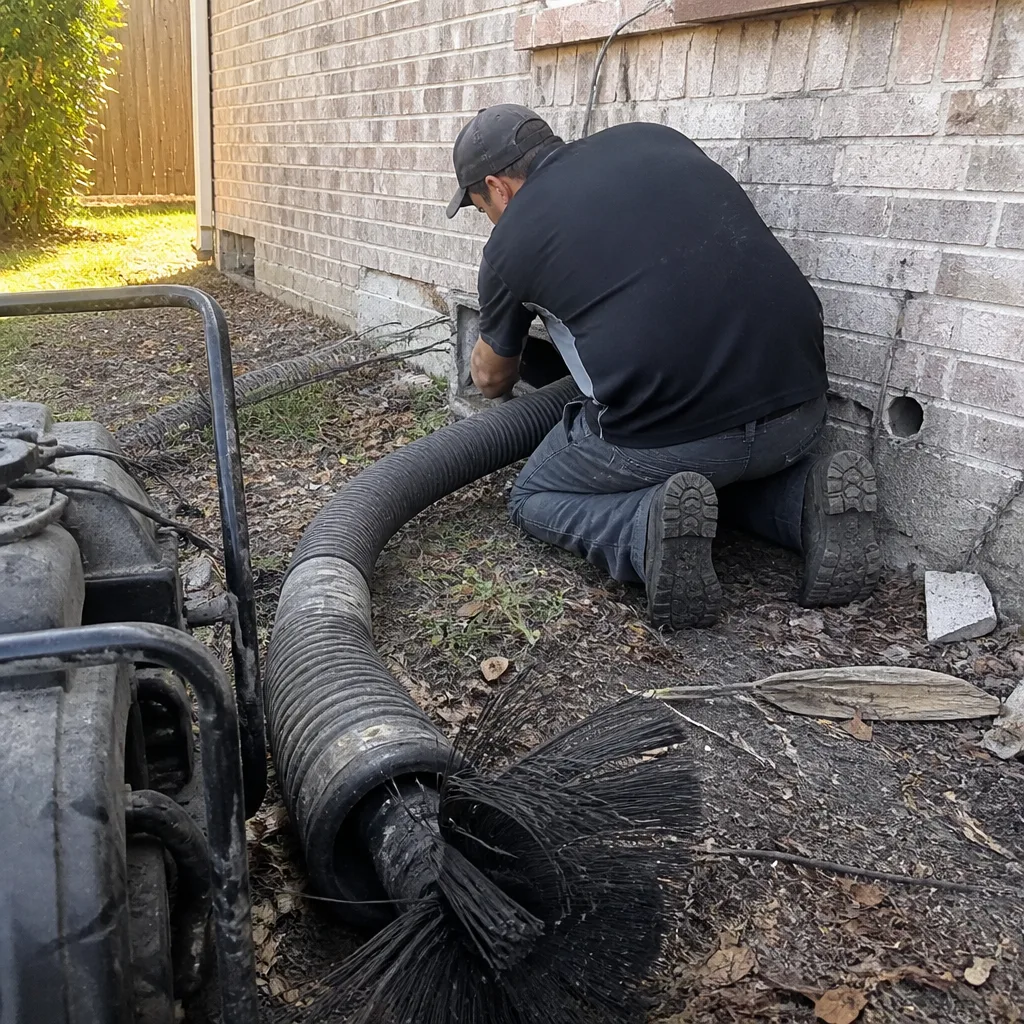 Before
 After
 Before
 After
 Before
 After
When to Call a Professional
Call when any cleaning trigger fires and you can’t rule it out yourself: post-renovation dust, visible spotting or a musty odor at a register, a filter that clearly bypasses its frame, rising static pressure, pest debris, or a dryer that’s taking two cycles to dry clothes. Call before you attempt anything in a fiberglass-lined system – the liner is easy to damage with the wrong equipment. If you have pets, sensitivity in the household, or flex duct in a humid home, a professional inspection every couple of years is the practical way to stay ahead of it. Bedrock Air Duct Cleaning offers free estimates – call (833) 588-6184. We answer 24/7. Fast dispatch from 7am to 7pm, Sunday through Friday.
Frequently Asked Questions
There’s no fixed number – most Texas homes should be inspected every 2 or 3 years and cleaned when a trigger shows up. In humid parts of the state, homes with fiberglass-lined flex duct often need cleaning sooner than the national “every 3-5 years” advice suggests. Call (833) 588-6184 for an exact assessment – estimates are free.
Yes. Relative humidity above 70% across much of the year keeps moisture in the duct liner, and damp textured surfaces hold debris and support microbial growth between cleanings. It’s the main reason a College Station flex system can soil faster than the same duct in a dry climate.
Look for a trigger: visible spotting or a musty smell at a register, dust blowing out of a supply, a filter that doesn’t seal, recent renovation dust, or pest debris. A professional can also read static pressure across the system, which reveals resistance before it’s visible. Call (833) 588-6184 for a free inspection – booking is handled during dispatch, Sunday through Friday, 7am to 7pm.
Fit and seal the right filter, seal leaking return boots, have the evaporator coil checked during HVAC service, and fix any moisture problem at its source. Those habits stretch the interval without replacing a proper cleaning.
Fiberglass liner holds moisture and gives debris a textured surface to cling to, so it soils faster and needs professional extraction equipment designed for it. Sheet metal is smooth, releases debris more easily, and usually holds a longer interval.
Pricing is per system by estimate – whole-system pricing based on the layout and condition, not a per-vent number. Get a written estimate before work starts so the price is settled up front. Call (833) 588-6184 for an exact quote – estimates are free.
The Bottom Line
Replace the calendar rule with a condition-based schedule. In College Station, humidity, pet load, filter bypass, renovation dust, and duct material all move the cleaning clock – and fiberglass flex duct needs the shortest interval. Watch for the triggers, do the between-cleaning habits, and keep the dryer vent on the same review. When a trigger fires, get it inspected by a company that uses professional mechanical equipment, not a blower and a vacuum. That’s Bedrock-level reliability: cleaning, clearing, and repair done as complete system care.
Ready to build your schedule? Call (833) 588-6184. We answer 24/7. Fast dispatch from 7am to 7pm, Sunday through Friday.
Written by the team at Bedrock Air Duct Cleaning.