
Last updated November 15, 2026
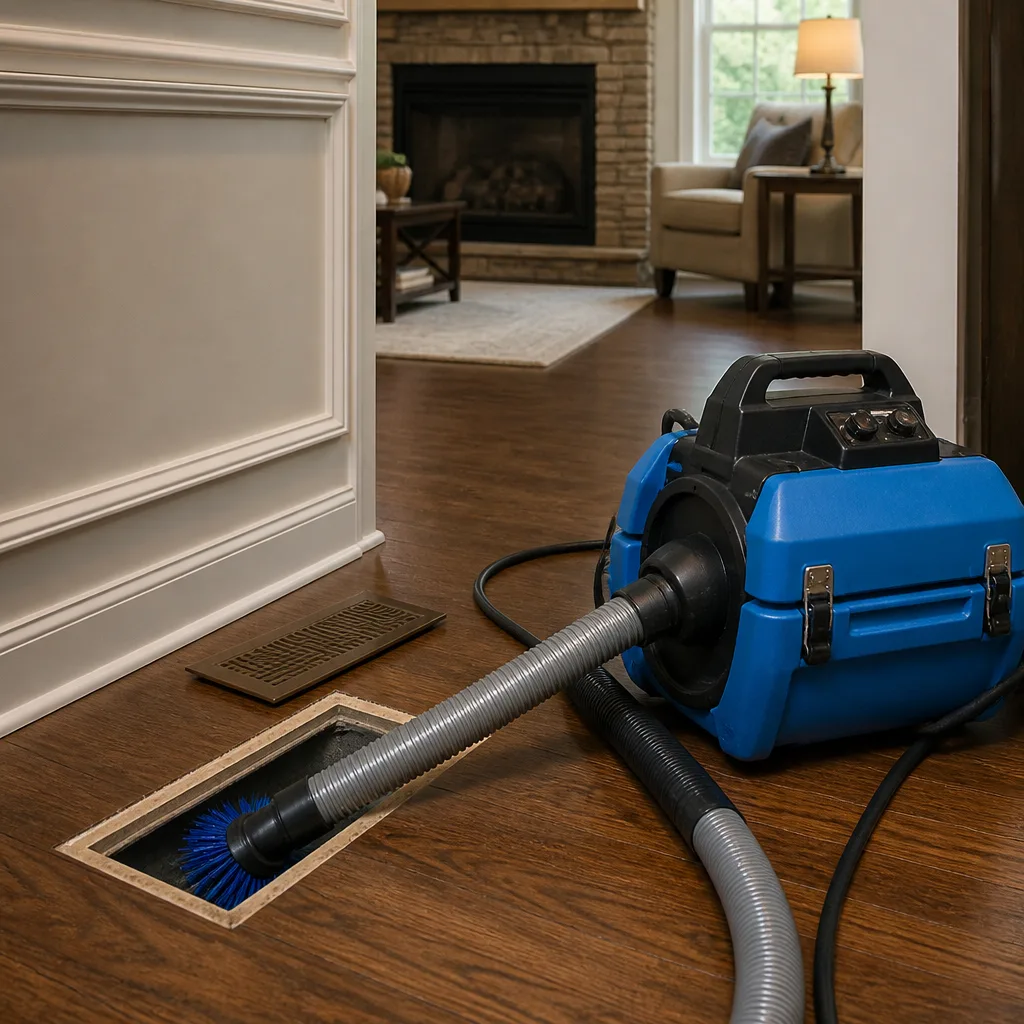 Whole-home duct cleaning
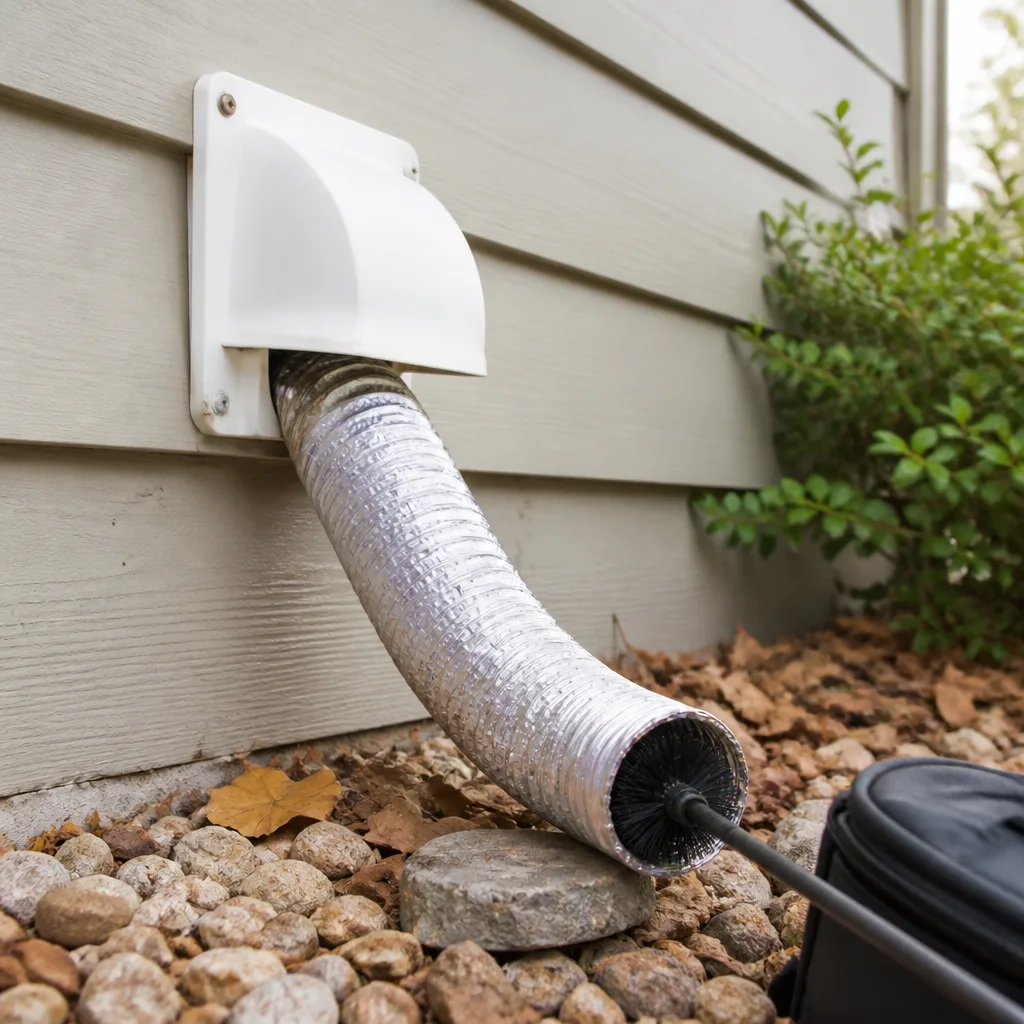 Dryer vent cleaning
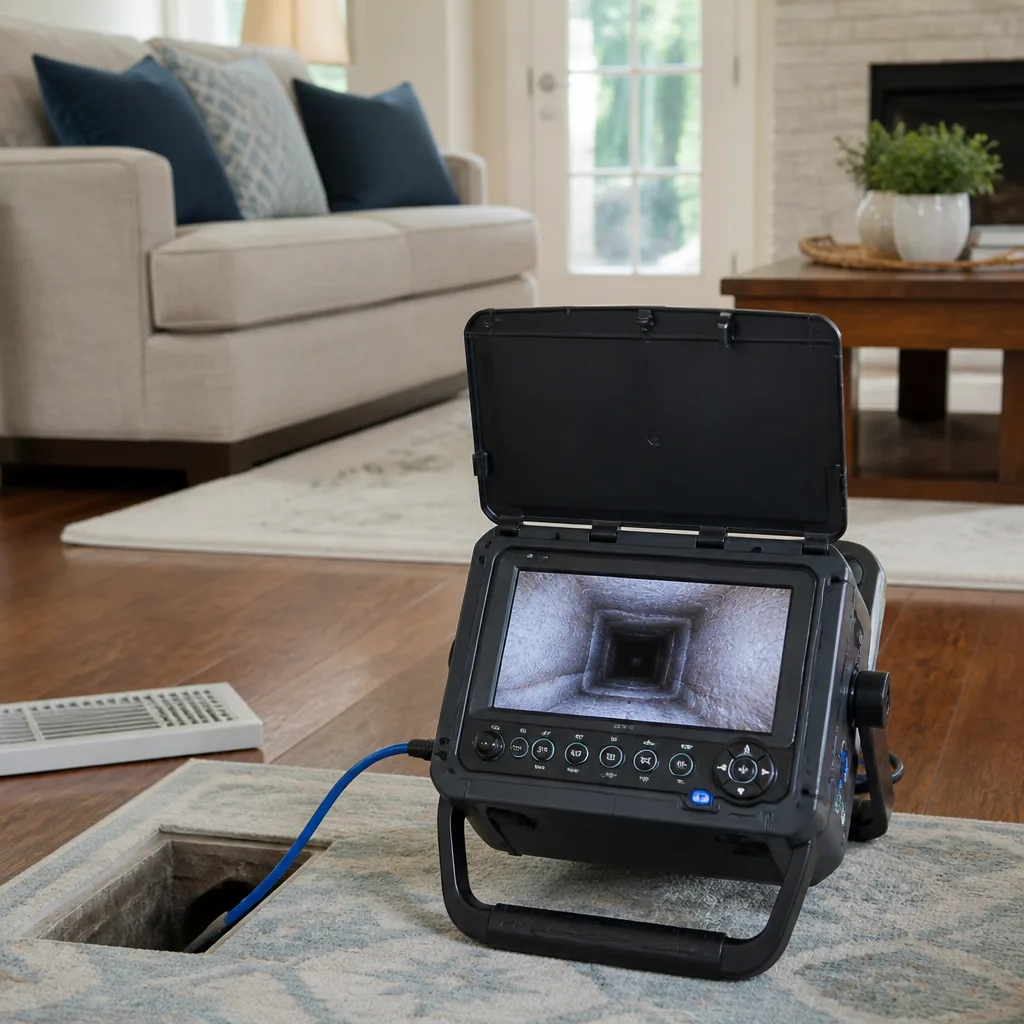 Camera inspection
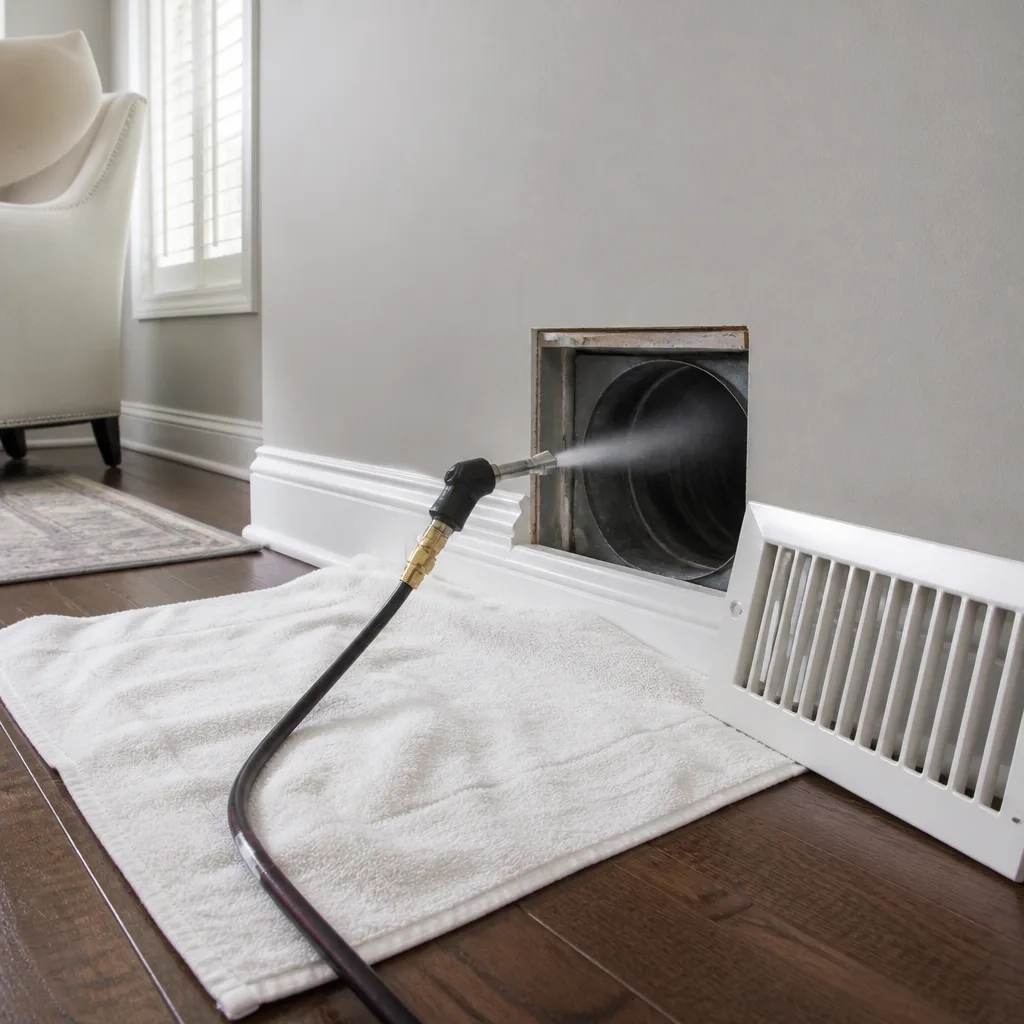 Sanitizing & deodorizing
Whole-system duct and dryer vent check with before-and-after photos - you see exactly what came out of your vents
That "$99 whole-house special" is a bait ad - the real number appears once they are in your hallway, or the "clean" is a shop-vac at the register. We photograph the inside of your ducts before and after instead.
The Complete Guide to Air Duct Cleaning in College Station
Here’s the part of air duct cleaning that most homeowners never hear: suction alone is not cleaning. A high-volume vacuum can pull thousands of cubic feet of air per minute through a trunk line and still leave compacted debris sitting at every elbow, because air moving past a sticky surface doesn’t lift what’s bonded to it. What actually removes contamination is mechanical contact: brushes, whips, and agitation that break debris loose before extraction catches it. That distinction shapes everything in this guide, from what a legitimate job covers in College Station to the documentation you should expect when the work is done.
Quick Answer
A proper air duct cleaning in College Station means mechanically cleaning the entire system, not just the visible ducts: the supply and return runs, the air handler cabinet, the evaporator coil, the drain pan, and the register boots. Cleaning only the ducts while leaving a fouled coil and wet drain pan in place leaves the source of the contamination where it was, so the system re-soils faster.
Styles & brands we work with
- Whole-home duct cleaning
- Dryer vent cleaning
- Camera inspection
- Sanitizing & deodorizing
Table of Contents
- What a legitimate duct cleaning actually costs in College Station
- Why College Station’s humid climate creates a specific debris profile
- Source-removal cleaning versus a blow-and-vacuum pass
- The components that must be cleaned with the ducts
- How attic duct runs in slab-foundation homes accelerate contamination
- What a complete cleaning job looks like, step by step
- The documentation a credible contractor should hand you
- Duct repair and dryer vent safety: the two services most visits skip
What does a legitimate duct cleaning actually cost in College Station?
Whole-system duct cleaning in College Station generally runs in the range of a few hundred to just over a thousand dollars depending on the size of the home, the number of systems, and how accessible the ductwork is. A single-system house sits at the lower end; a two-story home with two air handlers and long attic runs toward the top. The final figure is set by the written estimate for the specific job, not by a per-vent price advertised over the phone.
That last point matters more than the dollar range. This trade has a well-earned reputation problem: a low teaser figure quoted to get a technician through the door, followed by a much larger invoice once he’s on site and the work is already underway. The defense is structural, not a better coupon. Ask three questions before anyone starts:
- Is the price one flat price for the whole system? A per-vent or per-opening price invites the total to climb as “extra” vents get counted.
- What’s included in that price? Coil cleaning, the air handler cabinet, the drain pan, and register boots should be named, not treated as add-ons.
- Will we get before-and-after photos or video of our own ducts? Not generic stock images. Your system.
Typical line items an estimate should itemize look something like this: main trunk and branch runs, return ductwork, supply registers and boots, air handler cabinet interior, evaporator coil cleaning where accessible, and drain pan flush. If you also need dryer vent clearing, that’s a separate line, and it should be, because it’s a separate system with a separate purpose. For a full picture of how we scope and price residential work, see our page on air duct cleaning.
The one thing we’d steer you away from: treating price as the primary filter. In this trade, an unusually low quote usually signals one pass with a blower and nothing more. You’ll pay for the thorough job eventually, and it will cost more the second time.
Why College Station’s humid climate creates a specific debris profile
Duct contamination doesn’t look the same everywhere. In dry climates, the dominant problem is loose dust: mineral particulate, construction grit, pet hair. In College Station, the mix is different, and the humidity is why.
College Station sits in a humid subtropical band. Summers are long and moist, and HVAC systems run near continuously from late spring through early fall. That produces two conditions that matter for duct health:
- The coil stays wet. The evaporator coil condenses moisture out of the air all day long, and the drain pan below it collects the runoff. When that pan holds standing water or biofilm, the air handler pulls spores and odors from it and distributes them through every branch line.
- Dust binds to surfaces. Ordinary household dust is dry and loose. In a humid system, dust absorbs moisture and cakes onto sheet metal, turning a light layer into a bonded film that a vacuum pass can’t lift.
- Spore growth is possible on wet surfaces. Any component that stays damp, particularly the coil and the first few feet of duct downstream of the air handler, creates conditions where biological growth can establish.
The practical consequence: a duct cleaning that works in a dry climate by sheer suction often underperforms in College Station, because the material isn’t loose dust. It’s stuck. Mechanical agitation matters more here, not less. That’s where purpose-built equipment like a Rotobrush or Nikro system earns its keep, because the brush physically breaks the bond before the vacuum collects the loosened material.
If you’ve noticed a musty smell when the system first kicks on, or a fine gray film returning to your registers a few weeks after a cleaning, the source is probably somewhere you can’t see from the vent cover.
Source-removal cleaning versus a blow-and-vacuum pass: how to tell the difference
There are two distinct things sold under the name “duct cleaning” in College Station, and they’re not close to equivalent.
A blow-and-vacuum pass runs a large vacuum on the main trunk and a blower at the far end, moving loose surface dust from the ducts into the collector. It’s fast. The equipment is often a consumer or light-commercial vacuum, and the operator may make a single pass with no contact tools. On a system with bonded film, caked debris at elbows, and a fouled coil, a blow-and-vacuum pass moves very little and can actually aerosolize material into the living space if negative air isn’t controlled.
Source-removal cleaning uses mechanical contact tools, rotating brushes, air whips, and compressed-air agitation, to break debris loose from the duct walls, then extracts it under controlled negative pressure. It takes longer. It requires more equipment. And it addresses the actual source of the contamination, including the coil and air handler, rather than simply moving air through the ducts.
Here’s how to tell which one you’re being sold before the technician arrives:
- Ask what contact tools they’ll use. “Vacuum and blower” is a pass. Brushes, whips, and agitation are cleaning.
- Ask whether the coil and air handler cabinet are included. A pass doesn’t include them.
- Ask about negative air. A real cleaning controls airborne debris during the job with negative-air or HEPA filtration, not by covering the vents with plastic sheeting.
- Ask how long it takes. A genuine whole-system job takes hours, not twenty minutes.
- Ask for before-and-after inspection. A pass has nothing to show.
We mention this because the tools we use are the tools remediation contractors use on mold and contaminant jobs: Abatement Technologies negative-air and HEPA equipment, not shop vacuums. It’s a different class of job, and the difference shows up in what’s still in the system when the technician leaves.
The components that must be cleaned with the ducts
Cleaning the ducts while leaving the rest of the system alone is the single most common shortcut in this trade, and it’s the reason some homeowners pay for a cleaning and see contamination return within a season. The contamination lives in the system, and the ducts are one part of it.
The following components need to be addressed for a cleaning to hold:
- Evaporator coil. This is the wet, finned surface where air crosses before it enters supply ductwork. Dust and biofilm collect in the fins, and if they’re not cleaned, that material is the source of downstream dust.
- Air handler cabinet. The metal enclosure around the coil and blower often holds more debris than duct runs, because airflow slows at the cabinet and drops particulate. It needs to be opened, cleaned, and closed.
- Drain pan. Condensate collects here year-round in College Station. Standing water, biofilm, and microbial growth in the pan get pulled into the air stream. Flush and dry.
- Register boots. The metal transition between the duct branch and the register grille in each room. Dust collects at that transition because air slows there. Cleaning the run without cleaning the boot leaves the visible end uncleaned.
- Return ductwork. Often the dirtiest section, because it carries unfiltered air. Worth checking that the estimate explicitly covers returns, not just supplies.
If a quote covers only the duct runs, ask what it costs to include the coil, cabinet, pan, and boots. If the answer is that those are extra, or that they “don’t need it,” you’re comparing a partial job to a full one, and the numbers aren’t comparable.
How attic duct runs in slab-foundation homes accelerate contamination
Most College Station homes sit on slab foundations and run their ductwork through the attic. That construction detail shapes how contamination develops here, and it’s different from how it works in a house with a basement system.
In a basement or crawlspace arrangement, ductwork sits in a space that stays cool and relatively stable. In a Texas attic, the ducts live in the hottest environment in the house for most of the year. Several things follow:
- Temperature swings drive condensation. Hot attic air around a cold supply duct, especially where insulation is thin or damaged, produces condensate on the exterior of the duct. That moisture feeds microbial growth in insulation wraps and at joints.
- Attic air is dirty air. Attic dust, insulation fibers, and outdoor particulate are present around the ductwork. Any leak or disconnected joint pulls that air into the supply stream instead of pulling it back through the filter.
- Attic heat degrades flexible duct. Flexible runs sag, kink, and crack at the outer jacket over time. A sagged section creates a low point where debris accumulates and airflow stalls.
- Long runs mean more elbows. Slab homes often route long branch runs across the attic to reach distant rooms. Every elbow is a place debris collects, and elbows are exactly where suction alone fails.
If your home is in College Station and the ducts run through the attic, the two things to verify during an inspection are joint integrity on flexible runs and the condition of the insulation wrap. Cleaning a duct system with disconnected joints is money spent on a system that will re-soil quickly.
Our guide to service in College Station covers how a typical attic inspection plays out.
What a complete cleaning job looks like, step by step
A whole-system cleaning isn’t a single event, it’s a sequence. Here’s what a legitimate job covers, in order. If a contractor’s process looks materially different from this, ask why.
- Inspection and documentation. Before any equipment runs, the technician inspects accessible ductwork, the air handler, the coil, and the register boots. Photos and video of current conditions are captured.
- Setup and containment. Negative air equipment is placed to hold the work area under controlled pressure, so loosened debris doesn’t migrate into living space. Register openings are covered and the vacuum is connected at the main trunk.
- Mechanical agitation of the trunk and branches. Rotating brushes and air whips work through the main runs and out to each branch, breaking bonded material from the walls. This is the step a blow-and-vacuum pass skips.
- Coil and cabinet cleaning. The coil is cleaned at the fins without damage, the cabinet interior is vacuumed, and the drain pan is flushed and dried.
- Register boot cleaning. Each boot is cleaned individually, and the register grilles are cleaned before reinstallation.
- Extraction and final inspection. The loosened debris is extracted under negative pressure, and post-cleaning video inspection confirms the runs are clear. Static pressure readings are often taken before and after to demonstrate airflow improvement.
- Documentation and handoff. You get the photos, the video, and a written summary of what was found and what was cleaned.
The equipment matters at every stage. A Rotobrush system handles the trunk and branch agitation, Nikro components handle the contact cleaning of longer runs, and Abatement Technologies negative-air equipment holds containment. The point of naming the tools is that the results depend on them. Consumer-grade vacuums don’t produce them.
What documentation a credible contractor should hand you
You should not need to take anyone’s word that the work was done. The ventilation trade has the equipment to show you, and a professional job ends with evidence. Ask for the following, and treat an inability to produce it as a reason to keep looking:
- Before-and-after photos of your own ducts. Not stock photos. Photos of the runs in your house, before and after contact cleaning.
- Video inspection footage. Footage of the interior of your trunk and branch lines, before and after.
- Static pressure readings. A before-and-after measurement of the system’s pressure shows whether airflow actually improved. If the ducts were restricted by debris, pressure should change.
- A written summary of what was found. Disconnected joints, damaged flex, or a fouled coil should be in writing so you know what was cleaned and what needs repair.
- A clear statement of what was included. Which components were cleaned, and which were not, and why.
If you’re working with a property manager or handling multiple units, ask for the same documentation per unit. It’s the fastest way to catch a partial job before it’s paid for.
Homeowners and property managers in College Station who’ve dealt with the trade for a while usually ask for documentation up front. It’s a reasonable ask, and a competent company will have the photos and video ready to send.
Duct repair and dryer vent safety: the two services most visits skip
Cleaning and clearing are the middle of the duct system lifecycle, not the whole of it. Two services are commonly left out of duct cleaning visits, and both cause problems that cleaning can’t fix.
Duct repair addresses the structural condition of the system. Disconnected flexible joints in an attic, collapsed sections, torn insulation wraps, and cracked return plenums all let attic air and particulate into the supply stream. Cleaning a system with a disconnected joint is temporary. The repair has to come first, or at least go with it. In slab-foundation homes with long attic runs, this is a regular finding, because the conditions in the attic work on flexible duct continuously.
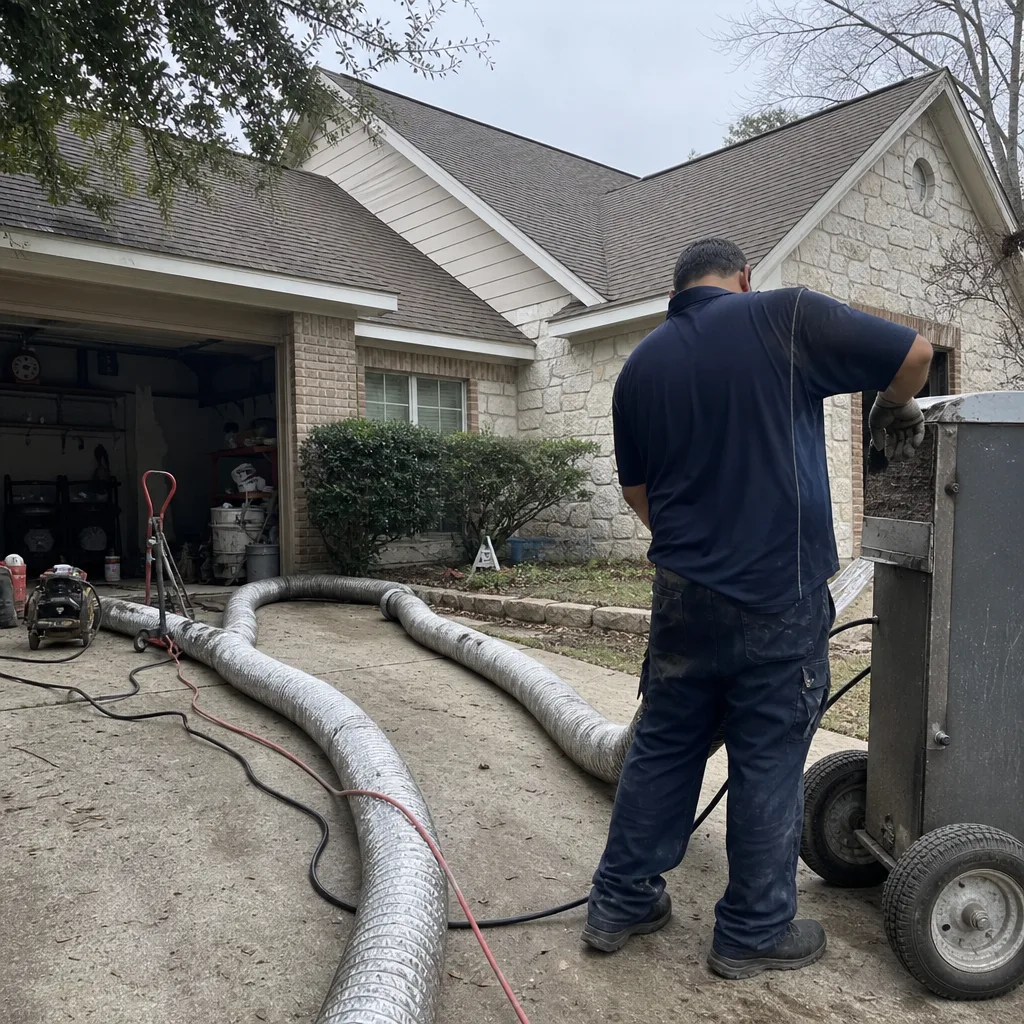
Dryer vent cleaning is a separate system, and it’s a fire-safety service rather than an air-quality one. Lint accumulates against the interior of the vent duct over time, restricts airflow, and can be ignited by the dryer itself. Treat it as a safety item, not an upsell. If your dryer vents through a long run, or through a flexible foil duct that sags in an attic, it should be checked on a schedule. We treat it as its own job, and it’s worth reading our guide to dryer vent cleaning to understand the warning signs. Don’t neglect this one.
Whole-home air quality gear fits in here too. If your house runs a Honeywell or Aprilaire filtration or humidification system, the ducts and the air handler are downstream of those components, and cleaning without understanding your filtration setup can miss why the system is fouling. The tools and brand alignment don’t fix a problem on their own, but they make sure the diagnosis is connected to the whole system.
Common Mistakes to Avoid
- Thinking clean ducts are enough. Cleaning the duct runs without the coil, cabinet, drain pan, and register boots leaves the source of the contamination in place. The system re-soils, and the cleaning looks like it didn’t work.
- Accepting per-vent pricing. A per-vent quote is designed to grow once the technician is on site. Ask for one flat price for the whole system before any work starts.
- Skipping the return side. Return ductwork carries unfiltered air and is often the dirtiest section. If the estimate covers only supply runs, ask why.
- Assuming a blow-and-vacuum pass is cleaning. Suction without mechanical agitation won’t break bonded film off the duct walls, and College Station’s humidity is exactly what makes that film form.
- Cleaning around a disconnected joint. In attic-routed duct systems in College Station, torn flex and open joints pull attic air into the supply stream. Cleaning a leaky system doesn’t fix the leak.
- Treating the dryer vent as an afterthought. Lint in the dryer vent is a fire hazard, not an air quality problem. It should be its own scheduled check.
- Paying without documentation. If there are no before-and-after photos of your ducts and no written summary, you have no way to know what was actually done.
See the difference
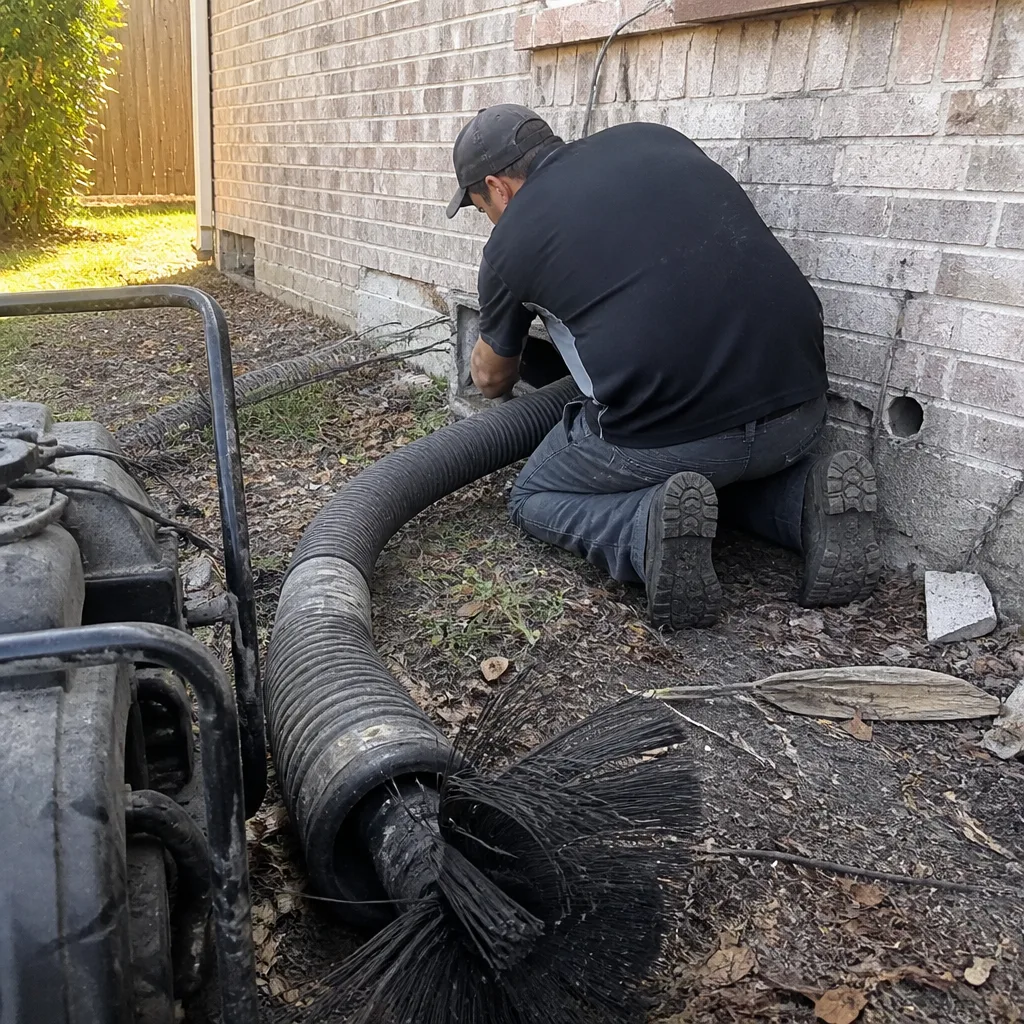 Before
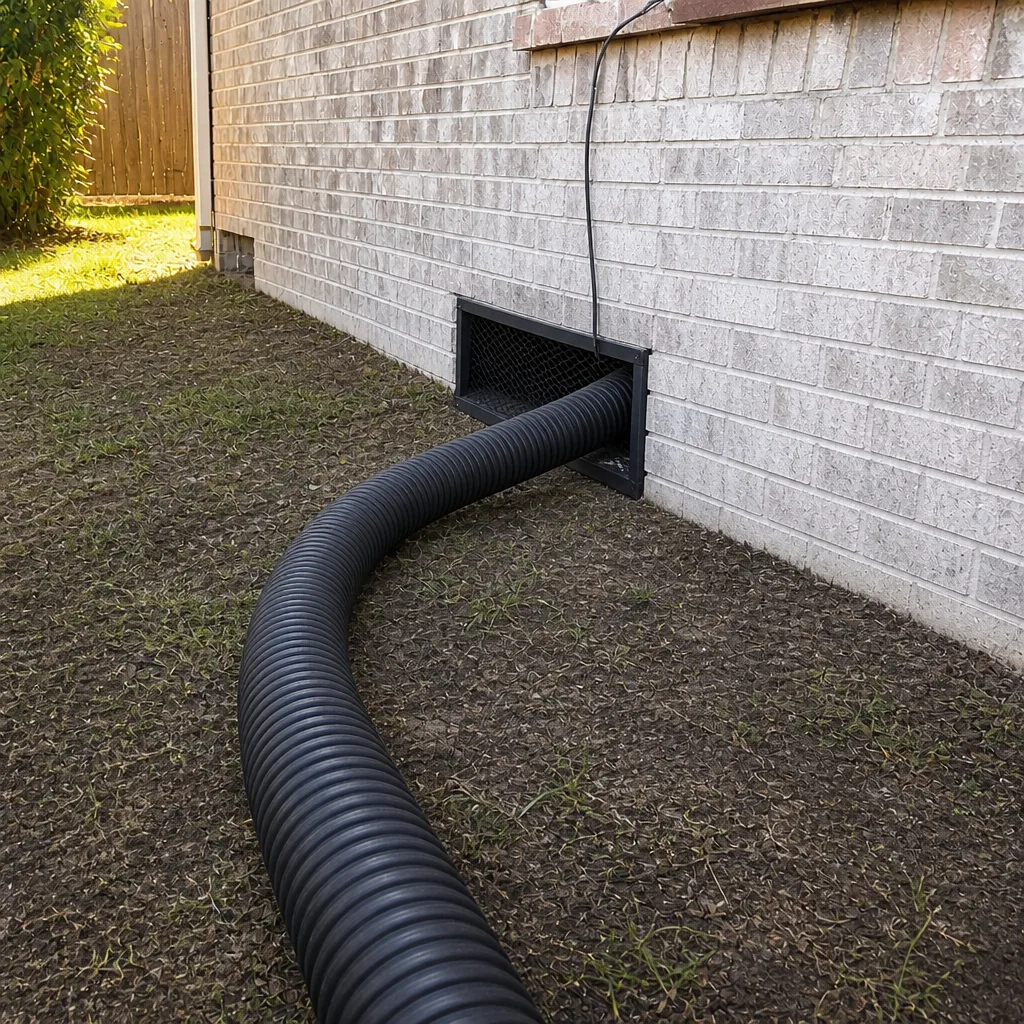 After
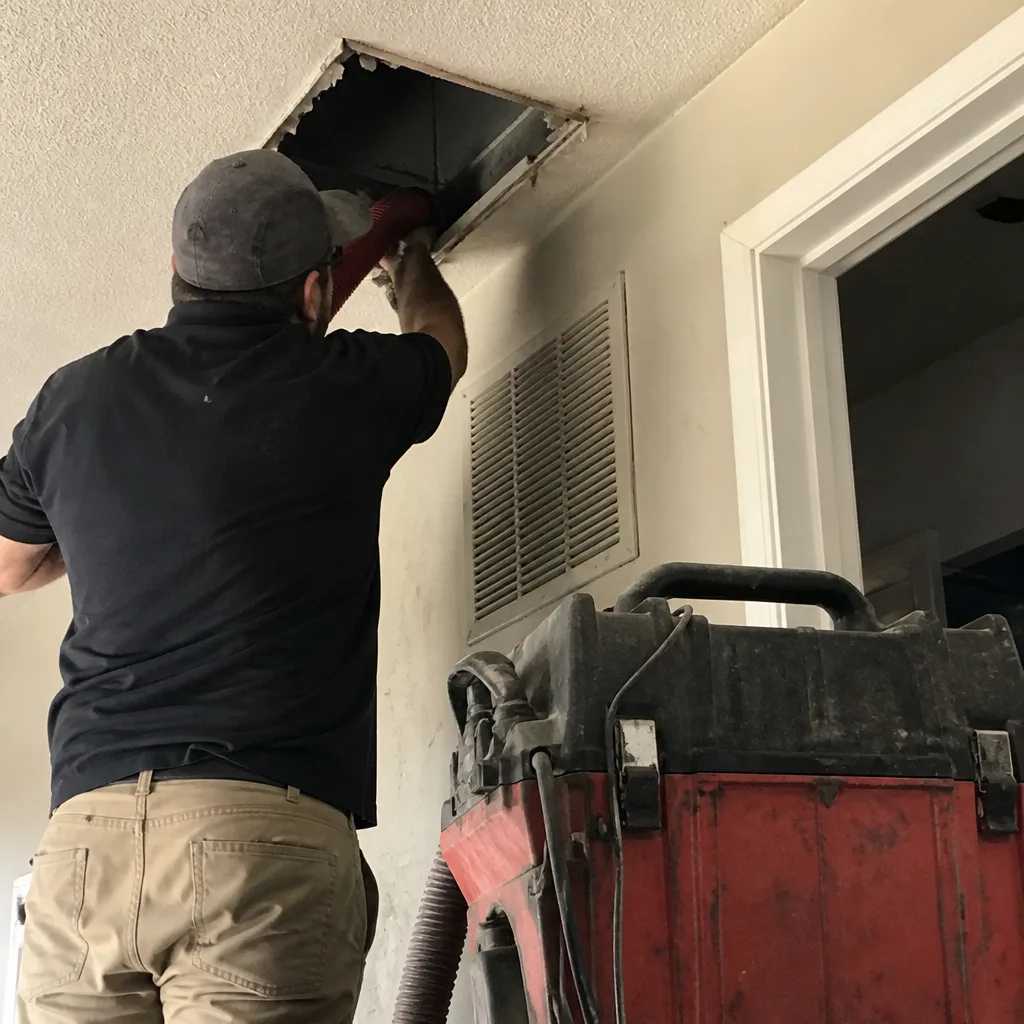 Before
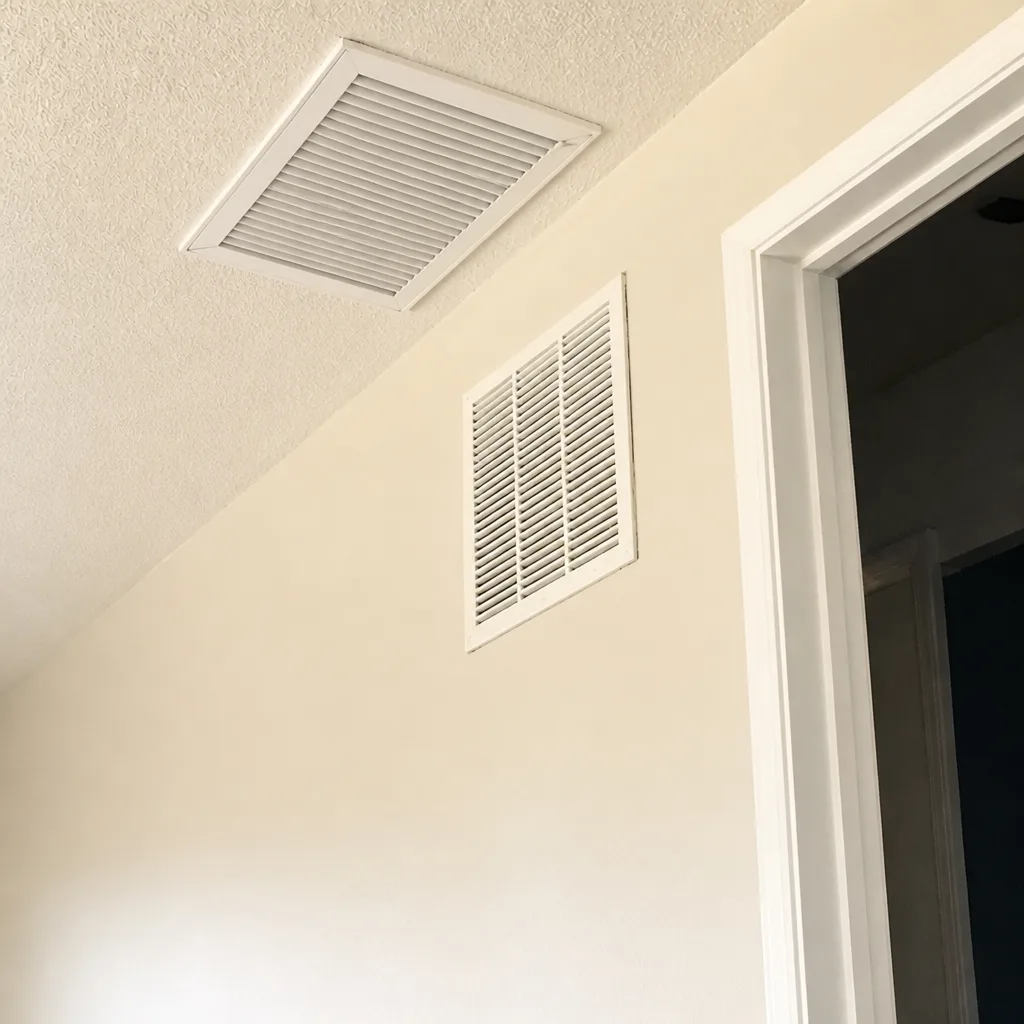 After
 Before
 After
When to Call a Professional
Some conditions call for a professional inspection rather than a wait-and-see approach. You should call if you notice a musty or dusty smell when the HVAC first turns on, if visible debris is accumulating in register grilles within weeks of cleaning, if you see sagging duct sections in the attic or a disconnected joint, or if your dryer takes longer than usual to dry a load or the vent hood feels weak. Renovation and construction work also merit a call, because drywall dust and insulation fibers get pulled into the return system and should be removed before they settle. If you’re a property manager handling multiple units, professional documentation per unit is worth more than a low per-unit price.
Bedrock Air Duct Cleaning offers free estimates in College Station. Call (833) 588-6184. We answer 24/7. Fast dispatch from 7am to 7pm, Sunday through Friday.
Frequently Asked Questions
Typical whole-system duct cleaning in College Station runs in the range of a few hundred to just over a thousand dollars, depending on system count and home size. The final number is set by the written estimate for the specific job, and it should be one flat price for the whole system, not a per-vent rate. Call (833) 588-6184 for an exact quote. Estimates are free.
Because they’re quoting a different job. A very low quote usually reflects a single blow-and-vacuum pass with no mechanical agitation and no coil, cabinet, drain pan, or boot cleaning. It’s cheaper because it covers less. Ask what’s included and what equipment will be on site before you compare prices. Call (833) 588-6184 to have a full-scope estimate priced out for your home.
Ask for before-and-after photos of your own ducts, video inspection footage, and static pressure readings, and expect a written summary of what was found. A credible company hands these over at completion. If they can’t produce documentation of your specific system, that’s the answer. Call us for a free estimate and we’ll show you the standard before we start.
It depends on the system rather than a fixed calendar. Homes in College Station with heavy summer runtime, a fouled coil, pets, or recent renovation debris benefit sooner than a lightly used system in a newer house. The practical trigger is evidence: a musty smell on startup, contamination returning quickly after cleaning, or disconnected joints. An inspection will tell you more than a schedule will. Call (833) 588-6184 to book one.
It does, in a specific way. Humidity allows dust to absorb moisture and bond to duct walls instead of staying loose, and it keeps the coil and drain pan wet enough for biofilm and microbial growth to establish. That’s why mechanical agitation matters more here than in dry climates. If a cleaning seems to fail, this is usually why. Call us to have your system scoped properly.
They’re separate systems and separate jobs, and the dryer vent is a fire-safety service rather than an air quality one. Lint accumulates against the interior of the vent duct and restricts airflow, and it can ignite. It’s worth scheduling on its own cadence rather than only when the ducts are due. Call (833) 588-6184 for a free estimate on either.
The Bottom Line
Most College Station homeowners don’t have a dirty duct problem. They have a dirty duct system, and the difference determines whether a cleaning holds or fails. A legitimate job means mechanical contact cleaning, not suction alone, and it covers the air handler, coil, drain pan, and register boots along with the duct runs. It’s quoted as one flat price agreed in writing before work starts. It ends with before-and-after photos of your own system. And it accounts for the two things most visits skip: actual duct repair, and dryer vent safety. At Bedrock, the equipment we bring is the reason the cleaning holds. Call (833) 588-6184 for a free estimate. We answer 24/7. Fast dispatch from 7am to 7pm, Sunday through Friday.
Written by the team at Bedrock Air Duct Cleaning.