
Last updated November 15, 2026
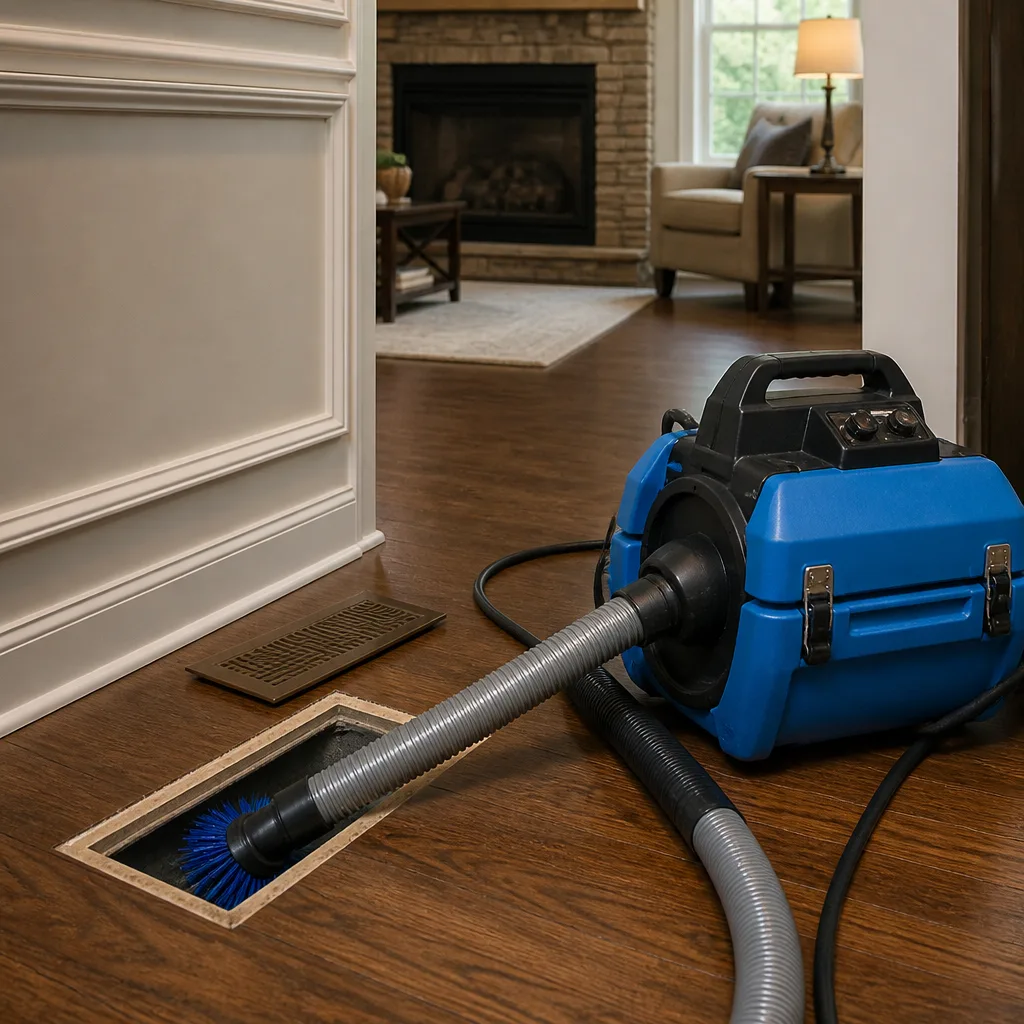 Whole-home duct cleaning
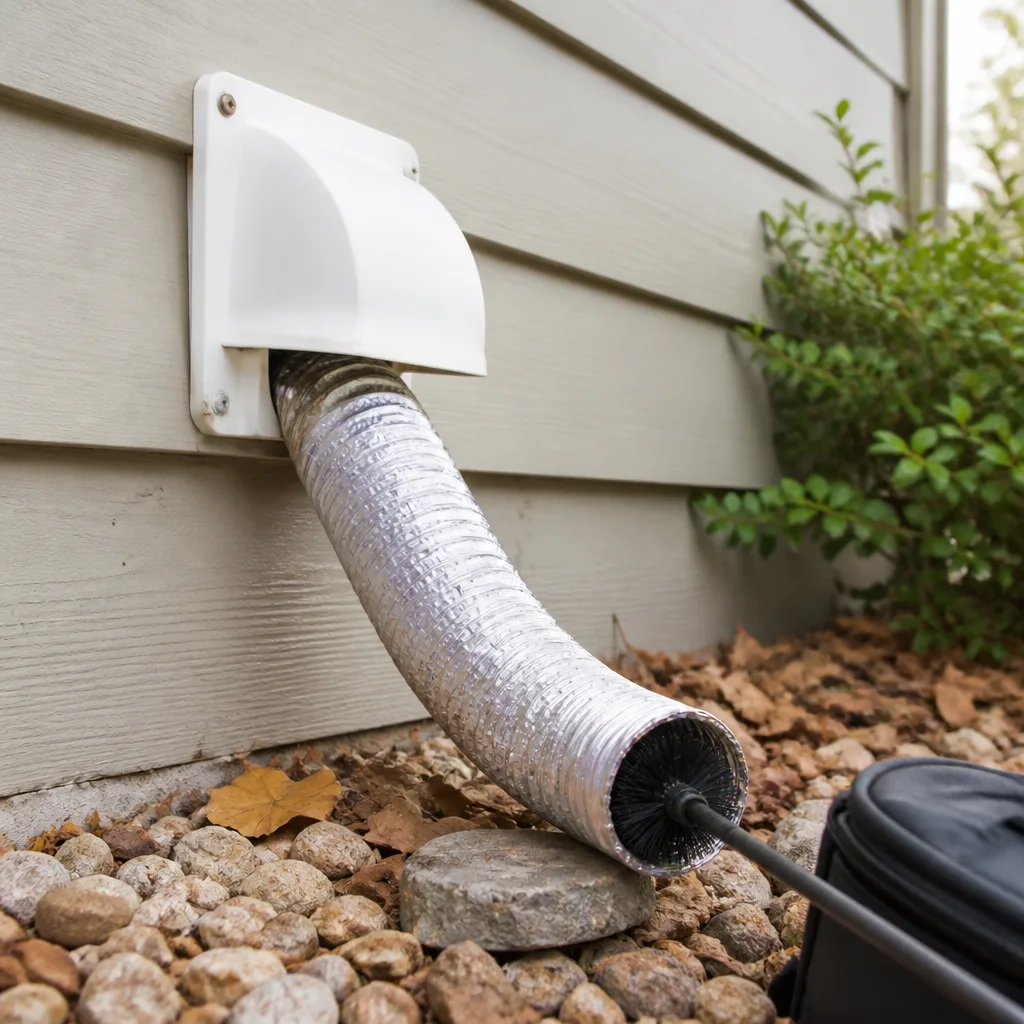 Dryer vent cleaning
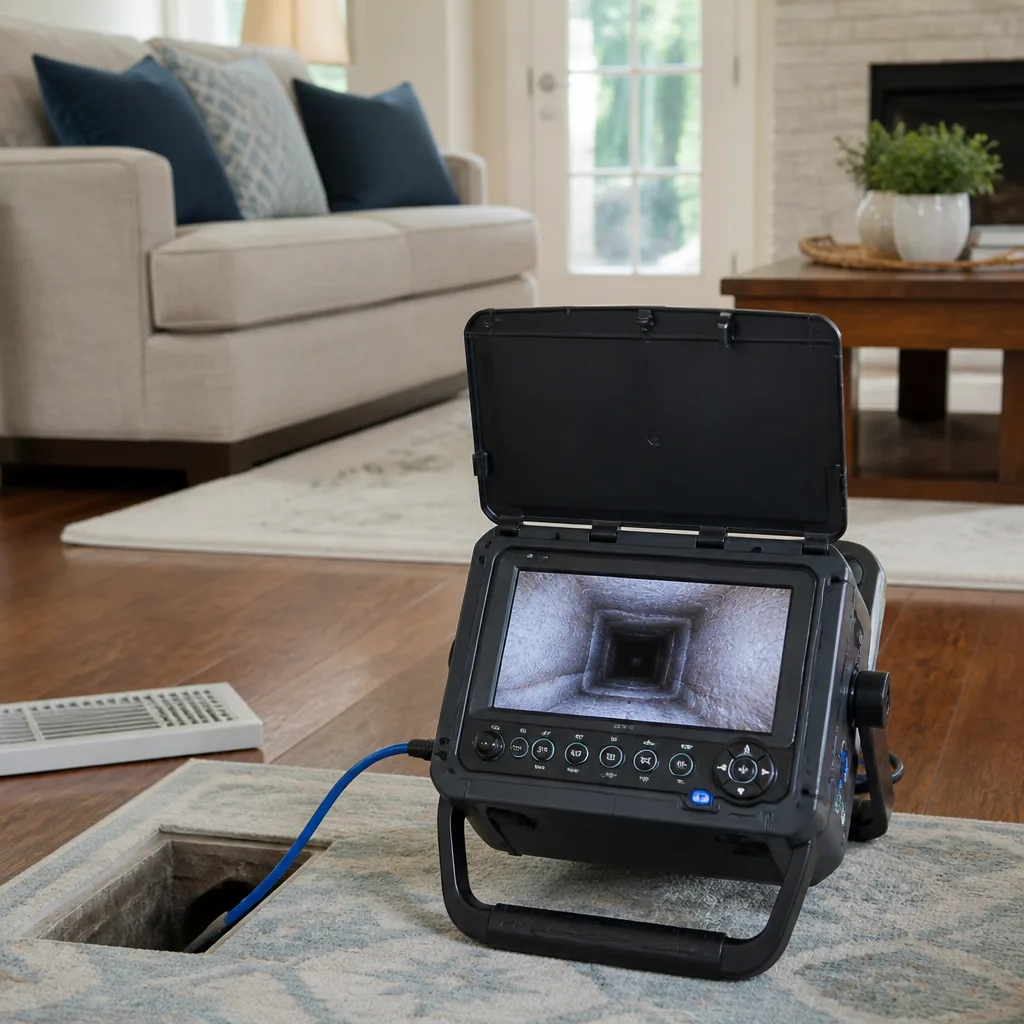 Camera inspection
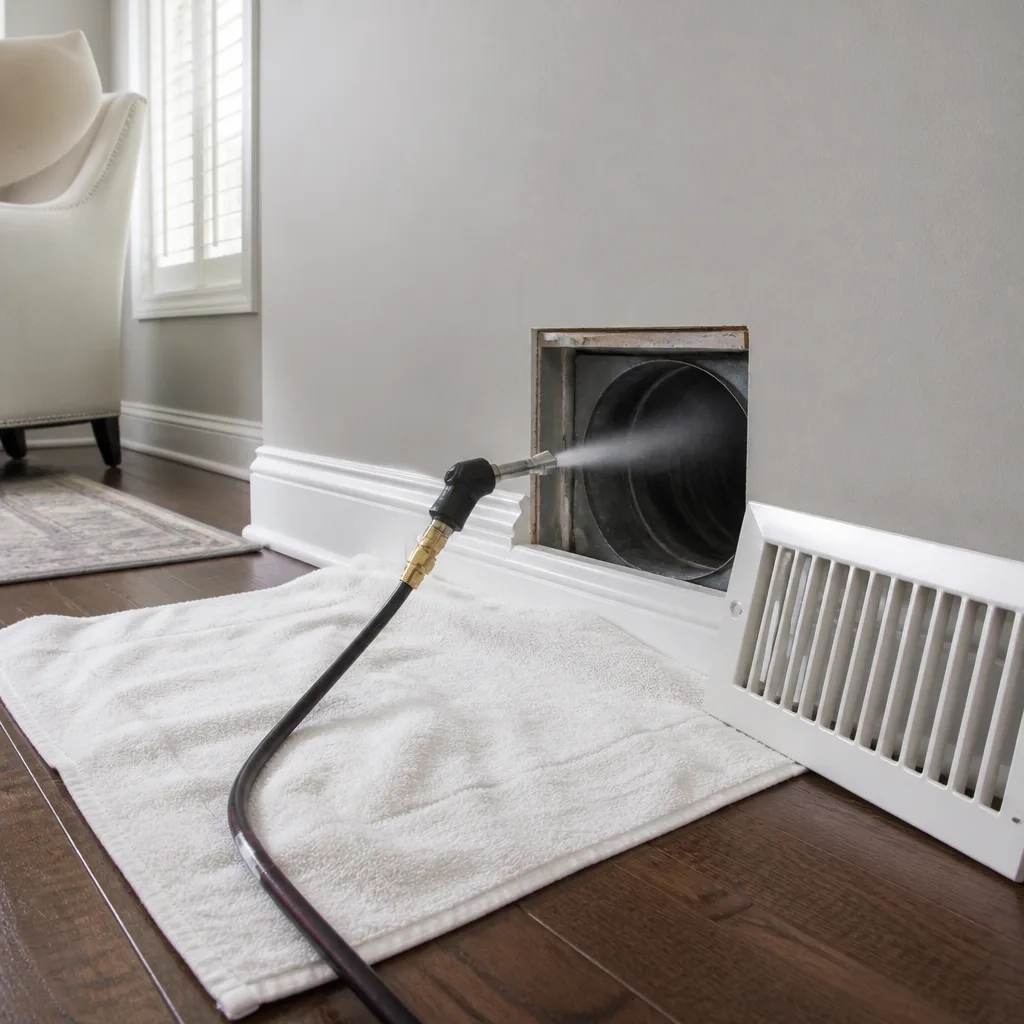 Sanitizing & deodorizing
Whole-system duct and dryer vent check with before-and-after photos - you see exactly what came out of your vents
That "$99 whole-house special" is a bait ad - the real number appears once they are in your hallway, or the "clean" is a shop-vac at the register. We photograph the inside of your ducts before and after instead.
DIY vs Professional Air Duct Cleaning: The College Station Homeowner’s Decision Guide
Most homeowners assume the choice comes down to money: rent a blower, save a few hundred dollars, call it done. Here’s the part that gets missed. A consumer-grade dryer vent kit extended to its full length reaches about 12 feet into a duct run. Many College Station homes have runs stretching 25 to 40 feet from the air handler to the farthest register. The tool isn’t the problem. The reach is. DIY duct cleaning isn’t dangerous and it isn’t pointless. It’s structurally limited to the last few feet of the system, and this guide maps exactly where that ceiling sits so you can decide what your home actually needs.
Quick Answer
DIY air duct cleaning in College Station can handle surface-level work at the registers and return grilles, but it can’t reach the interior of duct runs, the air handler cabinet, or the contamination that settles beyond arm’s length. Professional cleaning with negative pressure and rotary agitation reaches the full system. If your home has visible mold, recent flooding or renovation dust, or immunocompromised occupants, skip DIY and book a professional assessment.
Styles & brands we work with
- Whole-home duct cleaning
- Dryer vent cleaning
- Camera inspection
- Sanitizing & deodorizing
Table of Contents
- What DIY Duct Cleaning Can Actually Accomplish
- What DIY Tools Can’t Reach (And Why)
- College Station Scenarios Where DIY Is the Wrong Call
- The Real Cost Comparison: DIY vs Professional
- How to Do a Safe DIY Maintenance Pass Between Professional Cleanings
- Signs Your Duct System Needs More Than a DIY Pass
- Dryer Vent Cleaning: The One DIY Job You Shouldn’t Skip
- How to Evaluate a Professional Duct Cleaner in College Station
What DIY Duct Cleaning Can Actually Accomplish
We’re not here to talk you out of picking up a vacuum. There’s real value in what a homeowner can do at the accessible end of the system, and doing it correctly extends the interval between full professional cleanings. The key is knowing what you’ve actually cleaned versus what you’ve just made look better.
With a shop vacuum fitted with a HEPA filter and a brush attachment, a homeowner can legitimately handle three tasks:
- Register and grille cleaning. Removing supply registers and return grilles and washing them in a sink or outside with a hose removes dust, pet hair, and buildup that collects on the visible face of the system. This is the most visible layer of contamination and the easiest to address.
- Accessible boot wiping. The boot is the angled fitting where the duct meets the floor or wall register. On many College Station homes, the boot interior is reachable with a damp cloth and a gloved hand. Wiping down the first few inches removes loose debris that would otherwise get pulled back into the airstream.
- Return filter housing vacuuming. The filter slot and the housing around it collect dust that bypasses the filter. Vacuuming this area with a brush attachment keeps the air handler from pulling that debris into the coil.
What you get from this work is a cleaner-looking system, less dust at the register faces, and a small reduction in the debris that enters the airstream. What you don’t get is a clean duct system. Those three tasks address the outermost surface of a system that extends 25 to 40 feet into your walls and ceilings. In our experience, that visible surface represents a small fraction of where contamination actually accumulates.
Set realistic expectations. A DIY pass is maintenance, not restoration. If your ducts haven’t been professionally cleaned in several years, a Saturday afternoon with a shop vac won’t change what’s living inside the runs.
What DIY Tools Can’t Reach (And Why)
This is where the DIY ceiling becomes clear. The limitation isn’t effort or skill. It’s physics and equipment class. Consumer tools weren’t built for the inside of a duct system, and the parts of the system that hold the most contamination are the parts no homeowner tool can reach.
Negative pressure isolation
Professional duct cleaning starts with a negative air machine connected to the system, pulling the entire duct network into a vacuum before any agitation begins. This is called negative pressure isolation, and it’s the reason professional cleaning doesn’t just move debris around. Without it, every brush stroke inside a duct sends dust back into the living space. The Abatement Technologies negative-air and HEPA equipment we use is the same class of tooling used in professional remediation work. A shop vac in reverse doesn’t replicate that.
Rotary brush agitation inside lined flex duct
Most College Station homes built in the last few decades use flexible duct in the attic runs. Flex duct has a plastic liner and a wire helix, and it traps dust on the interior surface in a way that a straight vacuum wand can’t dislodge. Professional rotary brush systems like Rotobrush feed a spinning brush head through the full length of the run, agitating contamination off the liner and into the negative-pressure airstream. A homeowner pushing a shop vac hose a few feet into a register does none of this.
Air handler cabinet cleaning
The air handler cabinet houses the blower, the evaporator coil, and the filter rack. It’s the collection point for everything the return ducts pull in, and it’s where mold and biological growth most often take hold in a humid climate like ours. Cleaning the cabinet requires opening the unit, protecting the coil, and using HEPA extraction. This is not a homeowner task, and doing it wrong can damage the coil or the blower.
The full length of every run
A 12-foot consumer kit reaches about 12 feet. Many College Station homes have runs of 25 to 40 feet. Even a homeowner who buys the longest consumer kit available leaves most of the run untouched. And the far end of a duct run, near the register, is often where the most debris settles because airflow slows there.
College Station Scenarios Where DIY Is the Wrong Call
Some situations call for a professional from the start, no matter how handy you are. These are the ones we see most often in College Station, and each one involves contamination that DIY tools either can’t reach or can make worse.
After flooding or water intrusion
College Station sits in a part of Texas where heavy rain and occasional flooding are part of life. When water gets into a home, humidity inside the duct system spikes, and mold can establish itself on duct liner and inside the air handler within days. A shop vac can’t remove mold from a flex duct liner. It can spread spores through the system if the vacuum exhaust isn’t HEPA-filtered. After any water event, professional cleaning with remediation-class equipment is the right starting point.
After renovation or new construction
Drywall dust, sawdust, insulation fibers, and construction debris get pulled into the return system during any significant remodel. This dust is fine enough to coat the inside of every duct run and the evaporator coil. A homeowner vacuuming registers won’t touch it. Professional cleaning after renovation is standard practice for a reason: the debris is inside the system, not on top of it.
Visible mold at registers
If you can see dark spots or a musty smell coming from a supply register, the mold is likely established inside the duct run or on the boot. Wiping the register face doesn’t address the source. This is a remediation scenario, not a cleaning scenario, and it needs professional assessment.
Homes with immunocompromised occupants
Households with someone undergoing chemotherapy, living with asthma or COPD, or caring for an infant have a lower tolerance for airborne contamination. In those homes, the standard for “clean enough” is higher. Professional cleaning with HEPA filtration and negative pressure is the safer call. We’d rather tell you that than sell you a service you don’t need.
Homes with persistent musty odors
A musty smell that doesn’t go away after cleaning the registers usually points to moisture or biological growth deeper in the system. In our climate, that’s common in homes where the AC runs hard and the attic stays humid. This is a job for a professional with the right equipment to find and address the source.
The Real Cost Comparison: DIY vs Professional
The invoice is the easy number to compare. It’s also the least useful one. A fair comparison accounts for equipment, time, and what each approach actually accomplishes. Here’s how the two options stack up for a typical College Station home.
DIY costs
- Shop vacuum with HEPA filter: $150 to $400 depending on capacity and filtration. A standard shop vac without HEPA filtration can aerosolize fine dust, which is worse than leaving it in place.
- Consumer duct cleaning kit: $30 to $80 for a basic brush-and-hose kit. Longer kits cost more.
- Time: Two to four hours for a thorough register and boot cleaning pass, plus setup and cleanup. Add in the time spent researching what to do, and it’s a full afternoon.
- Outcome: Clean registers, wiped boots, vacuumed filter housing. The interior of the duct runs remains untouched.
Professional costs
Professional air duct cleaning in College Station typically runs $300 to $700 for a whole-home system, depending on the number of vents, the length of runs, and whether the air handler cabinet is included. Some homes with multiple systems or heavy contamination run higher. The estimate is per job and confirmed in writing before any work starts.
- Equipment: Rotobrush rotary agitation, Abatement Technologies negative-air and HEPA extraction, Nikro accessories. This is commercial-grade equipment, not a consumer blower.
- Time: Two to four hours on site, depending on system size.
- Outcome: The full duct system cleaned under negative pressure, with before-and-after photos so you can see what was removed.
The honest comparison is this: DIY costs less up front and delivers less. If your ducts are already reasonably clean and you’re doing maintenance, DIY is a reasonable supplement. If they haven’t been cleaned in years, or if you’re dealing with one of the scenarios above, DIY spends time and money on a job that doesn’t reach the problem. The professional estimate is free, so the cost of finding out is a phone call.
How to Do a Safe DIY Maintenance Pass Between Professional Cleanings
If you’ve had your ducts professionally cleaned and want to stretch the interval, there’s a right way to maintain them yourself and a wrong way that damages the flex duct liner or pushes debris deeper into the system. Here’s the sequence we recommend to homeowners who want to stay involved.
- Turn off the system. Before you remove any register, switch the thermostat to off and let the fan stop. Running the system while you clean pulls dust into the return.
- Remove registers and grilles carefully. Most are held by two screws. Set them aside and wash them separately. Don’t drop screws into the duct opening.
- Vacuum the boot and the first few inches of the duct with a brush attachment. Use light pressure. Flex duct liner is thin, and a stiff brush or a high-pressure nozzle can tear it. A torn liner becomes a permanent collection point for dust and a restriction on airflow.
- Don’t push anything past the first bend. Pushing a shop vac hose deep into a flex run can dislodge debris that’s settled on the liner and send it downstream toward the air handler. Stop at the boot.
- Vacuum the return filter housing. Remove the filter, vacuum the slot and the surrounding housing, then replace the filter with a fresh one.
- Reinstall registers and confirm they sit flush. A register that doesn’t seal properly leaks conditioned air into the wall cavity.
- Change your filter on schedule. This is the single most effective thing a homeowner can do between professional cleanings. A clogged filter strains the blower and reduces airflow through every duct run.
What not to do: don’t use a leaf blower or compressed air to “blow out” the ducts. Don’t run a shop vac without HEPA filtration inside the system. Don’t try to reach the air handler cabinet with a vacuum hose. Those moves can damage the system or redistribute contamination into the living space.
Signs Your Duct System Needs More Than a DIY Pass
If you’re on the fence about whether to call a professional, here are the indicators that DIY won’t solve the problem. These come up often in College Station homes, especially in older properties and homes with attic ductwork.
- Visible dust blowing from a register right after you clean it. The source is downstream in the duct run, not at the register face.
- A persistent musty smell that returns within days of cleaning. Moisture or biological growth inside the system.
- Uneven airflow between rooms. A partially collapsed or disconnected flex duct run, which is a repair issue, not a cleaning issue.
- Higher energy bills with no change in usage. Restricted airflow through dirty ducts forces the blower to work harder.
- Recent renovation, flooding, or pest activity. Contamination that DIY tools can’t remove.
- It’s been more than three to five years since the last professional cleaning. At that point, a DIY pass is maintenance on top of a system that needs a full reset.
If more than one of these applies to your home, the DIY ceiling has been reached. At that point, the question isn’t whether to call a professional but how to choose the right one.
Dryer Vent Cleaning: The One DIY Job You Shouldn’t Skip
Dryer vent cleaning is different from duct cleaning in one important way: it’s a fire-safety issue, not just an air-quality issue. Lint accumulation in a dryer vent is a documented fire hazard, and it’s one of the leading causes of residential dryer fires. That’s why we treat it as a fire-risk reduction service, not an upsell afterthought.
A homeowner can do a basic dryer vent maintenance pass. Disconnect the dryer, pull it out, and vacuum the lint trap housing and the first few feet of the vent run with a vent brush. If the vent run is short and straight and the exterior vent hood is accessible, a homeowner can often clear it completely.
Where DIY stops working is the same place it does for ducts: reach. A typical dryer vent run is 10 to 25 feet, often with bends and turns behind the dryer or in the wall. Consumer vent kits reach about 12 feet. Beyond that, lint compacts against the walls of the vent and reduces airflow, and the dryer runs hotter and longer. That’s the fire risk building.
Signs your dryer vent needs professional attention:
- Clothes take longer than one cycle to dry
- The dryer feels hot to the touch on the exterior
- The exterior vent flap doesn’t open fully when the dryer runs
- Lint is visible around the vent hood or on the ground outside
- It’s been more than a year since the vent was last cleaned
Professional dryer vent cleaning uses rotary brushes and vacuum extraction to clear the full run, including the bends and the exterior hood. It’s a safety measure, and it’s worth the call.
How to Evaluate a Professional Duct Cleaner in College Station
Once you’ve decided a professional cleaning is the right call, the next question is who to hire. The duct cleaning industry has a reputation problem, and it’s earned. Low coupon prices that balloon into a larger invoice once the technician is on site are common. Here’s how to evaluate a company before you book.
- Ask what equipment they use. A company that names its equipment (Rotobrush, Nikro, Abatement Technologies) is telling you it invests in professional-grade tooling. A company that can’t name its equipment is likely running a shop vac and a blower.
- Ask whether they use negative pressure. If the answer is vague, the cleaning won’t contain debris. Negative pressure is the difference between cleaning a system and stirring it up.
- Ask for a written estimate before work starts. One flat price per system, agreed in advance. Not a per-vent price. Not a coupon that becomes a larger invoice.
- Ask whether you’ll get before-and-after photos. You should be able to see what was removed from your system. Photos of your own ducts, not stock images.
- Ask what’s included. Register cleaning, boot cleaning, duct run cleaning, and air handler cabinet cleaning are not the same thing. A complete cleaning covers all of it.
- Ask about repair. A company that only cleans won’t tell you when a duct run is disconnected or a liner is torn. Duct repair is part of the full picture.
Bedrock Air Duct Cleaning works with Rotobrush and Nikro systems and Abatement Technologies negative-air and HEPA equipment. We treat air duct cleaning as a full mechanical cleaning and system restoration, not a single pass with a blower. We also work with Honeywell and Aprilaire air-quality platforms, which means we understand how ductwork fits into the broader indoor air quality picture.
For homeowners and property managers in College Station, that matters. Our climate means the AC runs hard for most of the year, and ducts in humid attic spaces are exposed to conditions that accelerate contamination. A company that understands the local housing stock and the equipment needed to address it is the right call.
Common Mistakes to Avoid
- Using a shop vac without HEPA filtration inside the duct system. A standard shop vac pushes fine dust out its exhaust and back into the living space. If you’re going to vacuum inside a duct, the vacuum needs HEPA filtration or it’s making the problem worse.
- Pushing a vacuum hose deep into flex duct. Flex duct liners tear easily, and a torn liner collects debris permanently and restricts airflow. A homeowner trying to reach the far end of a run can do more damage than the dust was doing.
- Assuming a visible clean register means a clean system. The register face is the outermost surface. The contamination that matters lives inside the runs, where no homeowner tool reaches.
- Using a leaf blower or compressed air to “blow out” the ducts. This redistributes debris into the living space and can send it into the air handler. It’s not a cleaning method.
- Skipping the dryer vent because the ducts were cleaned. They’re separate systems with separate risks, and the dryer vent is the fire hazard. Cleaning the ducts doesn’t clean the dryer vent.
- Hiring on price alone. A coupon price that becomes a larger invoice once the technician is on site is the industry’s most common complaint. Ask for one flat price per system in writing before work starts.
- Ignoring uneven airflow. If one room is consistently hotter or cooler than the rest, the issue may be a disconnected or collapsed duct run. Cleaning won’t fix it, but air duct cleaning and duct repair together usually will.
See the difference
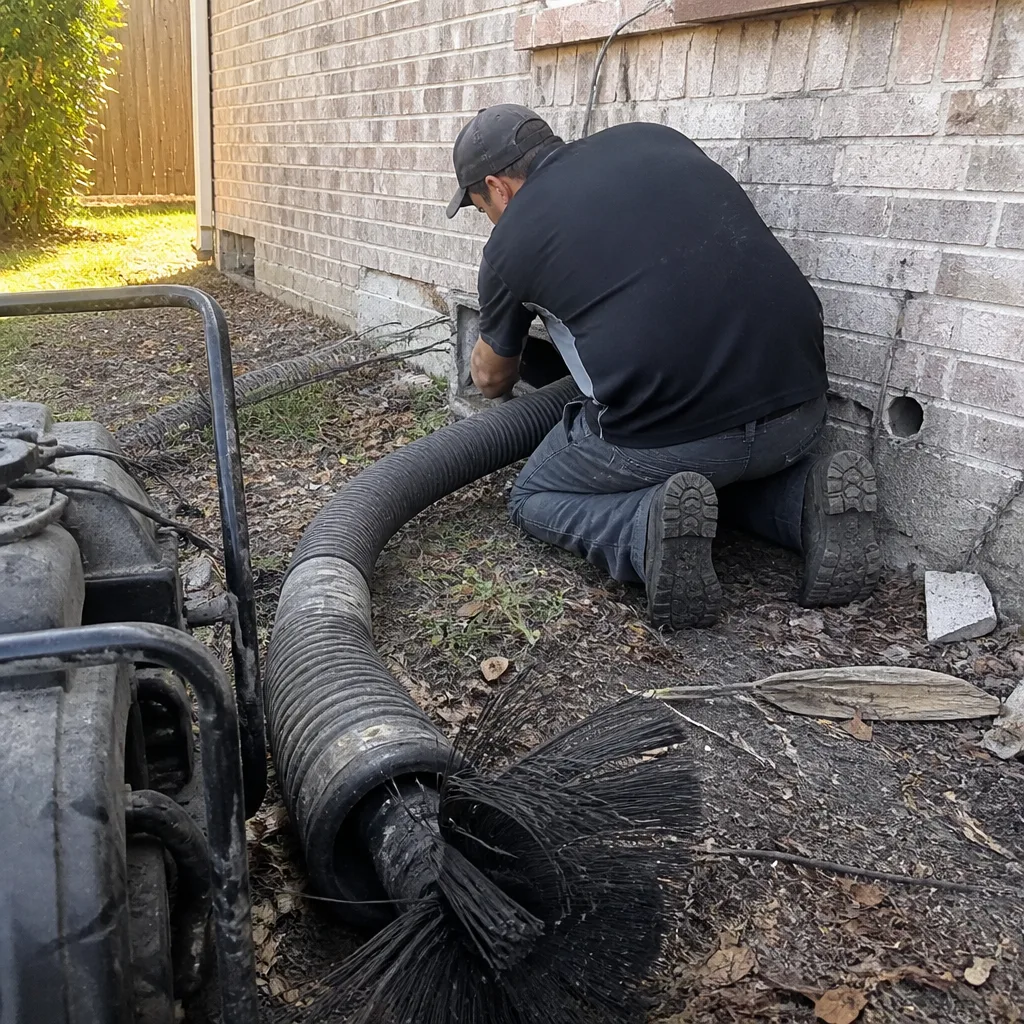 Before
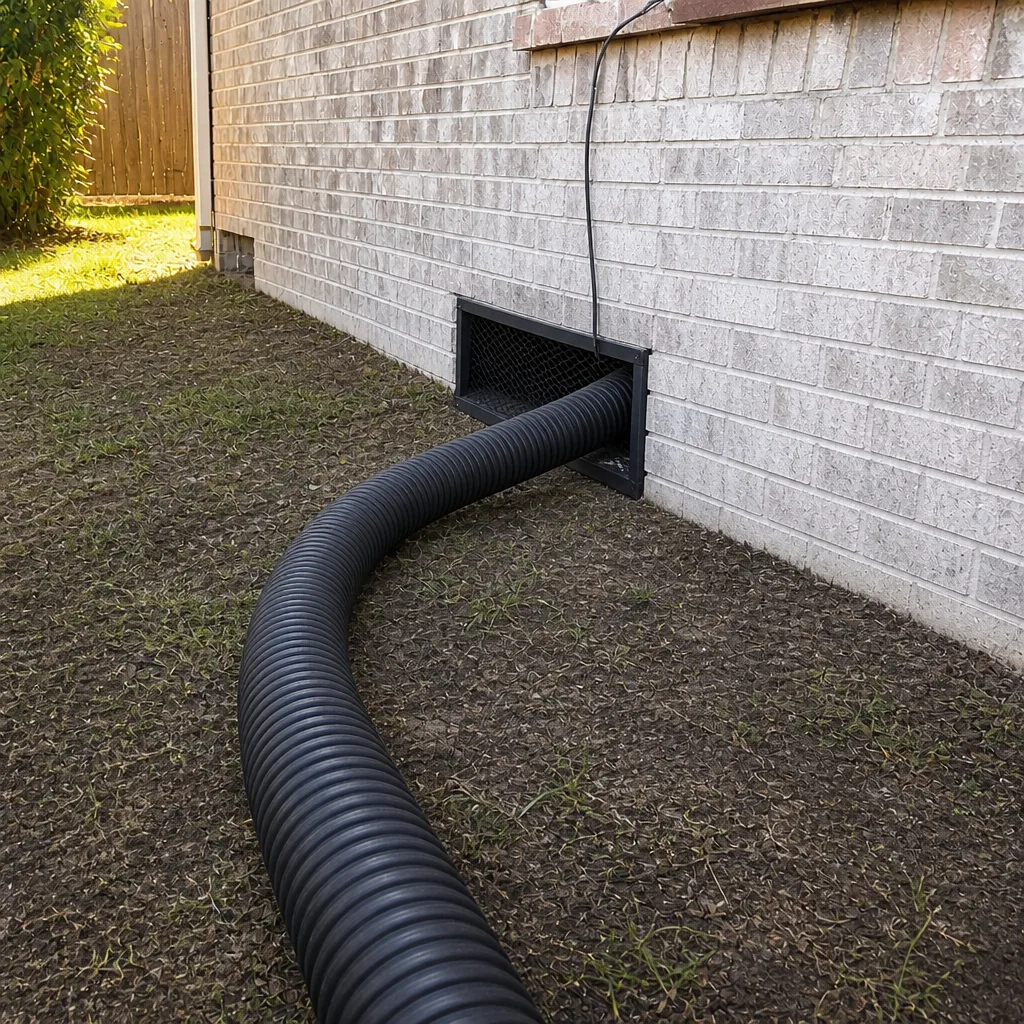 After
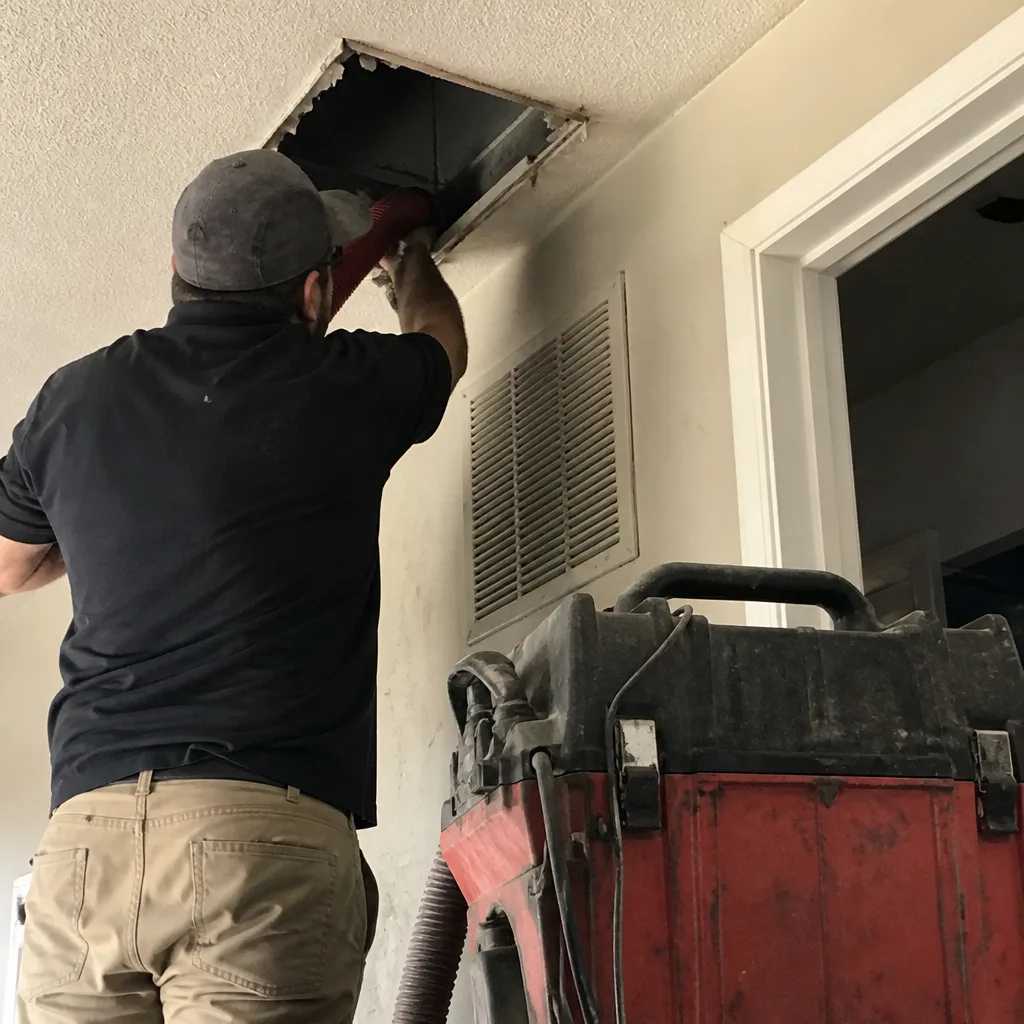 Before
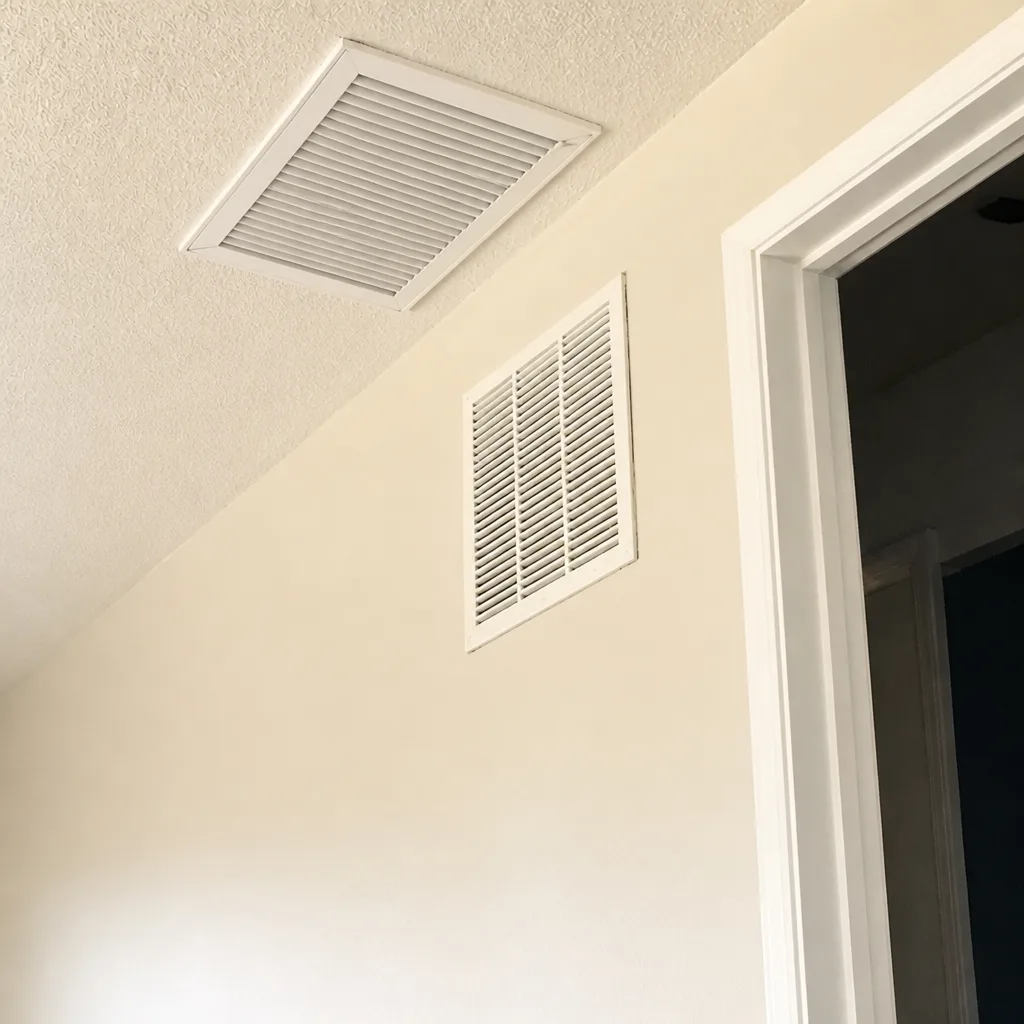 After
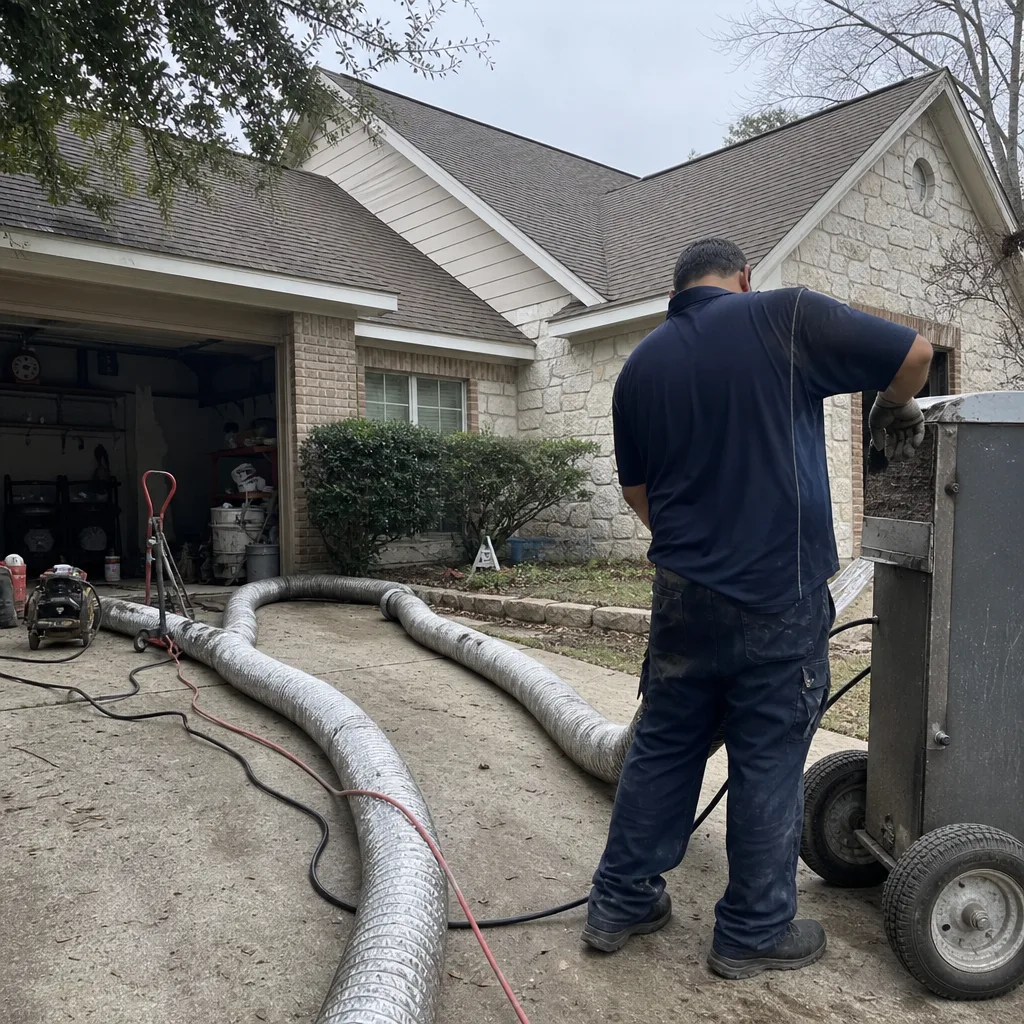 Before
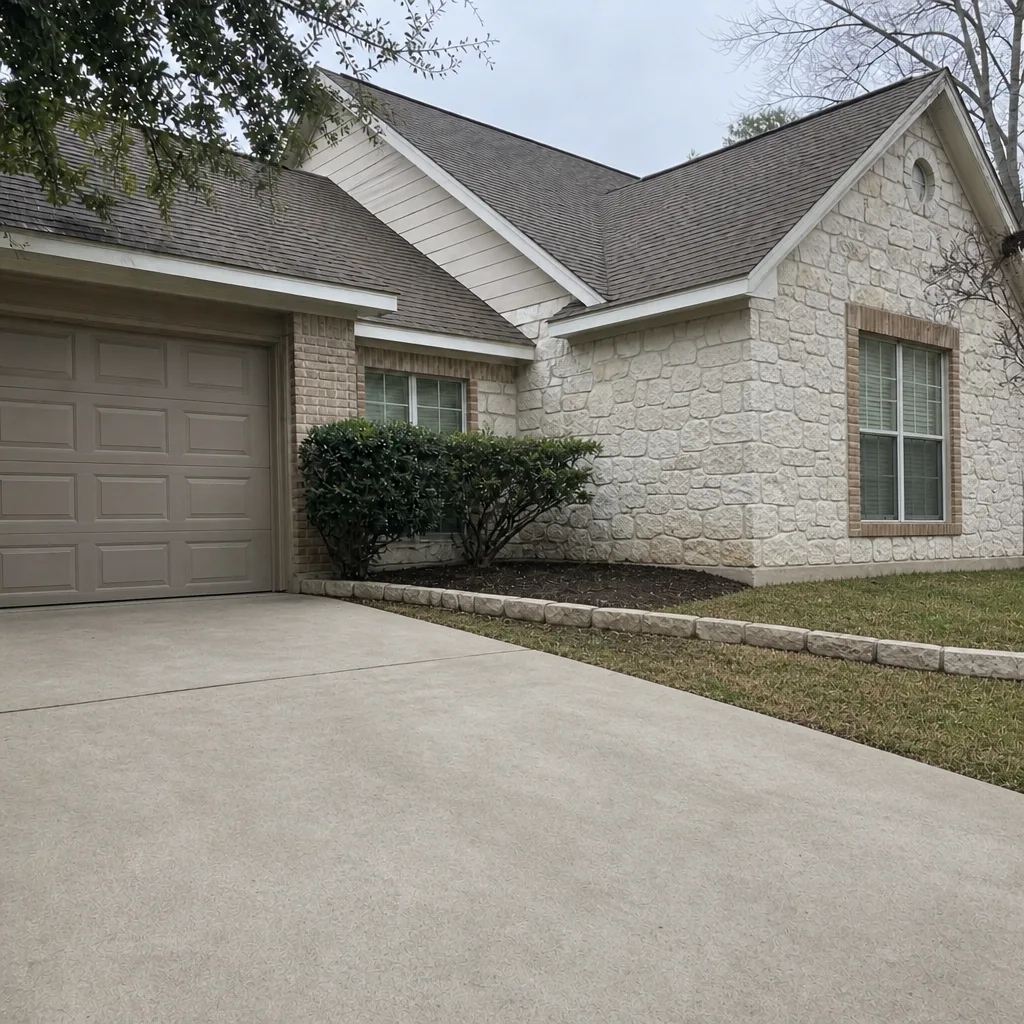 After
When to Call a Professional
Call a professional when the contamination is beyond the register faces, when there’s been water or renovation activity in the home, or when the system hasn’t been cleaned in several years. Call when you see visible mold at a register or smell mustiness that returns after cleaning. Call when someone in the home has a health condition that makes airborne contamination a real concern. Call when your dryer vent is more than a year past its last cleaning or the dryer is taking longer than one cycle. And call when you want to see before-and-after photos of your own duct system so you know the work was actually done. Bedrock Air Duct Cleaning offers free estimates in College Station. Call Bedrock Air Duct Cleaning at (833) 588-6184 to schedule one.
Frequently Asked Questions
DIY saves the professional invoice of $300 to $700 but costs $180 to $480 in equipment and two to four hours of time, and it only cleans the register faces and the first few inches of each boot. The interior of the duct runs remains untouched. Professional cleaning reaches the full system. Call (833) 588-6184 for an exact quote. Estimates are free.
You can clean the lint trap housing and the first few feet of the vent run, but most dryer vent runs are 10 to 25 feet long with bends that consumer kits can’t navigate. Lint compacts beyond the reach of a 12-foot kit, and that’s where the fire risk lives. Professional dryer vent cleaning clears the full run.
Every three to five years for most homes, sooner after renovation, flooding, or pest activity. Homes with pets, allergies, or immunocompromised occupants often benefit from cleaning closer to the three-year mark. A DIY maintenance pass between professional cleanings helps, but it doesn’t replace a full cleaning.
A homeowner can reach the register, the grille, and the first few inches of the boot, which is a small fraction of a 25 to 40 foot duct run. Professional cleaning uses negative pressure and rotary agitation to clean the full run, the air handler cabinet, and the return system. The difference is reach, and it’s the whole ballgame.
Yes, if your ducts haven’t been cleaned in several years, you’ve had a water event or renovation, or you’re seeing signs of contamination beyond the registers. The professional advantage is equipment class, not effort: negative pressure, rotary agitation, and HEPA extraction are tools a homeowner can’t replicate. The estimate is free, so the cost of finding out is a call.
Ask for before-and-after photos of your own duct system, not stock images. A reputable company will show you what was removed. Also ask for one flat price per system in writing before work starts, so there’s no per-vent surprise on the invoice. Call (833) 588-6184 for an exact quote. Estimates are free.
Yes. Bedrock Air Duct Cleaning handles duct repair alongside cleaning and dryer vent service. If a flex run is torn, disconnected, or crushed, cleaning alone won’t restore airflow. We identify those issues during the assessment and confirm repair scope in the written estimate before work begins.
The Bottom Line
DIY duct cleaning isn’t dangerous and it isn’t pointless. It’s just limited. A homeowner with the right tools and realistic expectations can clean registers, wipe boots, and vacuum the filter housing, and that maintenance work is worth doing. What a homeowner can’t do is reach the interior of a 25 to 40 foot duct run, clean under negative pressure, agitate a flex liner, or open the air handler cabinet. In College Station’s climate, where the AC runs hard and attic ducts stay humid, the contamination that matters lives where DIY tools stop. If your system is past the register faces, or if you’ve had water, renovation, or visible mold, book the professional. Call (833) 588-6184 for a free estimate. We answer 24/7. Fast dispatch from 7am to 7pm, Sunday through Friday.
Written by the team at Bedrock Air Duct Cleaning.