
Last updated November 15, 2026
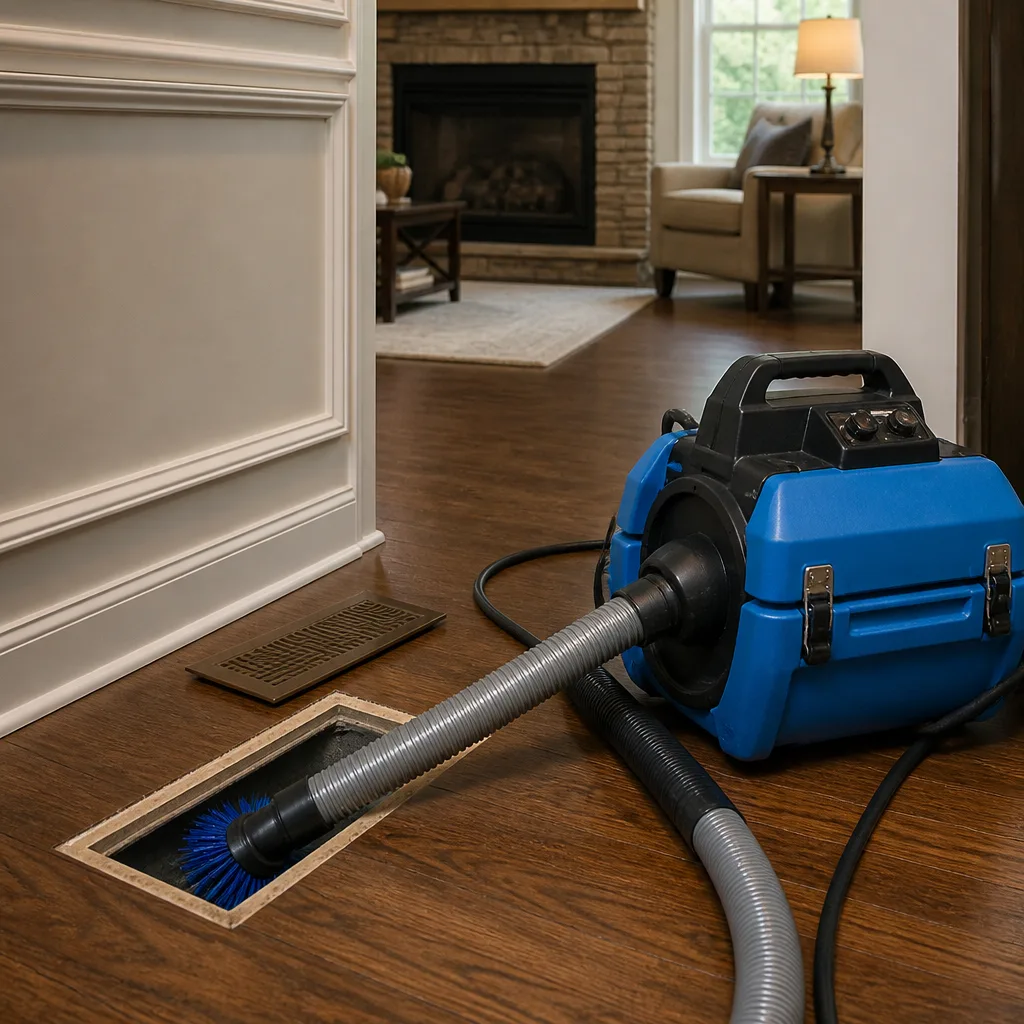 Whole-home duct cleaning
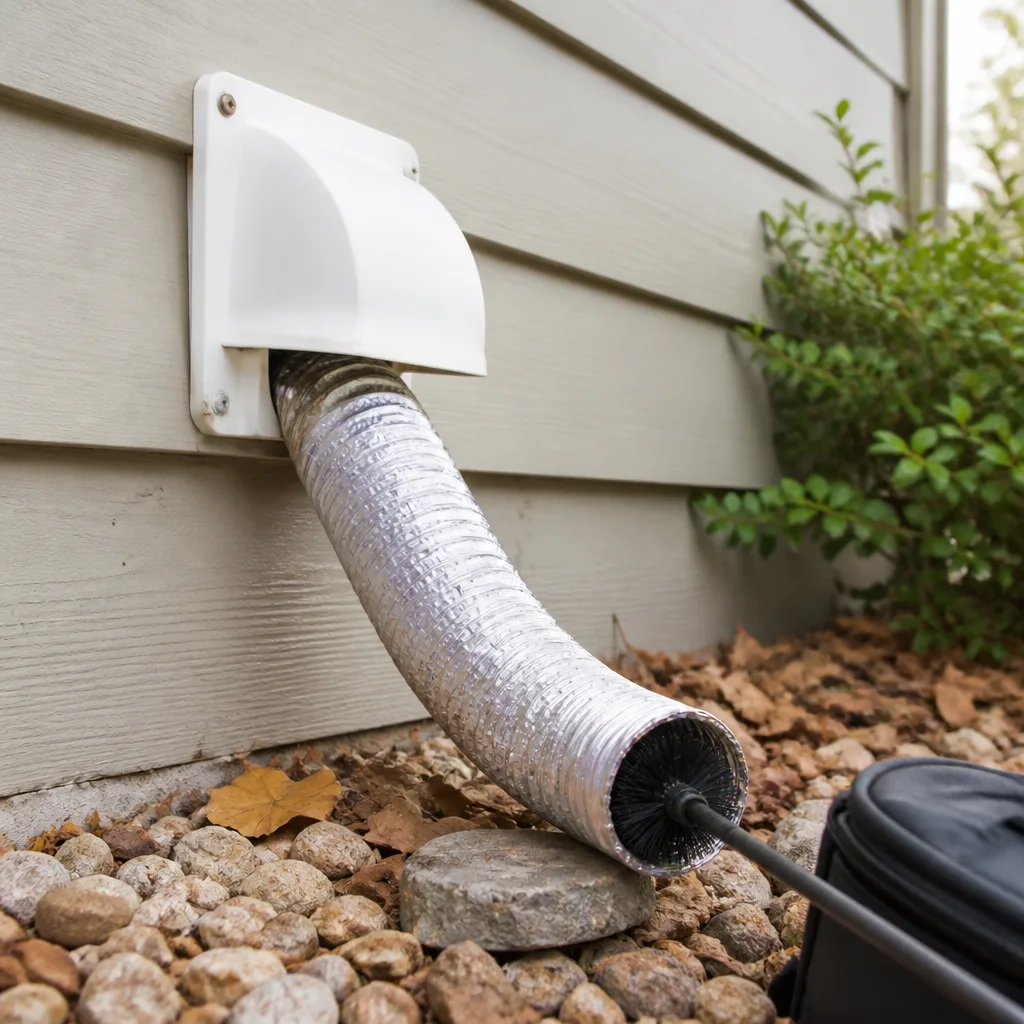 Dryer vent cleaning
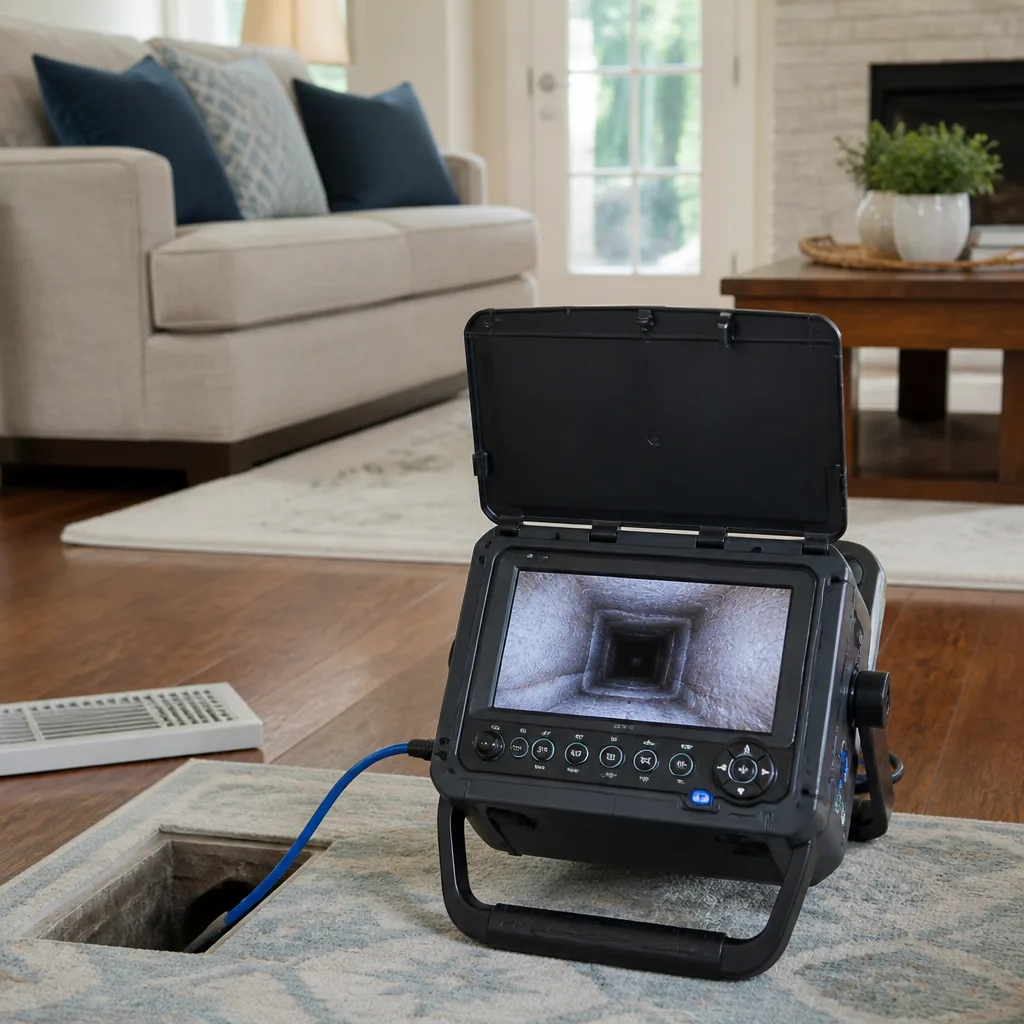 Camera inspection
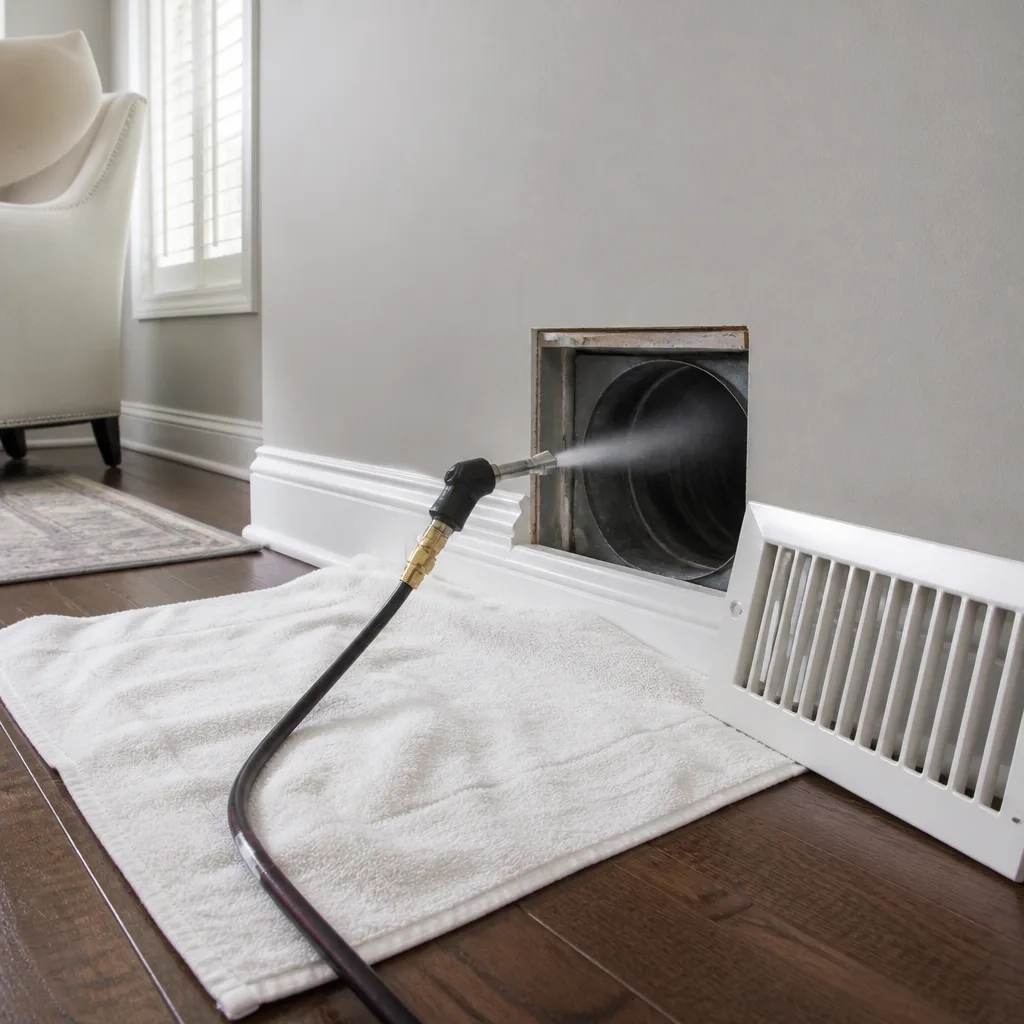 Sanitizing & deodorizing
Whole-system duct and dryer vent check with before-and-after photos - you see exactly what came out of your vents
That "$99 whole-house special" is a bait ad - the real number appears once they are in your hallway, or the "clean" is a shop-vac at the register. We photograph the inside of your ducts before and after instead.
How to Hire an Air Duct Cleaning Contractor in College Station: A Step-by-Step Guide
Most homeowners assume the state checks who cleans their ducts. It doesn’t. Texas does not license air duct cleaners, which means anyone with a phone number, a van, and no equipment can hand you a bid today. That’s the uncomfortable part of hiring in this trade, and it’s the part nobody explains before you sign. In this guide we walk through the exact questions that separate a process-driven contractor from a coupon operator, what a legitimate contract should say, and how to compare bids that aren’t quoting the same scope. If you’re hiring air duct cleaning in College Station, this filter is how you avoid the bait-and-switch.
Quick Answer
To hire an air duct cleaning contractor in College Station, verify that the contractor uses professional-grade mechanical equipment (Rotobrush, Nikro, or comparable), offers a documented pre-job inspection with before-and-after photos, quotes one flat price for the whole system rather than per vent, and provides a written scope naming the equipment class and components covered. Texas has no licensing requirement for duct cleaning, so your questions – not the state – do the vetting. Ask for the written scope before you approve any work.
Styles & brands we work with
- Whole-home duct cleaning
- Dryer vent cleaning
- Camera inspection
- Sanitizing & deodorizing
Table of Contents
- Why Texas Doesn’t License Duct Cleaners – And What That Means for You
- The Five Technical Questions That Disqualify a Bidder
- What NADCA Membership and ACR Standard Compliance Actually Require
- Low-Bid Red Flags Specific to the College Station Market
- How to Compare Quotes Apples-to-Apples
- What a Legitimate Contract Must Specify
- What a Real Job Looks Like Step by Step
- Duct Repair and Dryer Vents: The Scope Most Bids Miss
Why Texas Doesn’t License Duct Cleaners – And What That Means for You
Texas leaves air duct cleaning unregulated. No state license, no bonding requirement tied to the trade, no minimum equipment standard. A company can operate legally in College Station with zero documented training, no certifiable filtration equipment, and a price printed on a mailer. That legal reality is the single most important thing to understand before you hire anyone.
What fills the gap is voluntary compliance. The National Air Duct Cleaners Association (NADCA) publishes a standard – ACR, Assessment, Cleaning and Restoration of HVAC Systems – that defines what a real cleaning involves. Membership in NADCA is not required to operate in Texas, and holding the ACR standard in hand isn’t enforced by any agency. But a contractor who follows it can show you the process. A contractor who doesn’t will dodge the questions.
So the vetting burden is entirely on you. That’s not a reason to skip the cleaning – it’s a reason to hire deliberately. The market in College Station includes plenty of legitimate operators running commercial-grade equipment, and a handful of van-and-shop-vac outfits that saw an unregulated market and moved in. Your job is telling them apart.
Three practical consequences of the unregulated market:
- Price is not a quality signal. A $99 offer and a $450 offer can both come from a one-person operation – the difference is often marketing budget, not equipment.
- Insurance claims are unenforceable without proof. If a crew pulls a duct loose and doesn’t disclose it, you need the written scope and photos to make a case.
- The written estimate is your only contract. In a state with no trade board, the paper you sign is the sole record of what was promised.
That’s the foundation. Everything below builds on it.
The Five Technical Questions That Disqualify a Bidder
Ask these five questions before a bidder steps inside. A process-driven contractor answers them in plain language within a minute. A coupon operator stumbles on at least one – usually question two or three. You don’t need to understand every technical detail; you need to see whether the answer is fluent or rehearsed.
- “How do you set up negative pressure, and where does the exhaust go?” A real contractor will describe a negative-air setup that keeps dust from migrating into your living space during cleaning. They’ll name the equipment – Abatement Technologies negative-air units are remediation-grade tools built for contaminant containment, not consumer vacuums. If the answer is “we just hook up a big vacuum,” that’s disqualifying.
- “What’s your agitation method?” Professional cleaning requires mechanical agitation inside the ducts, not just suction. Rotobrush and Nikro systems use rotating brush heads to break loose debris that suction alone can’t move. If they can’t name their agitation equipment, they’re running a single blower pass.
- “Do you verify clean after the job?” Legitimate crews inspect before and after. In our experience the honest answer is “we show you photos of your own ducts before and after.” Anything vaguer is a red flag.
- “Is your price per vent or for the whole system?” Per-vent pricing invites the classic bait-and-switch: a low teaser price that expands once the tech counts your registers. Whole-system pricing is one flat number for one defined scope.
- “What components does your quoted scope cover?” Supply runs, return runs, plenum, registers, and the air handler cabinet are distinct. A written scope either names them or leaves room for surprise charges. Push for the list.
Two bonus questions worth asking, if the bidder is still standing: “Do you coordinate with Honeywell or Aprilaire whole-home air quality systems?” That answer tells you whether they understand what’s downstream of the ducts. And “Can you quote duct repair if you find damage?” A cleaning-only operation that can’t repair what it finds will only clean around the problem.
Write the answers down. When you compare bids, you’ll be comparing answers, not just dollar signs.
What NADCA Membership and ACR Standard Compliance Actually Require
NADCA membership signals that a contractor has chosen to align with an industry standard, and the ACR standard spells out what a compliant cleaning actually involves. It requires an assessment phase before work begins, defined cleaning methods matched to the system, containment during cleaning, and verification after. A member isn’t handed a trophy for signing up – they’re obligated to describe their process in those terms.
Here’s what NADCA membership does not do, and this is where homeowners get confused:
- It doesn’t replace licensing. Texas doesn’t license duct cleaners, and NADCA membership is not a license – it’s a voluntary affiliation. It doesn’t stop a non-member from advertising in College Station.
- It doesn’t audit every job. Membership carries obligations, but no NADCA inspector is on your roof watching the negative-air setup.
- It doesn’t cover dryer vents or duct repair. Those are separate scopes with their own safety and structural concerns, which is why the strongest contractors offer duct cleaning, dryer vent clearing, and duct repair as a complete service rather than a single visit.
So the way to use NADCA is as a benchmark, not a badge. Ask a bidder: “Do you follow NADCA’s ACR standard? Walk me through your four phases – assessment, cleaning, containment, verification.” If you get four phases back, you’re talking to a process-driven contractor. If you get one phase (“we suck everything out”), you’re not.
You can also ask which equipment brands they run. Rotobrush and Nikro are named in almost every professional setup. Abatement Technologies negative-air gear shows up in remediation work, not typically on generic cleaning trucks. When a College Station contractor talks about remediation-class extraction as a residential service, that’s the equipment difference getting described in plain English.
We use the phrase “complete duct system care” deliberately when we talk about scope: clean, clear, repair. A cleaning-only operation is not a duct system contractor. It’s a vacuum with a schedule.
Low-Bid Red Flags Specific to the College Station Market
The College Station market has a specific flavor of low-bid operator, and the pattern repeats. The Brazos Valley’s mix of student rentals, rapidly built subdivisions, and long-tenured homes means duct systems range from a decade old to decades past their design life – and that spread is exactly what a coupon operator exploits. They underbid the system, then upsell the deficiencies they “discover” on arrival.
The specific red flags, in order of how often we hear them:
- Per-vent pricing with a teaser number. A low ad price that only covers one register wall – the real number arrives after the tech is inside.
- No pre-job inspection. A legitimate contractor examines the system before quoting the final scope. If they quote over the phone without looking, the price is a bid, not an estimate.
- No camera documentation offered. Before-and-after photos of the customer’s own ducts should be standard, not an upgrade. If the bidder won’t commit to documenting the work, you have no way to know what was done.
- Equipment described as “commercial-grade” with no brand names. Every serious contractor will name Rotobrush, Nikro, or Abatement Technologies because the equipment is the differentiator. Vague claims usually mean a shop vac with a hose extension.
- No written scope, no signed contract. A verbal promise of “we’ll get it clean” isn’t a scope. It’s a shrug.
- Pressure to decide today. The honest contractor lets you compare bids. The coupon operator has a schedule to fill.
- No offer to address dryer vents as a separate fire-safety concern. A dryer vent full of lint is a documented fire hazard, and any operator who treats it as an upsell afterthought is signaling their priorities.
None of these are College Station-specific in isolation. What is College Station-specific is the pitch. High-turnover rental stock and new-build subdivisions mean a low-bid operator can knock door to door in a neighborhood, close two dozen jobs in a week, and disappear before complaints surface. The vetting process is what travels with you when the crew doesn’t.
How to Compare Quotes Apples-to-Apples
Two bids for “duct cleaning” in College Station are rarely the same job. One might clean supplies only; another cleans supplies, returns, plenum, and registers. One includes post-cleaning photos; the other doesn’t. Comparing the bottom-line dollar figure on those bids is meaningless until you’ve forced them into the same shape.
Use this checklist. Line-item every bid against it, and the honest one will still look honest when the fields are filled in.
- Scope of components. Supply ducts, return ducts, plenum, registers, air handler – spelled out or not? A quote that only names “ducts” leaves you guessing.
- Equipment class. Mechanical agitation system named (Rotobrush, Nikro, or equivalent). Negative-air setup named (Abatement Technologies or equivalent). No names = no comparison.
- Pre-job assessment included? Yes or no. If no, the bid isn’t final.
- Post-cleaning verification. Before-and-after photos of your ducts committed in writing?
- Pricing structure. Per-vent or per-system? If per-vent, the final number is unknowable up front.
- Dryer vent add-on quoted? Ask explicitly. A separate scope with its own price, or omitted entirely?
- Duct repair quoted if damage is found? A bid that ends at cleaning will surface repair costs later or leave damage in place.
- Written estimate with warranty terms. What’s the recourse if something goes wrong?
Once every bid is filled out to the same shape, the comparison becomes obvious. The bid that couldn’t answer questions two, three, or four on your technical list will also have blanks on this checklist. That’s not a coincidence – it’s the same missing process, seen twice.
Where bids diverge on price, ask why. A legitimate contractor will explain the difference in equipment class or scope. A coupon operator won’t have an answer, because there isn’t one – the price gap is the margin on the upsell.
What a Legitimate Contract Must Specify
The written contract is the only durable record of what you bought. In an unregulated Texas market, “they said they’d clean everything” isn’t a contract – it’s a memory. The written scope locks in both sides, and it’s what you’ll rely on if anything goes sideways after the crew leaves.
A legitimate contract for air duct cleaning should include these at minimum:
- Equipment class specified by name. Rotobrush, Nikro, Abatement Technologies, or the equivalent category named – “professional-grade vacuum” doesn’t count.
- Negative pressure target. The contract should reference maintaining negative pressure on the living-space side during the job. That’s the containment promise.
- Components included. Every branch of the system: supplies, returns, plenum, registers, air handler. If a component isn’t listed, assume it’s excluded.
- Pre-job assessment documentation. A written record of what was found before cleaning – debris level, damage noted, register condition.
- Post-cleaning verification. Photos of your own ducts before and after, delivered to you.
- Flat price per system. One number, agreed before work starts. No per-vent arithmetic on arrival.
- Warranty or workmanship terms. Specific, not “satisfaction guaranteed” – what’s covered, for how long, and who you call.
- Dryer vent scope if included. A separate line item with its own price and its own documentation, since it’s a fire-safety service, not a duct cleaning add-on.
- Duct repair terms if damage is found. If the crew finds a failed joint or a hole in a run, the contract should say how repair is quoted and whether it’s a separate visit.
If a bidder won’t put those items in writing, the answer is no. Not because the contractor is necessarily dishonest, but because you can’t enforce what isn’t specified. The written estimate sets the final price. That sentence is the whole point of the contract.
One more note on the market’s preferred phrasing: when a company talks about “Guardsman-associated brand credibility” or “protection-first product partnerships,” that’s a signal about how they think about durability. It’s not a license or an audit. Treat it as one data point in the comparison, not a substitute for the contract.
What a Real Job Looks Like Step by Step
The best way to know what you’re buying is knowing what a compliant cleaning actually looks like from inside the home. Here’s the sequence a process-driven contractor runs on a typical College Station system. None of these steps are optional in a legitimate scope, and the absence of any one of them is a fair warning.
- Pre-job assessment. The technician inspects the system, documents debris levels and register condition, and photographs the interior of the ducts. Any damage found is noted before cleaning begins.
- Containment setup. Negative-air equipment (Abatement Technologies or equivalent) is staged at the main trunk or air handler to keep dust from migrating into living space. Registers are sealed off.
- Mechanical agitation. Rotobrush or Nikro heads agitate debris off the duct walls, then extraction pulls it out. One pass is never a full cleaning – professionals verify coverage across the whole system, not just the main line.
- Component cleaning. Registers, grilles, and the air handler cabinet are handled separately. Each has its own debris pattern.
- Dryer vent clearing (if scoped). Handled as its own job with its own containment. Lint accumulation is a documented fire hazard and needs thorough removal, not a quick brush pass.
- Duct repair (if documented in assessment). Failed joints, holes, or disconnected runs are repaired with the appropriate material – not left for a “next visit.”
- Post-cleaning verification. Before-and-after photos of the customer’s own ducts delivered. Written summary of work done and any issues found.
- Final walkthrough. Registers reinstalled, containment removed, air handler filter checked. Nothing left unclosed.
Two things to watch for at step three. One: if the technician never mentions negative pressure, containment is missing. Two: if there’s no camera work at step one and step seven, you’ll have no record of the job. Both are signs the crew is running a blower pass, not a mechanical cleaning.
If your system includes a Honeywell or Aprilaire whole-home air quality setup, contain and protect the components during cleaning – a legitimate contractor will account for that. It’s the difference between “we cleaned the ducts” and “we cleaned the system without breaking what’s downstream.”
Duct Repair and Dryer Vents: The Scope Most Bids Miss
Duct cleaning, dryer vent cleaning, and duct repair are three distinct services. A single-service visit leaves the two it doesn’t cover in whatever condition they were before. That’s the gap most low bids quietly rely on, and it’s the gap that costs homeowners money on the next visit.
Dryer vents. Lint accumulation is the leading fire hazard in residential laundry systems, and a clogged vent also makes the dryer run long and hot. A duct cleaning visit that never looks at the dryer vent is an incomplete job – the duct system that pulls air through the house includes the appliance vent. Treat this as a fire-safety line item, priced separately, documented separately, and scheduled as a real piece of the work. Not an afterthought once the technician is walking out the door.
Duct repair. Mechanical cleaning will surface failures – joints that have fully detached, boot-to-floor gaps, holes in flexible runs. A cleaning-only operation can’t fix any of them. A complete contractor quotes repair in the written scope and either does it on the same visit or returns with a documented plan. If a bidder can’t repair what they find, they’re incentivized not to find it. That’s the structural problem with a single-service vendor.
For a property manager in College Station juggling multiple rentals, the three-service scope is even more important. A cleaning pass on a system with a failed return run delivers zero efficiency improvement and looks like it did nothing. Repair is what actually moves the efficiency number – not vacuum passes. Ask the bidder directly: “Will you repair what you find, or only clean around it?” The honest answer is the one that saves you the second visit.
Common Mistakes to Avoid
- Hiring on price alone. A $99 ad and a $450 whole-system quote can both be cheap or expensive depending on what’s included. The equipment class, not the dollar figure, sets the value. Compare scope first, price second.
- Skipping the pre-job inspection. Quoting over the phone means quoting without seeing the system. Any final number that arrives before the technician has looked at the ducts is provisional – and the coupon operators exploit that gap.
- Accepting per-vent pricing. Your register count is fixed; the price shouldn’t change based on how many vents the tech counts. Per-vent pricing is the bait-and-switch’s preferred structure.
- Not asking for photos of your ducts before and after. Without documentation, you have no idea whether the work was done. Ask for photos before the crew leaves and confirm they showed your ducts, not stock images.
- Assuming “licensed” means anything specific in Texas. Texas doesn’t license duct cleaners. A “licensed” claim may refer to a general business registration, not a trade qualification. Ask what specifically is licensed.
- Ignoring the dryer vent on the same visit. Even if you only hired duct cleaning, ask whether the dryer vent was inspected. If not, add it. Lint fires start in the vent, and the vent is part of the same airflow system.
- Not asking about repair capability. Cleaning a system with a broken duct is polishing a problem. Confirm the contractor repairs what they find, and that it’s in the written scope.
See the difference
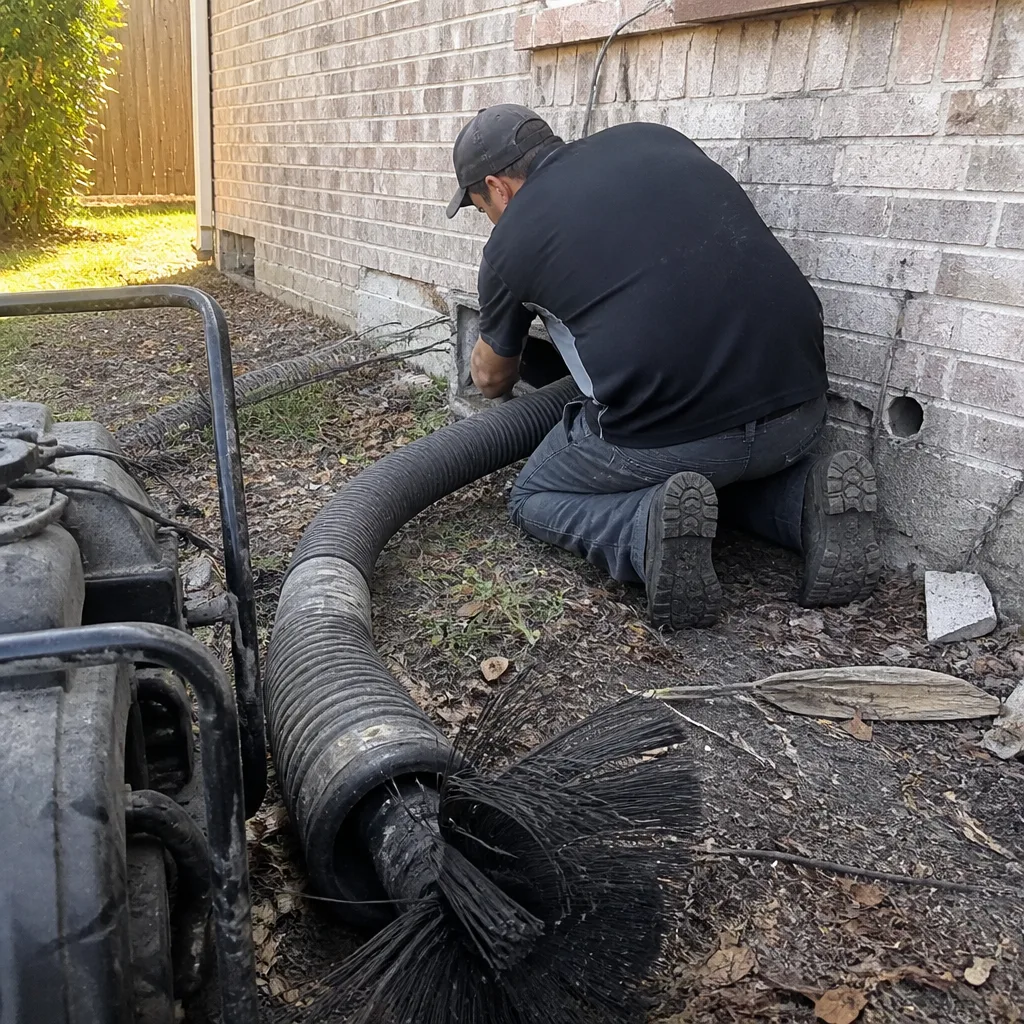 Before
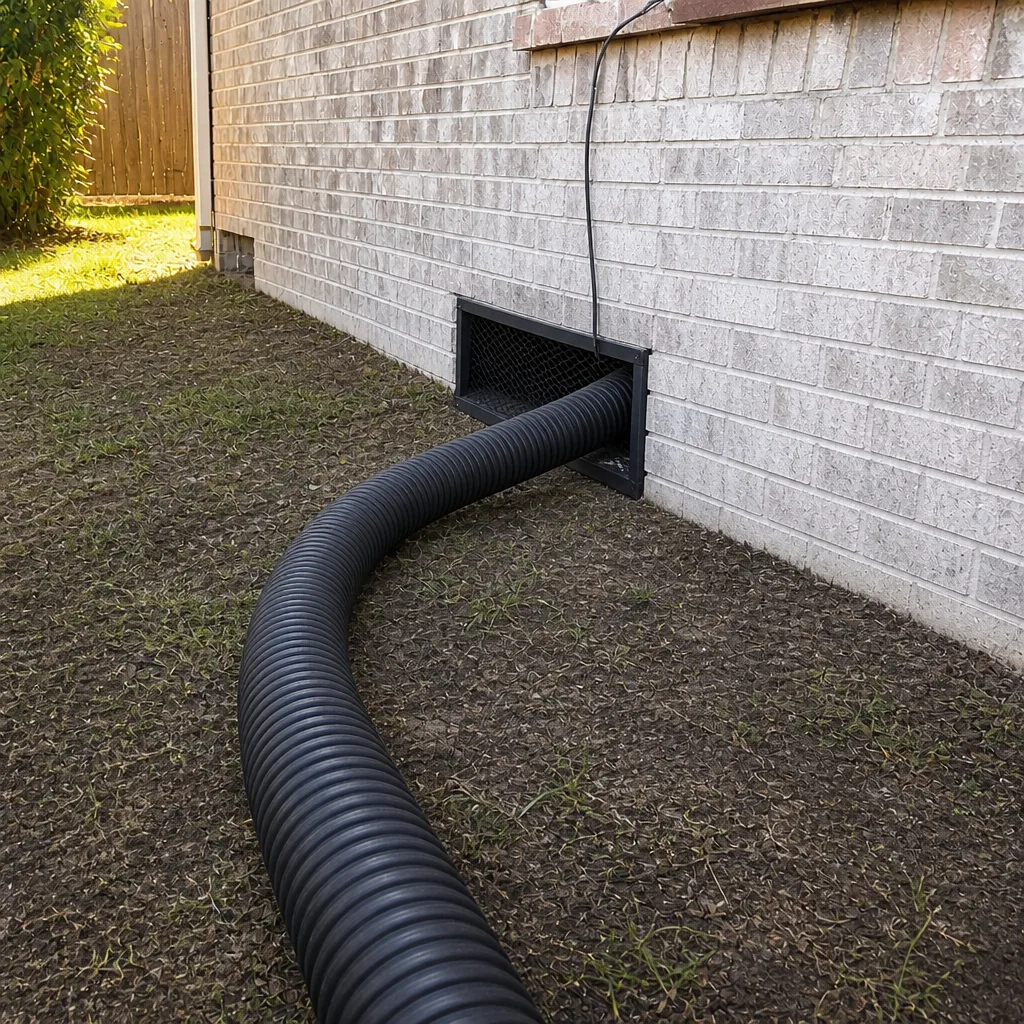 After
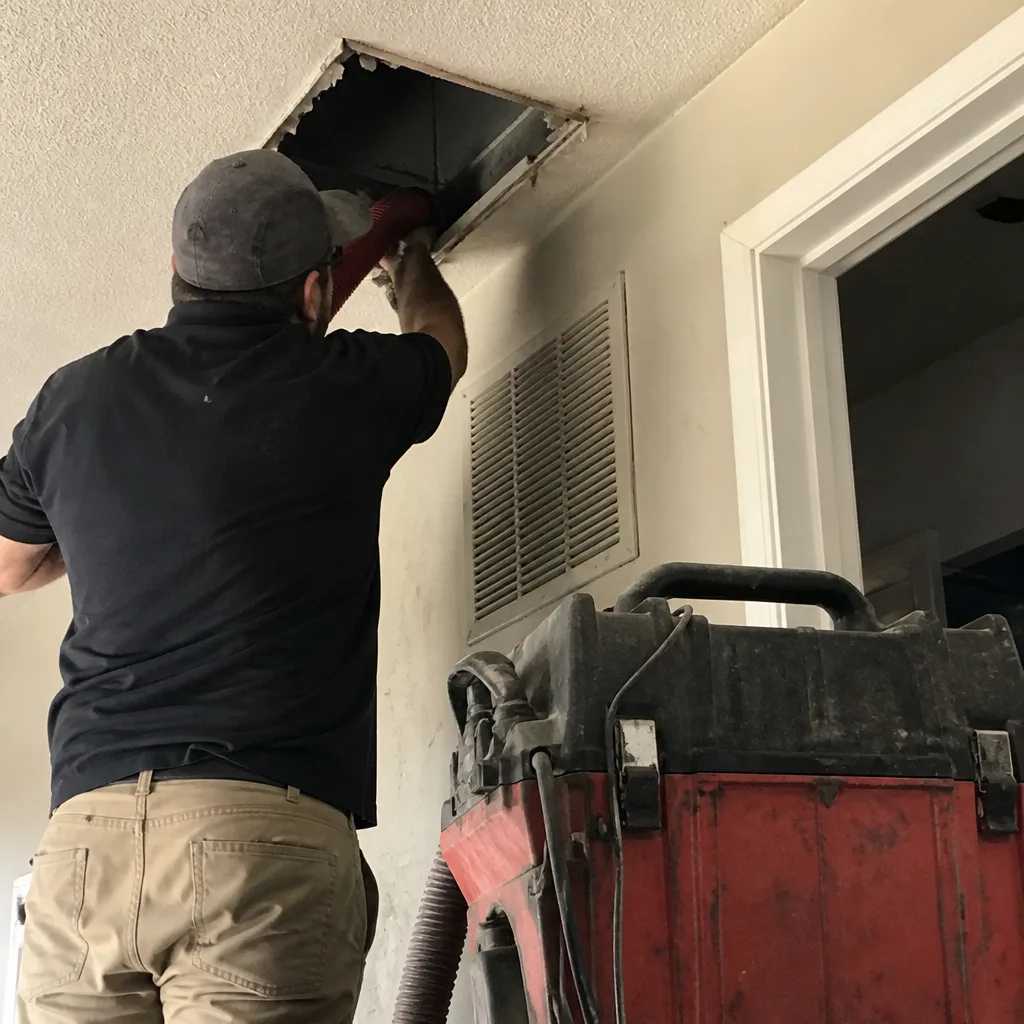 Before
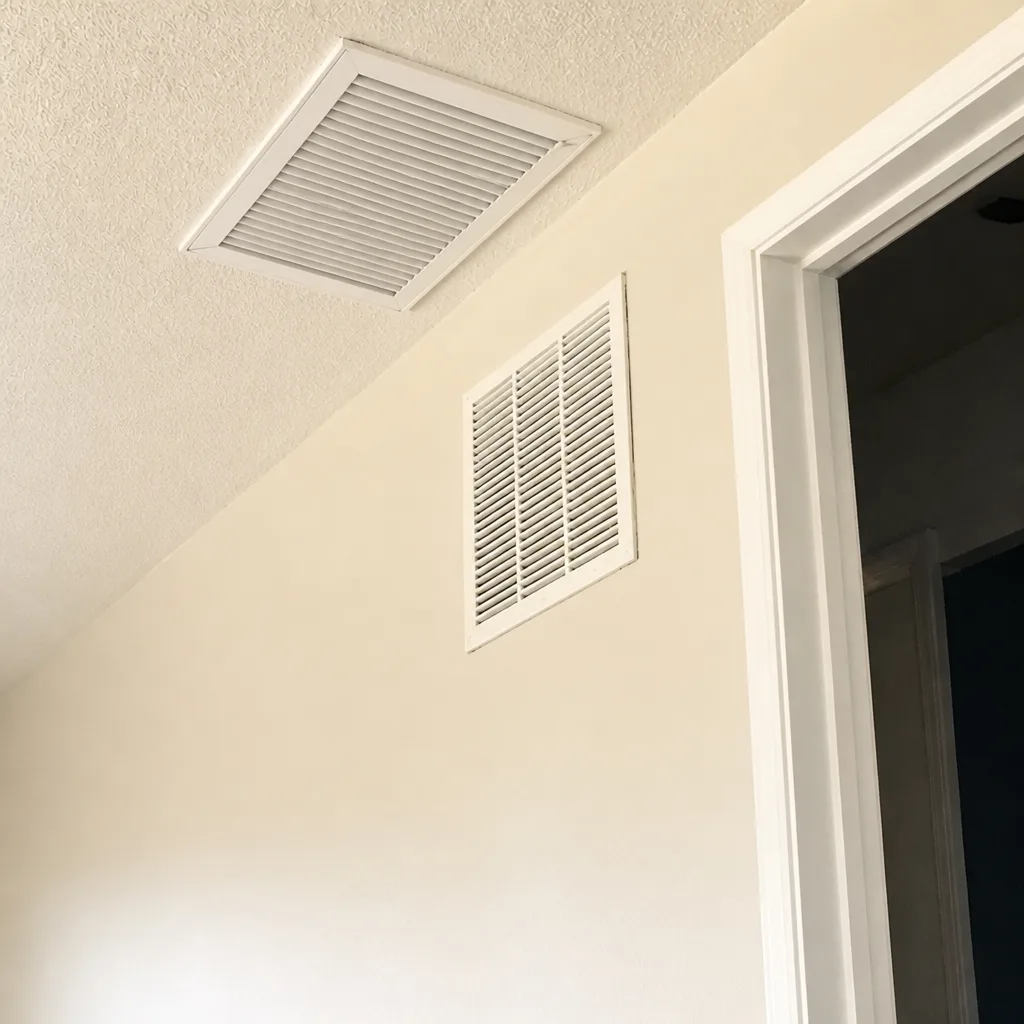 After
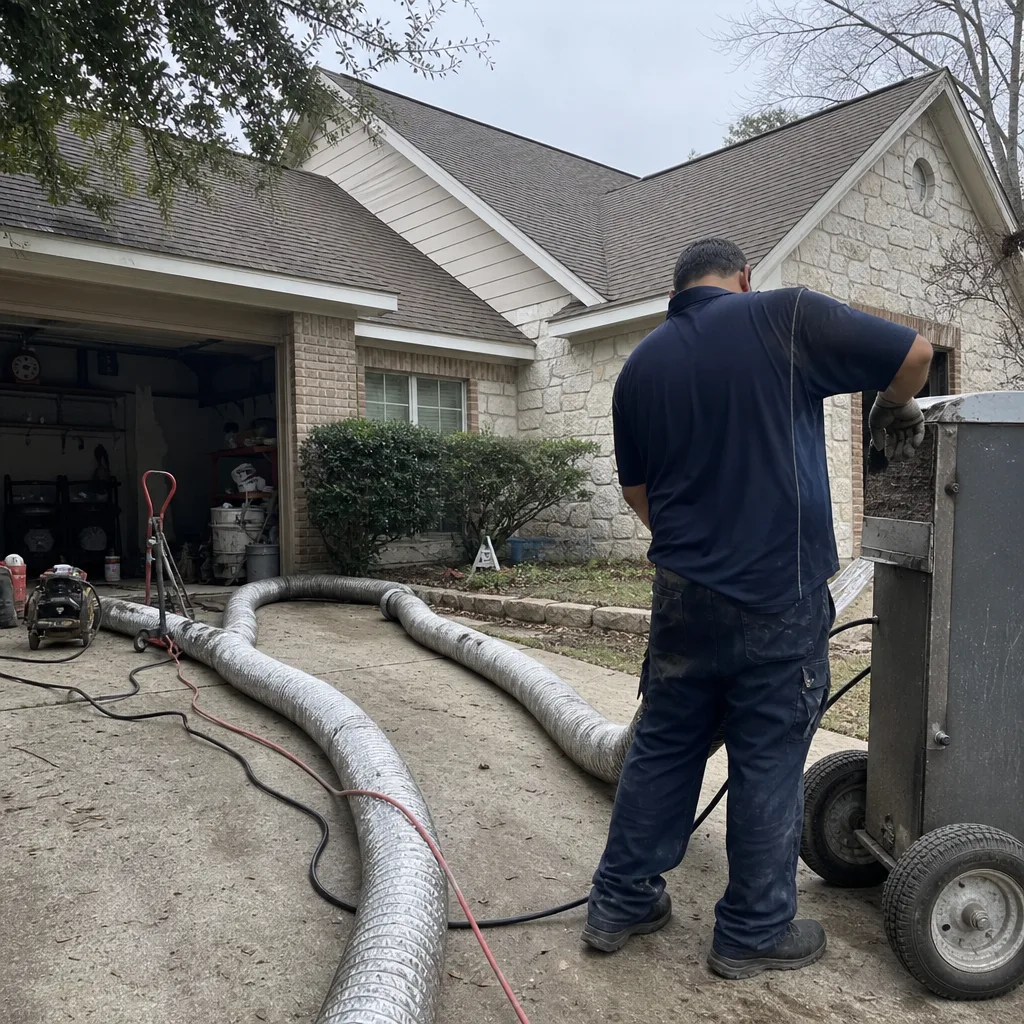 Before
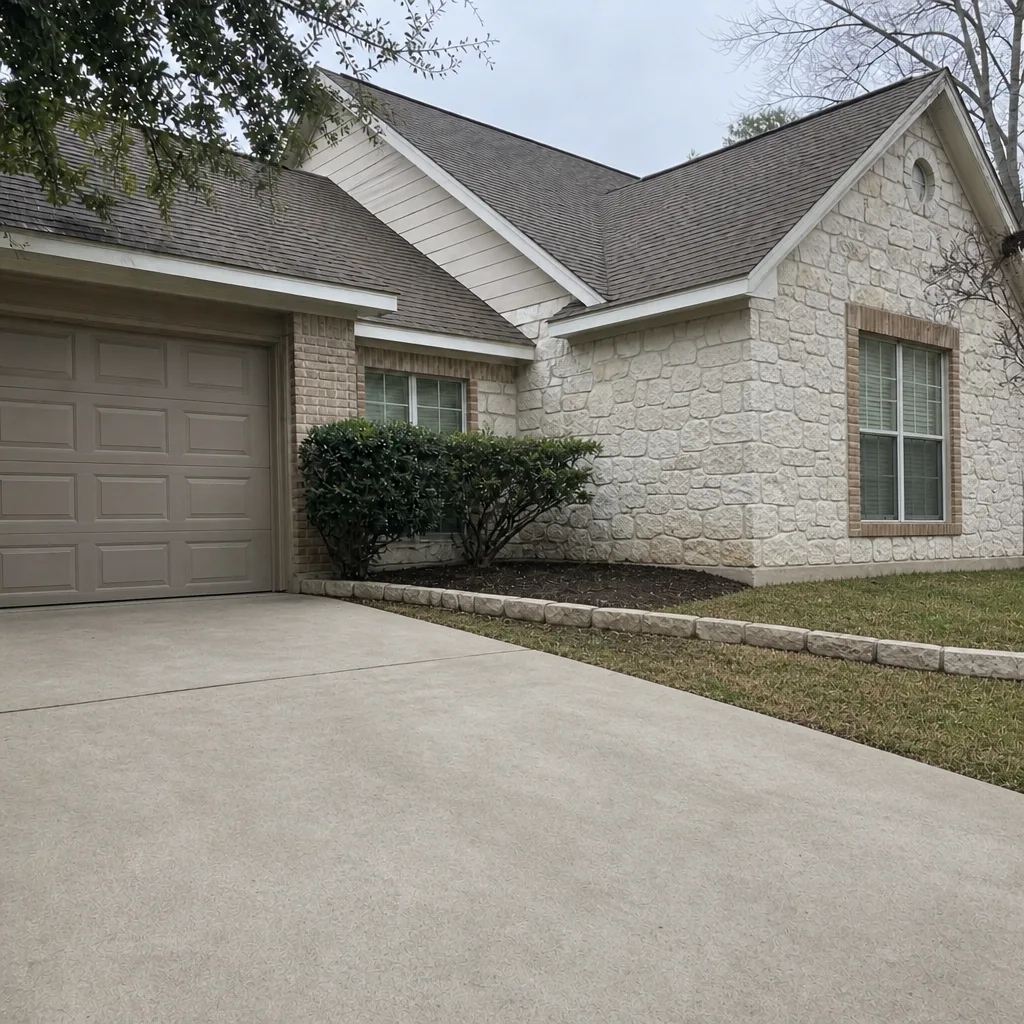 After
When to Call a Professional
Call a professional duct cleaning contractor in College Station when you notice visible dust discharging from supply registers, worsening allergy symptoms that track to the home’s air, or a system that’s been in service for years without inspection. Call when a dryer takes two cycles to dry a load, when air flow from registers feels weak or uneven room to room, or when you’re preparing a rental property for a new tenant and don’t know the duct history. Call if a remodel recently finished, or if you’re moving into an older College Station home with no service records. Bedrock Air Duct Cleaning offers free estimates in College Station – call (833) 588-6184. We answer 24/7. Fast dispatch from 7am to 7pm, Sunday through Friday. Our technicians have up to 10 years of experience on residential systems. For dryer vent cleaning, don’t wait for the dryer to overheat – lint accumulation builds quietly, and the vent is a genuine fire risk that deserves the same treatment as the ducts.
Frequently Asked Questions
There’s no single price for a duct cleaning because scope and equipment class vary so much by contractor, and we don’t quote teaser numbers. A legitimate quote is per-system, written down, and agreed before work starts. Expect it to reflect the whole system – supply, return, plenum, registers, air handler – not the number of vents. Call (833) 588-6184 for an exact quote. Estimates are free.
No. Texas does not license air duct cleaners, so no state agency vets training or equipment standards. That’s why your questions matter more than any badge or certificate. Focus on equipment brands (Rotobrush, Nikro, Abatement Technologies), written scope, and before-and-after documentation. Those are the levers you actually have.
Most homes in College Station do well with cleaning every few years, but the honest answer depends on the home, the occupants, and events like remodels or pet changes. If you’ve never had the ducts inspected, start with an assessment and let that guide the schedule. There’s no universal calendar – anyone quoting a fixed annual plan without looking is selling, not advising.
You’ll know because the contractor shows you before-and-after photos of your own ducts, documents the equipment used, and delivers a written summary of components cleaned. Request that documentation in the written scope before you sign. If it’s not promised up front, it won’t be delivered later.
Cheaper quotes usually mean narrower scope and lesser equipment. A single blower pass with no agitation, no negative pressure, and no post-cleaning verification costs the operator far less than a mechanical cleaning with remediation-class filtration. The quote is cheaper because the job is smaller. Sometimes that’s fine; often it isn’t. Call (833) 588-6184 to compare scopes side by side before you decide – estimates are free.
We clean, clear, and repair. Duct cleaning without repair capability leaves failures in place. Mechanical cleaning reveals detached joints and holes, and if the contractor can’t fix them, they’re inclined to clean past them. Our scope includes actual duct repair, quoted and documented like the cleaning itself. Call (833) 588-6184 for a free estimate.
The Bottom Line
The core of hiring a duct cleaning contractor in College Station is understanding that Texas puts the vetting burden on you. Ask the five technical questions. Demand the written scope with equipment class and components named. Insist on before-and-after photos of your own ducts. Reject per-vent pricing. Confirm the contractor can repair what they find and can quote dryer vent cleaning as a fire-safety service, not an upsell. Compare bids once every field is filled in, and the honest one will still look honest. Bedrock Air Duct Cleaning uses Rotobrush, Nikro, and Abatement Technologies equipment, works with Honeywell and Aprilaire air quality systems, and stands behind foundational duct system work in College Station. For a straight answer on any of this, call (833) 588-6184. We answer 24/7. Fast dispatch from 7am to 7pm, Sunday through Friday. Learn more about Bedrock Air Duct Cleaning and how we approach the work.
Written by the team at Bedrock Air Duct Cleaning.