
Last updated November 15, 2026
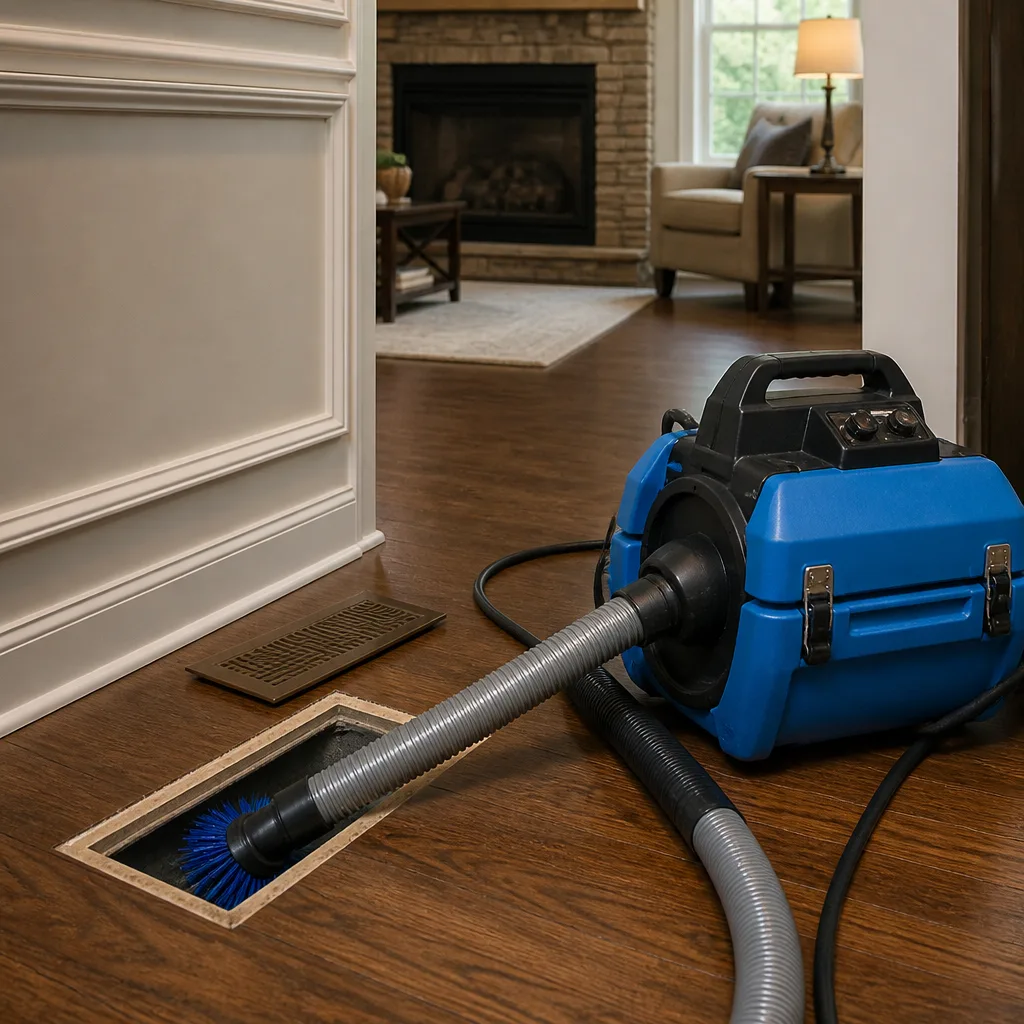 Whole-home duct cleaning
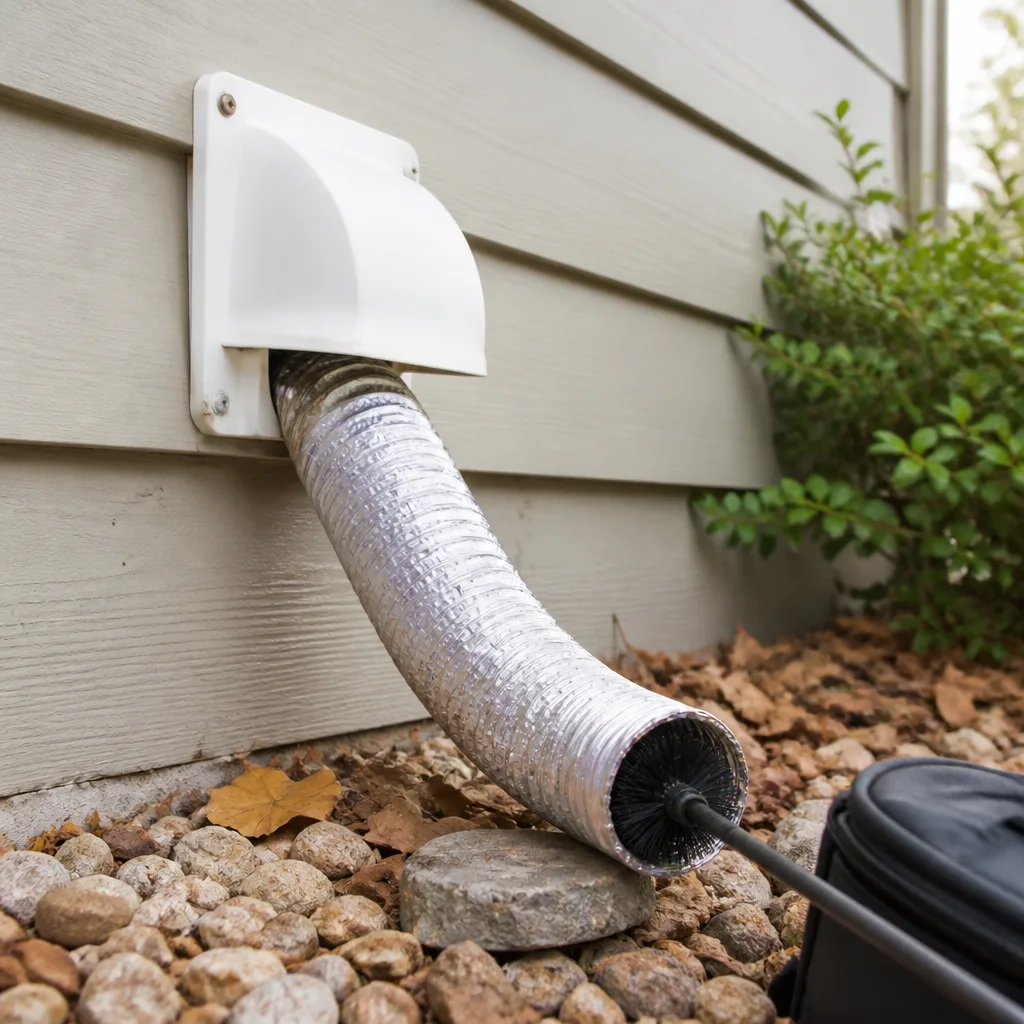 Dryer vent cleaning
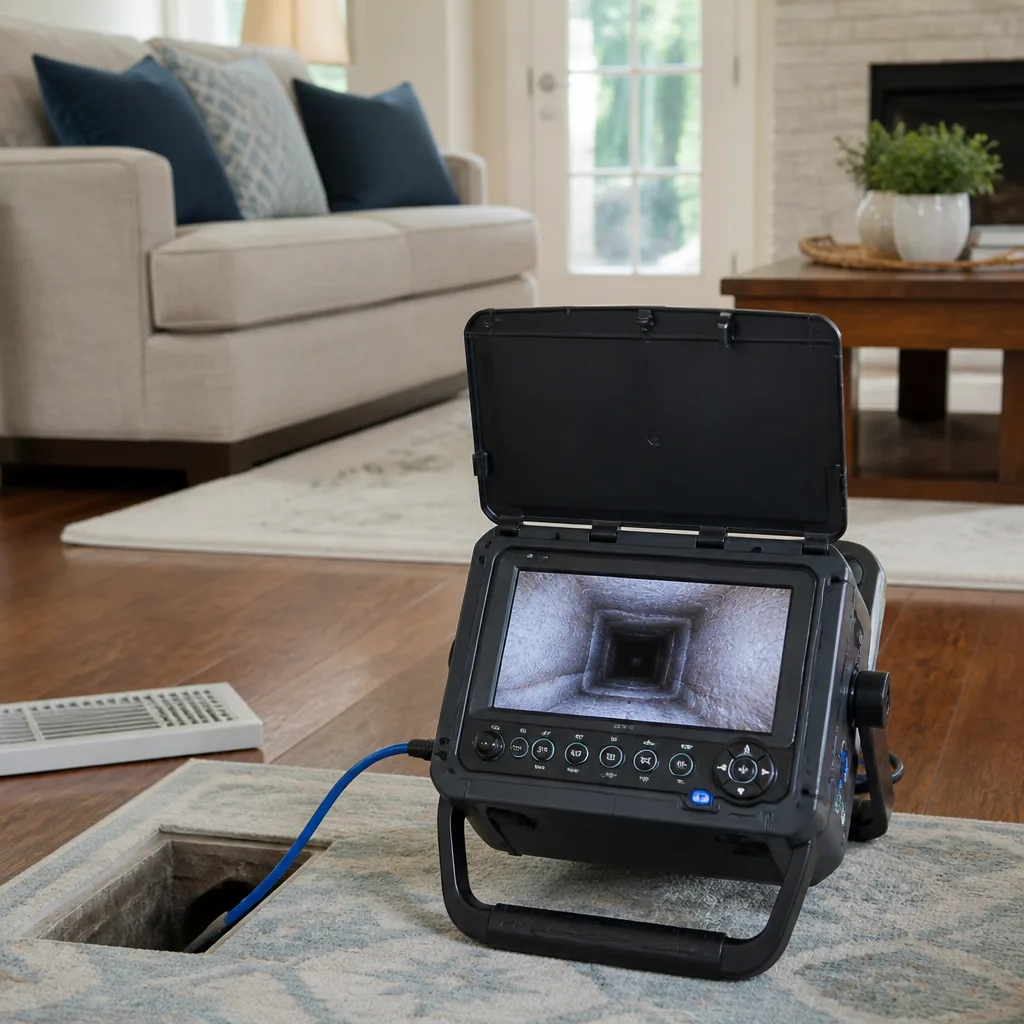 Camera inspection
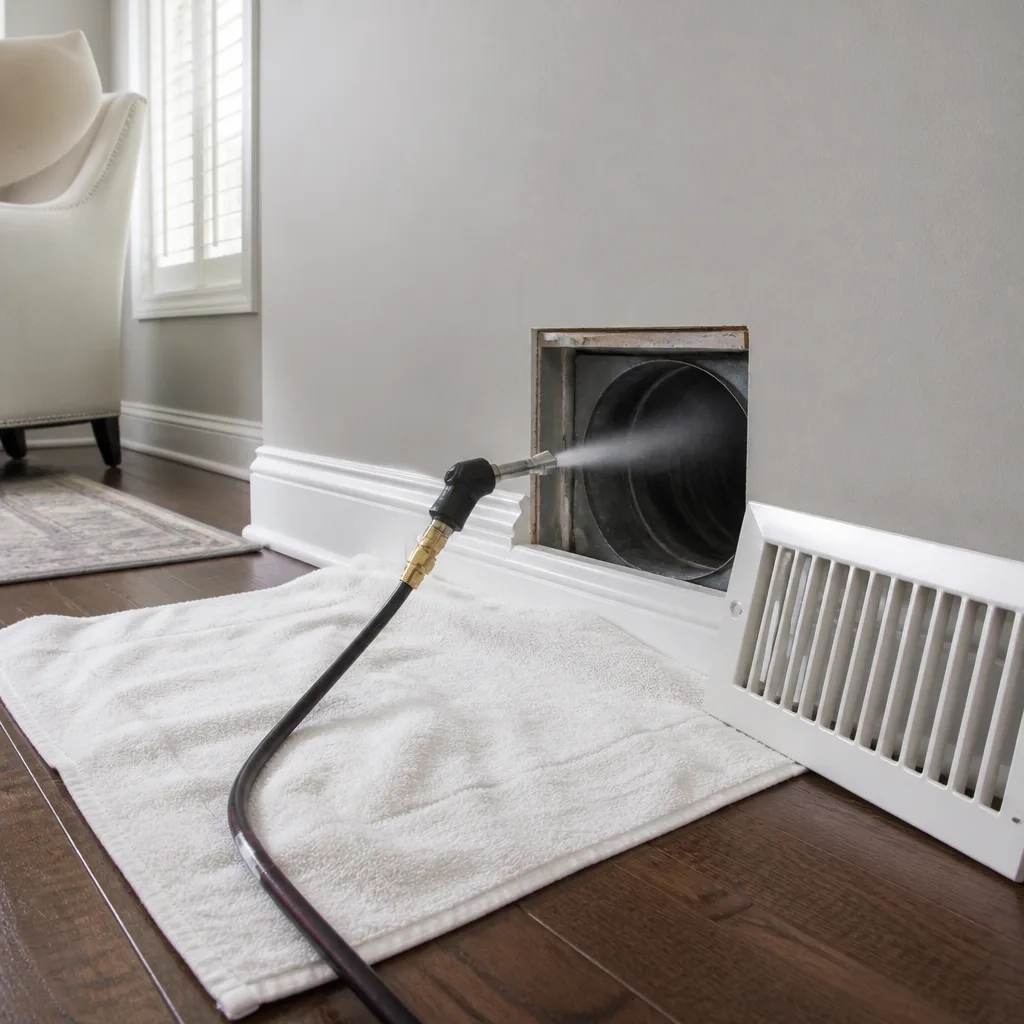 Sanitizing & deodorizing
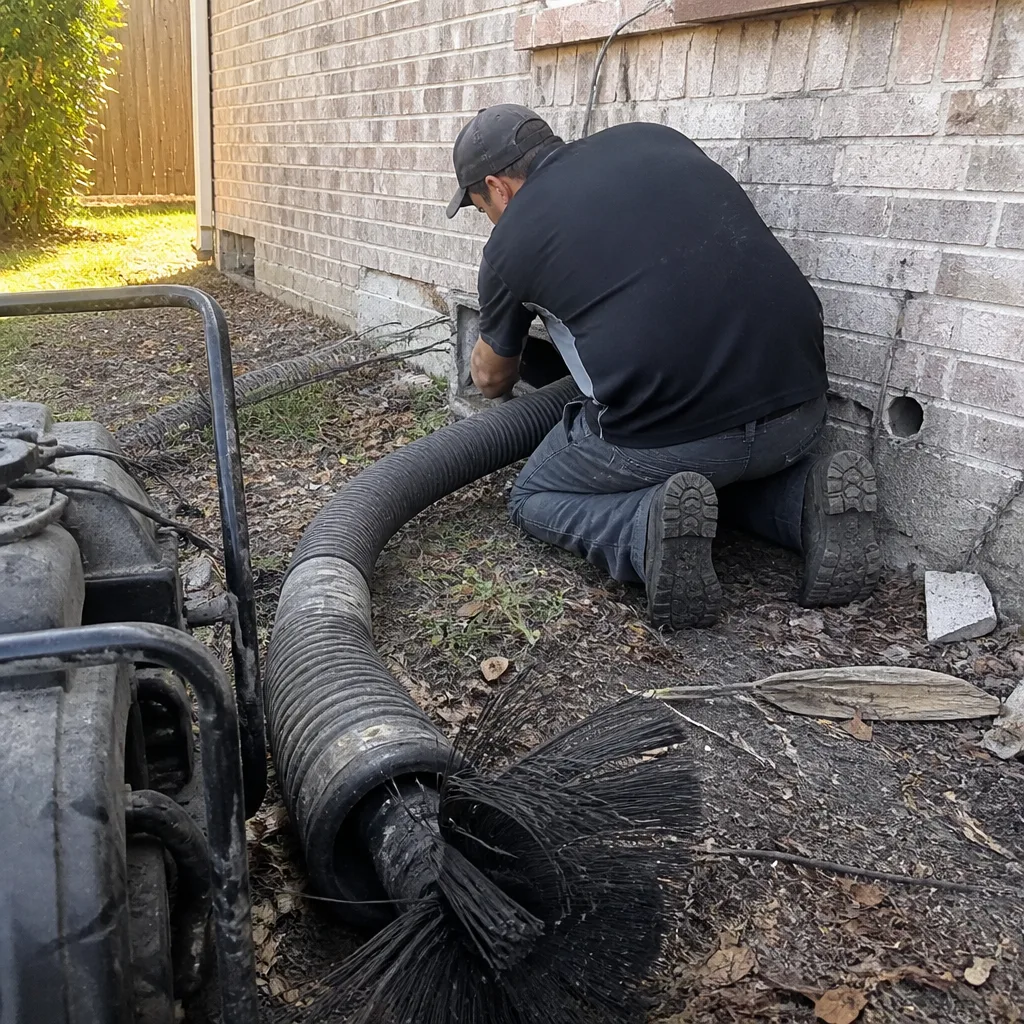
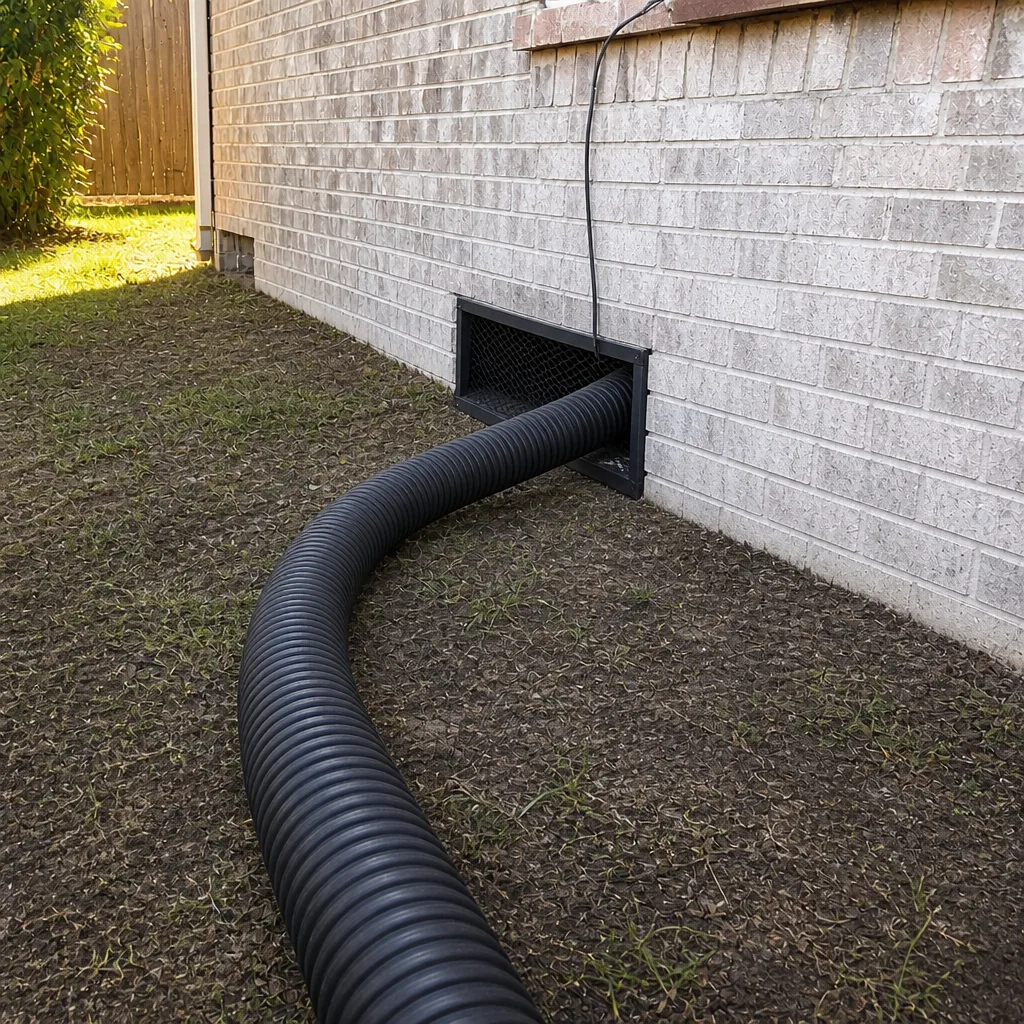
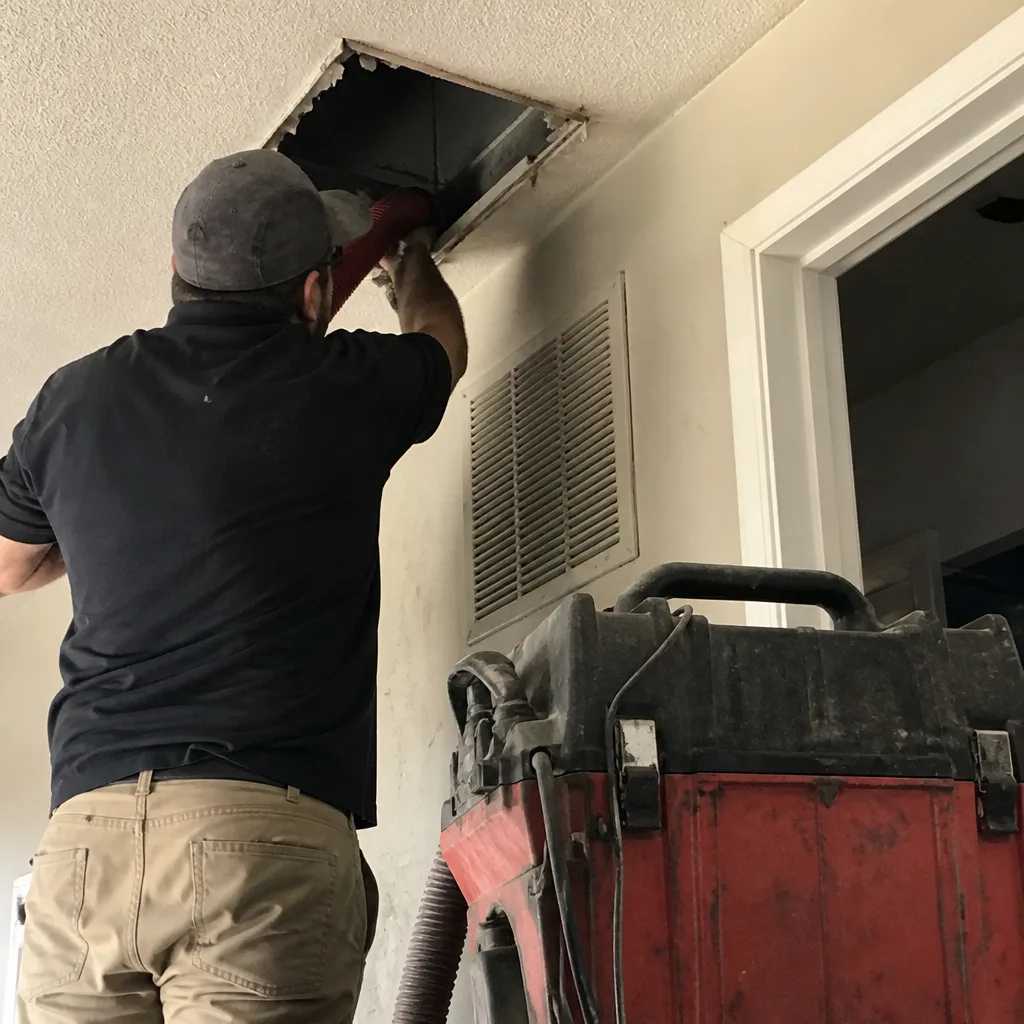
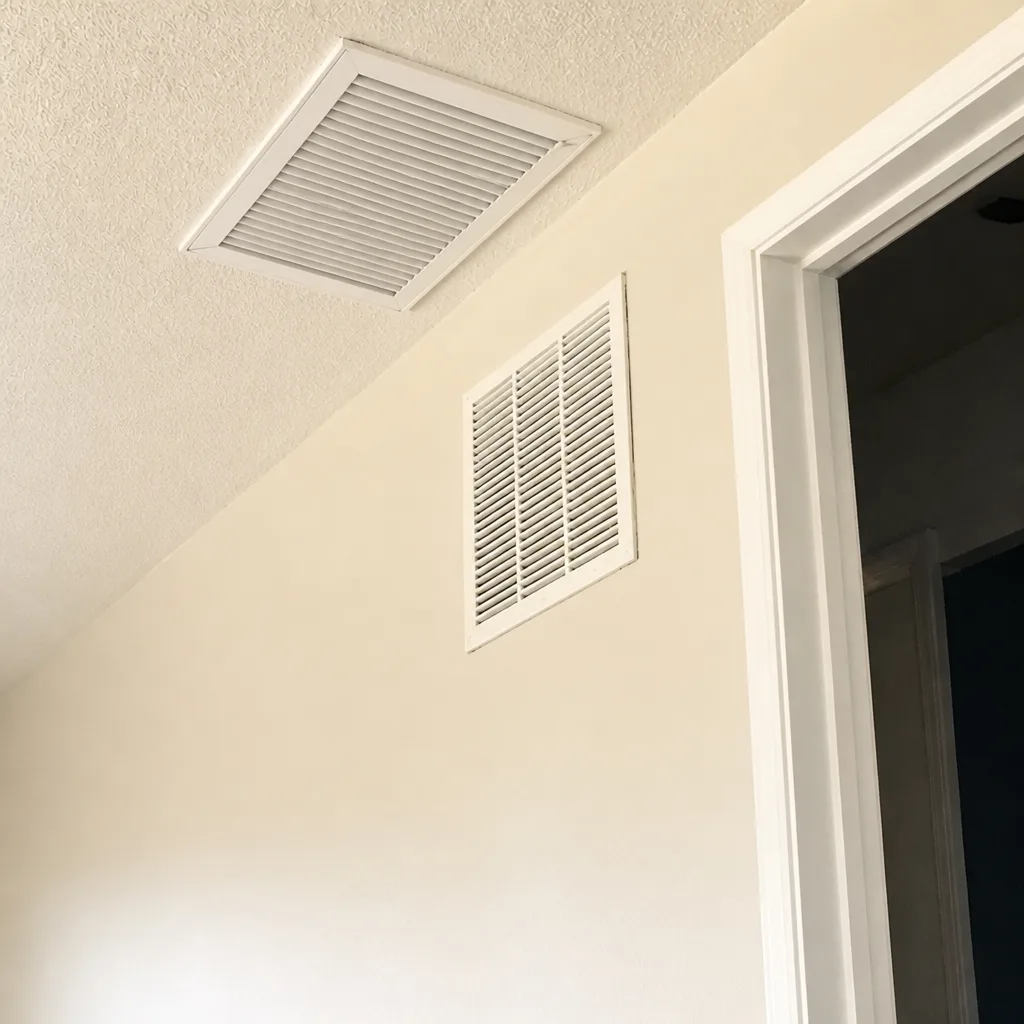
Whole-system duct and dryer vent check with before-and-after photos - you see exactly what came out of your vents
That "$99 whole-house special" is a bait ad - the real number appears once they are in your hallway, or the "clean" is a shop-vac at the register. We photograph the inside of your ducts before and after instead.
Air Duct Cleaning Cost Breakdown: The College Station Homeowner’s Reference for 2026
Most homeowners expect the quote for duct cleaning to land somewhere between $300 and $500. That expectation comes from a national average built on a scope that many remediation contractors consider incomplete. The figure usually covers a pass through the supply and return runs with a blower and vacuum, and it generally excludes the air handler, the evaporator coil, the drain pan, and any real mechanical agitation of the debris stuck to the duct walls. In College Station, where humid Gulf air keeps ducts damp for much of the year and new construction has spread fast across the south side of town, that national average often buys a cleaning that looks finished but isn’t. This guide breaks down what each dollar actually pays for: the equipment, the scope, the labor, and the add-ons that either matter or don’t. By the end you’ll know how to compare two quotes on written scope instead of bottom line.
Quick Answer
Air duct cleaning in College Station typically runs from around $300 to $500 for a basic single-system cleaning, $500 to $800 when the scope includes the air handler, coil, and drain pan, and north of $1,200 for full-system mechanical cleaning with remediation-class extraction. The $89 offers you see advertised are real prices for a real (tiny) scope. The number that matters is the written scope, not the headline price. Call (833) 588-6184 for a free estimate.
Styles & brands we work with
- Whole-home duct cleaning
- Dryer vent cleaning
- Camera inspection
- Sanitizing & deodorizing
Table of Contents
- What drives the cost in College Station?
- Line-item breakdown: what each dollar buys
- Why per-vent pricing is a red flag
- What remediation-class equipment costs to operate
- Legitimate add-ons versus upsells
- How to compare two quotes at different prices
- The full duct system lifecycle
- Common mistakes to avoid
- When to call a professional
What drives the cost in College Station?
Four variables separate a $300 job from a $1,200 job in College Station: the size of the conditioned space, the ratio of returns to supplies, whether the ductwork is flex or hard pipe, and how accessible the attic runs are. None of these is arbitrary. Each one translates into a specific number of hours of labor and a specific amount of equipment time.
Square footage matters because it sets the total linear feet of ductwork. A 1,400-square-foot house on a standard lot typically has fewer supply runs and shorter main trunks than a 3,200-square-foot home. More duct means more agitation time, more vacuum time, and more filter changes.
Return versus supply count is the number that surprises most homeowners. Returns carry far more air volume than supplies, so a return trunk takes noticeably longer to clean properly. A house with three large return grilles and a central return plenum can cost more to clean than a house with twice as many small supply vents.
Flex duct versus hard pipe changes the cleaning method. Flex duct has ridges that trap debris and requires gentler, more patient agitation to avoid tearing the inner liner. Hard metal pipe can take a more aggressive mechanical brush. Both can be cleaned well, but they’re not the same job.
Attic accessibility is the wildcard. In College Station, attic runs in older homes near the university are often cramped, hot, and obstructed by later plumbing or wiring work. A duct system that takes thirty minutes of attic work takes ninety when it’s packed tight. That difference shows up in the quote.
You’ll see all four of these reflected in the written scope of a professional estimate. If a quote doesn’t tie its price to those variables, it’s pricing the visit, not the work.
Line-item breakdown: what each dollar buys
Here’s how a professional-grade estimate in College Station actually breaks down. These are typical ranges, not quotes. The written estimate sets the final price, and it should reflect the specifics of your home.
| Line item | Typical estimated range | What it covers |
|---|---|---|
| Base duct cleaning (up to ~10 vents) | $300 – $500 | Mechanical agitation and negative-air extraction of all supply and return runs |
| Air handler and coil cleaning | $150 – $300 | Removing debris from the air handler cabinet and evaporator coil fins, cleaning the drain pan |
| Additional vents beyond base | $25 – $50 each | Each additional supply or return run beyond the base count |
| Sanitizer application | $100 – $250 | EPA-registered sanitizer applied after mechanical cleaning |
| Duct sealing (minor) | $200 – $500 | Sealing small gaps at joints and connections to reduce leakage |
| Duct repair (as needed) | $150 – $600+ | Reconnecting or replacing damaged sections of flex or hard pipe |
| Dryer vent cleaning | $100 – $200 | Full clearance of the dryer vent run from appliance to exterior termination |
Notice that the base price is the smallest line on the sheet for many homes. The air handler and coil alone can add 40% to a basic cleaning. That’s the piece the $300 national average leaves out. If your ducts get mechanically cleaned but the coil stays caked, you’ve paid for half a job.
All of these are estimates. Get them in writing, with the scope spelled out, before anyone touches your system.
Why per-vent pricing is a red flag
Per-vent pricing looks transparent. It isn’t. It prices the number of openings, not the amount of work. When a company charges per vent, its incentive is to spend as little time as possible at each opening and move to the next one.
What per-vent pricing misses:
- The main trunk lines. The big rectangular ducts that carry the bulk of the air often get skipped. A quick pass at each vent does nothing for the trunk that feeds them.
- The air handler. Debris collects in the cabinet, on the coil, and in the drain pan. None of that lives at a vent.
- Mechanical agitation. The debris that sticks to duct walls doesn’t come off with a blower vacuum alone. It has to be loosened with a rotating brush or air whip before it will move.
- The returns. Returns are the largest debris collection points and the least accessible. A per-vent price usually undersells the return work.
Scope-based flat pricing works the other way. The price reflects the total system: how many runs, whether the air handler and coil are included, how accessible the attic is, and how much mechanical agitation the ductwork needs. A company that prices by whole system has no reason to rush, because the price doesn’t change with speed.
When you see per-vent pricing on a quote, ask what the total will be for your specific system. That question alone separates the two pricing models.
What remediation-class equipment costs to operate
The biggest reason low-bid and professional-grade cleaning land at different prices has nothing to do with the labor rate. It’s the equipment. A shop vacuum and a modified blower will pass debris through a duct. They won’t do what a Rotobrush or Nikro mechanical cleaning system does, and they can’t match the extraction that comes from Abatement Technologies negative-air and HEPA-filtration tools. Those are the same class of equipment used in professional remediation work.
That equipment carries real operating costs:
- Rotobrush and Nikro brushes, whips, and drive cables wear out and get replaced regularly.
- HEPA filters are consumables and can’t be reused once they load up.
- Negative-air setups pull significant power and require maintenance between jobs.
- The systems are heavy and awkward in tight attics, which slows the work relative to a shop vac pass.
That’s the honest reason a professional-grade cleaning costs more than an $89 coupon. There’s a real cost to operating that equipment, and someone has to pay it. The company that charges $89 either isn’t using that equipment or isn’t doing that scope. Either way, you’re not getting it.
We run this equipment because the alternative isn’t a thorough cleaning. Rotobrush and Nikro systems loosen what a blower leaves behind, and the Abatement Technologies setup captures it instead of redistributing it into the living space. On a humid College Station afternoon, when ducts are already carrying moisture, that extraction difference is the whole point.
Legitimate add-ons versus upsells
Some add-ons genuinely improve the outcome. Others exist to raise the invoice. The distinction is measurable: a legitimate add-on produces a result you can verify with before-and-after photos or a visible improvement in airflow and system function.
Legitimate add-ons:
- Coil cleaning. The evaporator coil in the air handler collects dust continuously. Clean coils outperform dirty ones on every measurable parameter, and improved cooling efficiency is a documented outcome.
- Sanitizer application. EPA-registered sanitizers applied after mechanical cleaning reduce microbial growth on damp surfaces. Worth discussing if you’ve had a moisture problem or a lingering odor.
- Duct sealing at major disconnections. When a duct has partially separated at a joint, sealing it is a repair, not an upsell. You’ll see the connection in the photos.
- Drain pan cleaning. Debris in the drain pan can promote standing water. It’s part of air handler service, not separate.
Add-ons worth questioning:
- Any treatment sold without mechanical cleaning first. Sanitizer sprayed on top of caked dust does nothing lasting.
- Air purifiers pitched mid-visit as a solution to a duct problem. That’s a separate discussion, involving separate equipment like Honeywell or Aprilaire air-quality platforms, and it doesn’t belong on a duct-cleaning invoice.
- “Enzyme treatments” or “duct coating” recommended for every home regardless of condition.
- Any add-on where the technician can’t show you, in a photo, why your specific system needs it.
The test is simple. A legitimate add-on has a clear mechanical rationale and a visible result. If it doesn’t, it’s an upsell.
How to compare two quotes at different prices
You have two estimates: one at $350 and one at $750. The cheap quote isn’t necessarily a scam, and the higher one isn’t automatically better. The only way to know is to compare the written scope line by line.
Here’s the comparison we recommend to every College Station homeowner who asks:
- Check whether the air handler and coil are included. This single line accounts for most of the price gap between a basic and a complete cleaning. If the higher quote includes them and the lower one doesn’t, they may not be that different in price per unit of work.
- Check whether returns and trunk lines are included. A quote that lists “10 vents” and one that lists “all supply and return runs plus trunks” are describing different jobs.
- Ask what mechanical agitation method is used. Rotating brush, air whip, or compressed air. If the answer is “vacuum,” ask what loosens the debris first.
- Ask what gets photographed. Before-and-after photos of your own ductwork are how you verify the work was done. A company that can’t provide them isn’t showing its work.
- Ask whether testing and inspection are included. A proper inspection identifies damaged duct sections, disconnected joints, and hidden moisture problems. If those exist, no cleaning will fix the symptom without repair.
- Ask how change orders are handled. If unexpected issues come up (a damaged flex run, a disconnected joint), how are they priced? A written scope that handles change orders in advance is a sign the company is pricing the job, not the surprise.
Compare scope first, then price. Two quotes at the same price can describe wildly different work. Two quotes at very different prices might not.
The full duct system lifecycle
Duct cleaning is one event. A duct system is a working mechanical assembly that needs care across its whole life: clean, clear, and repair. Treating any one of those as the whole job leaves the underlying problem in place.
Clean. Mechanical cleaning of the ductwork, air handler, and coil is the base service. It’s the piece that most homeowners think of as “duct cleaning.” It’s the starting point, not the end.
Clear. The dryer vent is part of the air system, and it’s the leading fire hazard in residential laundry setups. Lint accumulates on the interior wall of the vent and around the exterior termination. When it clogs, dryers overheat and can ignite the accumulated lint. Dryer vent cleaning is a distinct service that treats a real safety issue, not an optional add-on.
Repair. Duct systems develop leaks, disconnected joints, and crushed sections. Flex duct can sag or collapse. Hard pipe can separate at seams. A cleaning that leaves these in place is incomplete. Repair is what makes the cleaning matter.
We offer all three because a service that only cleans can’t fix a system that needs repair, and a service that only repairs can’t remove the debris that caused the problem. If you’re going to have a professional out for one, it’s worth having the whole system looked at.
Our technicians have up to 10 years of experience, and they work with Honeywell and Aprilaire air-quality platforms. Understanding what happens downstream of the duct matters, because duct work and air quality are part of the same system.
Common mistakes to avoid
- Hiring on price alone. The cheapest quote usually reflects the smallest scope, not a better deal. Ask what’s included before comparing dollar figures.
- Assuming the air handler is covered. Most basic quotes exclude it. In a humid College Station climate, the coil and drain pan are exactly where biological growth and debris concentrate. Confirm they’re on the scope.
- Accepting per-vent pricing without asking what it excludes. Per-vent pricing often skips the trunk lines and returns entirely, which are the largest debris collection points. Ask for the total for the whole system.
- Skipping the dryer vent. Homeowners who clean their ducts often leave a dryer vent untouched for years. Lint accumulation is a documented fire hazard and takes a dedicated service to clear properly.
- Skipping the inspection. A cleaning done without looking for damaged or disconnected duct sections can leave a leak undiscovered. Cleaning dirty ducts with a two-inch gap won’t fix the airflow problem the gap is causing.
- Believing a seasonal schedule. Duct cleaning isn’t a yearly obligation. It depends on the system’s condition, your home’s airflow behavior, and any recent renovation. Get an inspection and let the findings decide the interval.
- Not asking for photos. Before-and-after photos of your own ducts are how you verify the work was done. If the company doesn’t provide them, you have no way to know.
When to call a professional
Some duct problems are obvious. You see visible dust blowing from a vent after the system kicks on. You notice dust accumulating on surfaces faster than usual. You have a persistent musty odor in the house that heating and cooling don’t clear. You’ve just finished a major renovation that stirred up drywall dust and debris. Or you’ve never had your ducts looked at and you don’t know their condition. In any of those cases, an inspection tells you whether cleaning is needed and what scope makes sense.
Other signs are less obvious but just as real. Your dryer takes noticeably longer to dry a load, which suggests lint accumulation in the vent. A room stays warmer than the rest of the house even when the system runs, which can point to a disconnected or damaged duct section. You hear whistling or rattling at a vent, which usually means a leak or a loose connection. None of these get better on their own.
Bedrock Air Duct Cleaning offers free estimates in College Station. Call (833) 588-6184. We answer 24/7. Fast dispatch from 7am to 7pm, Sunday through Friday.
See the difference
 Before
 After
 Before
 After
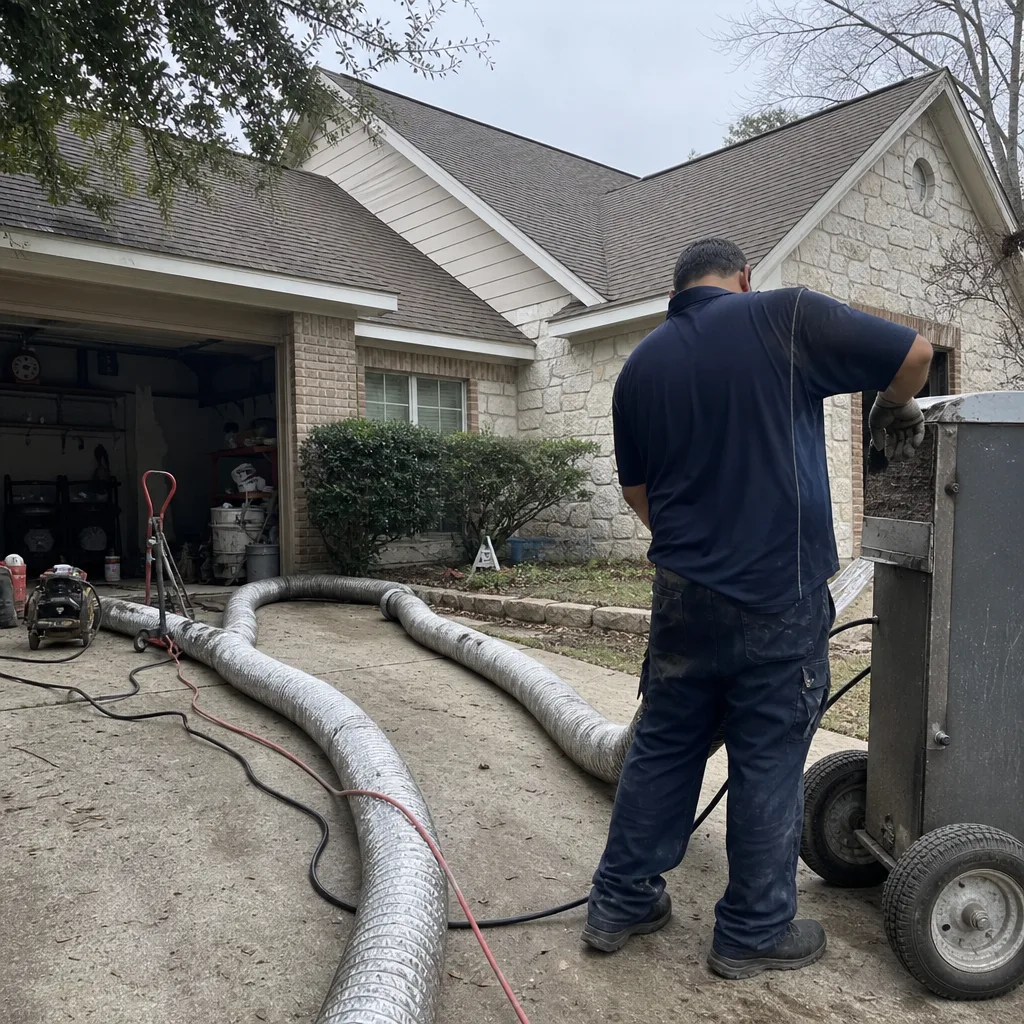 Before
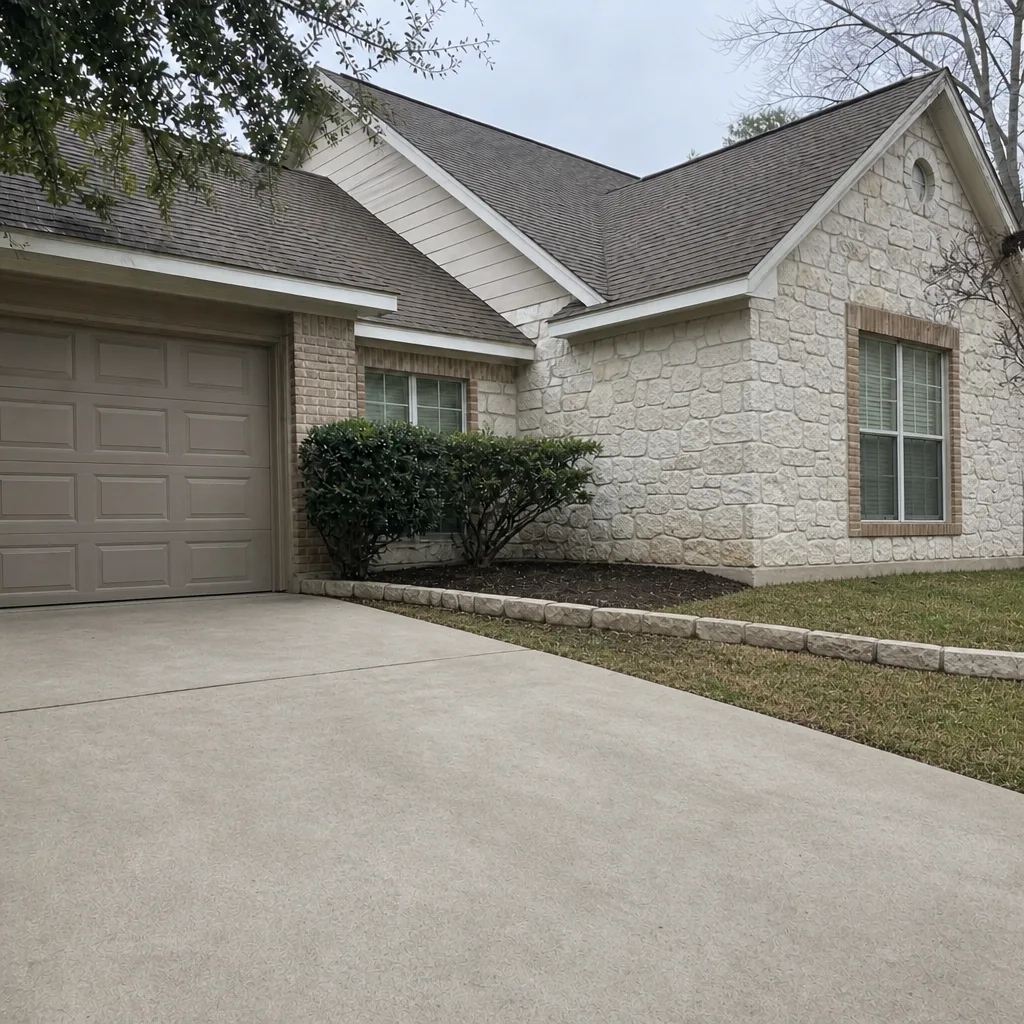 After
Frequently Asked Questions
Typical estimates run from around $300 to $500 for a basic single-system cleaning, $500 to $800 with air handler and coil service included, and $1,200 or more for full-system mechanical cleaning with remediation-class extraction. The written estimate sets the final price. Call (833) 588-6184 for a free estimate.
Because the scope is smaller. An $89 quote typically covers a single blower-and-vacuum pass at each vent, with no mechanic
al agitation, no trunk line work, and no air handler or coil. It’s a real price for a real (limited) scope. The way to compare is to put the scope side by side, not the price. Call (833) 588-6184 to get a written scope for your home.
Before-and-after photos of your own ductwork. A professional service provides them, and the difference between a dirty run and a clean one is visible. If a company can’t show you photos of your own system, you have no way to verify the work. Call (833) 588-6184 and ask for photos of your duct system as part of the estimate.
There’s no fixed interval. Duct cleaning depends on the condition of your system, the amount of dust your home generates, and any recent renovations or water events. Most homes need it every few years at most; many go longer. An inspection tells you what your specific system needs. Call (833) 588-6184 for a free inspection and estimate.
Cleaning removes debris. Repair fixes physical problems: disconnected joints, crushed flex runs, and damaged sections. Some duct problems can’t be solved by cleaning alone, and leaving a damaged section in place defeats the purpose of the cleaning. Our air duct cleaning scope covers both when needed. Call (833) 588-6184 for an estimate that covers the whole system.
Yes, if it’s been more than a year or your dryer is taking longer to dry. Lint accumulation in the dryer vent is a leading fire hazard, and it’s a separate service from duct cleaning. We treat it that way because it’s a safety issue, not an upsell. Call (833) 588-6184 for a free estimate on dryer vent cleaning.
The Bottom Line
Air duct cleaning in College Station costs what it costs because of scope and equipment. A $300 basic cleaning and a $1,200 full-system cleaning are both honest prices. The difference is whether the air handler, coil, and drain pan are included, whether returns and trunk lines are covered, and whether mechanical agitation loosens what’s stuck to the duct walls. Per-vent pricing is a red flag. Flat, scope-based pricing is the model that lets a company do the work properly without rushing. Compare quotes on written scope. Ask for before-and-after photos. Get an inspection that covers the whole system. Bedrock Air Duct Cleaning connects College Station homeowners with independent local professionals using professional-grade Rotobrush, Nikro, and Abatement Technologies equipment. Call (833) 588-6184 for a free estimate.
For a full look at our College Station service area, visit our main page. You can also read more about Bedrock Air Duct Cleaning and how we approach complete duct system care.
Written by the team at Bedrock Air Duct Cleaning.