
Last updated November 15, 2026
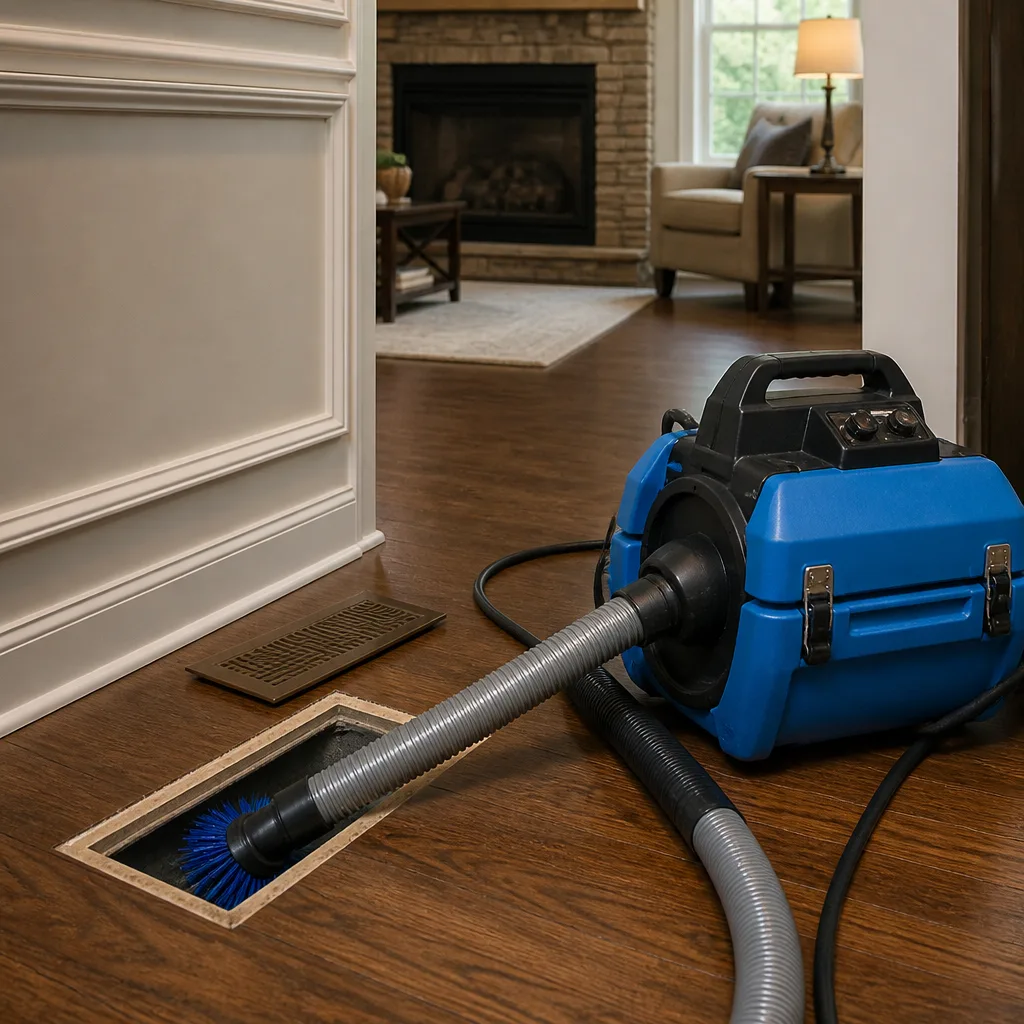 Whole-home duct cleaning
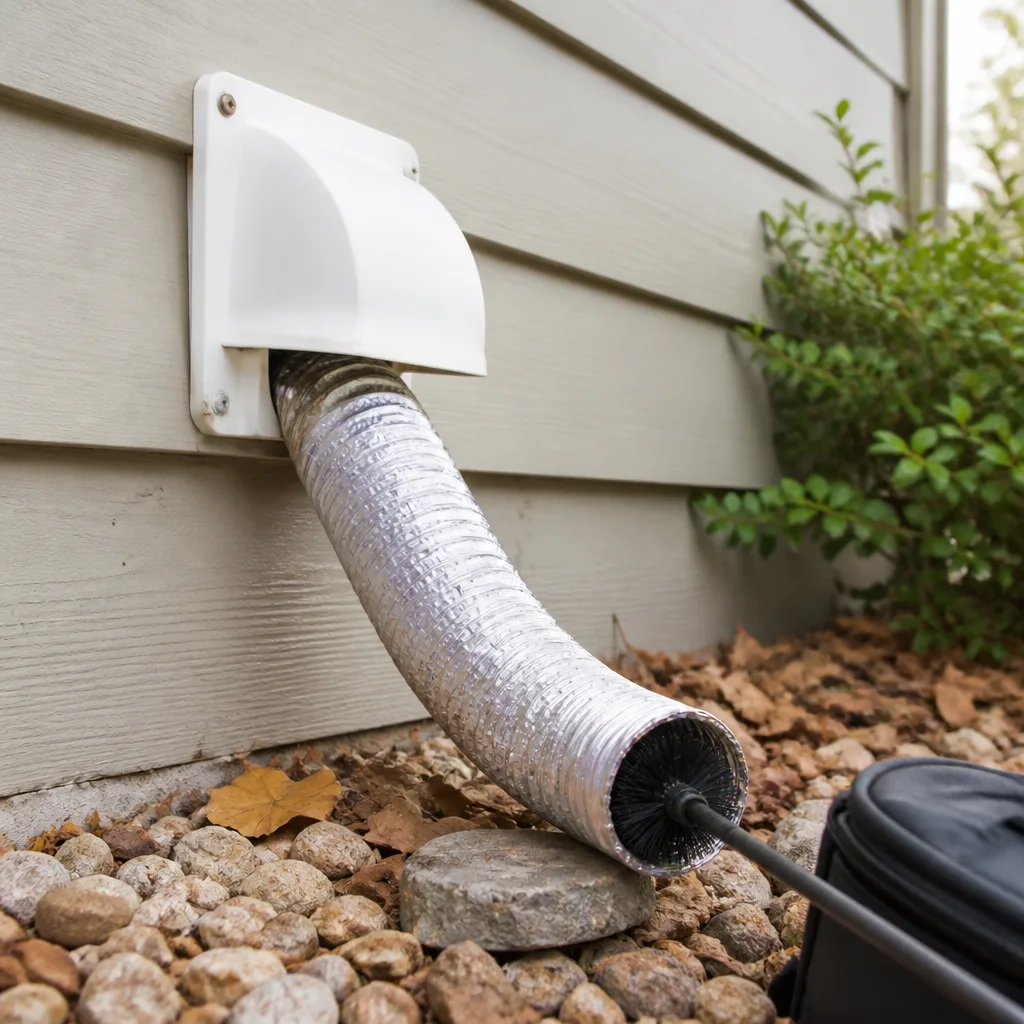 Dryer vent cleaning
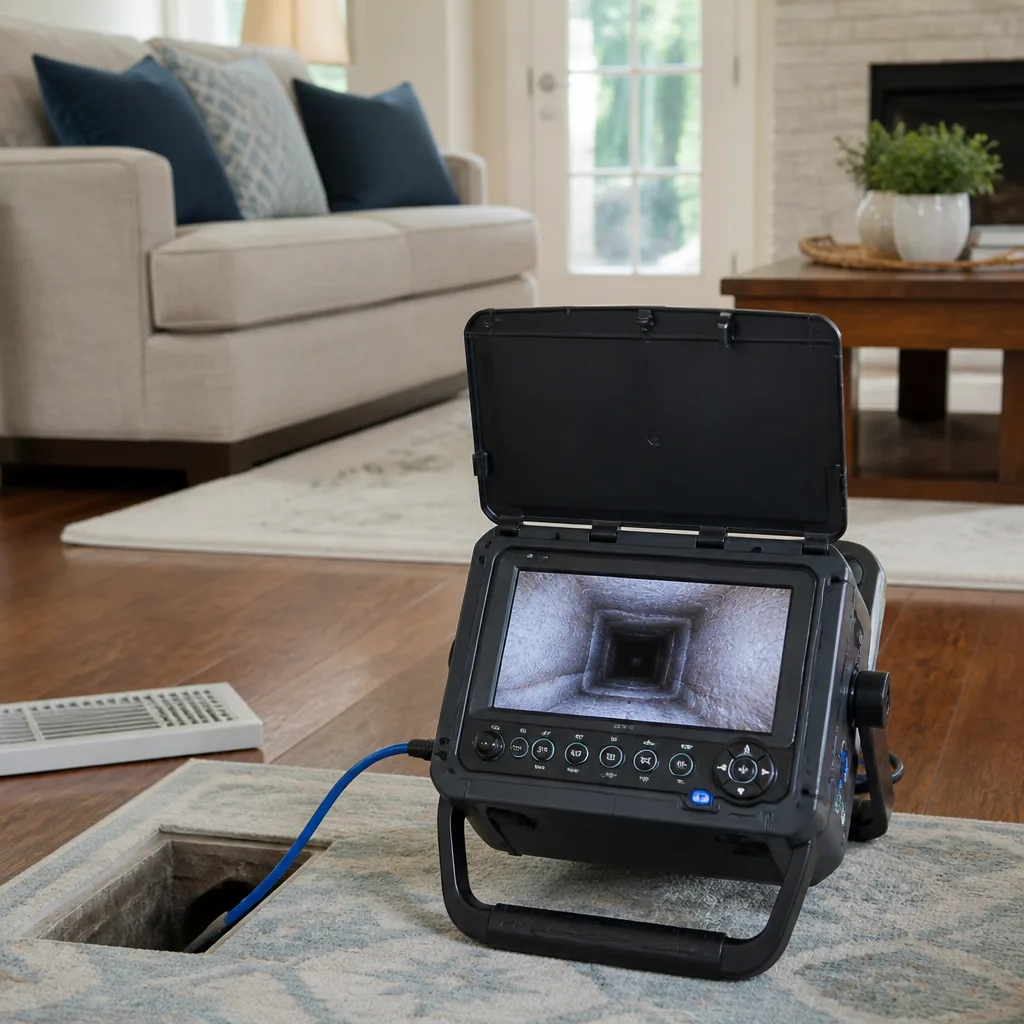 Camera inspection
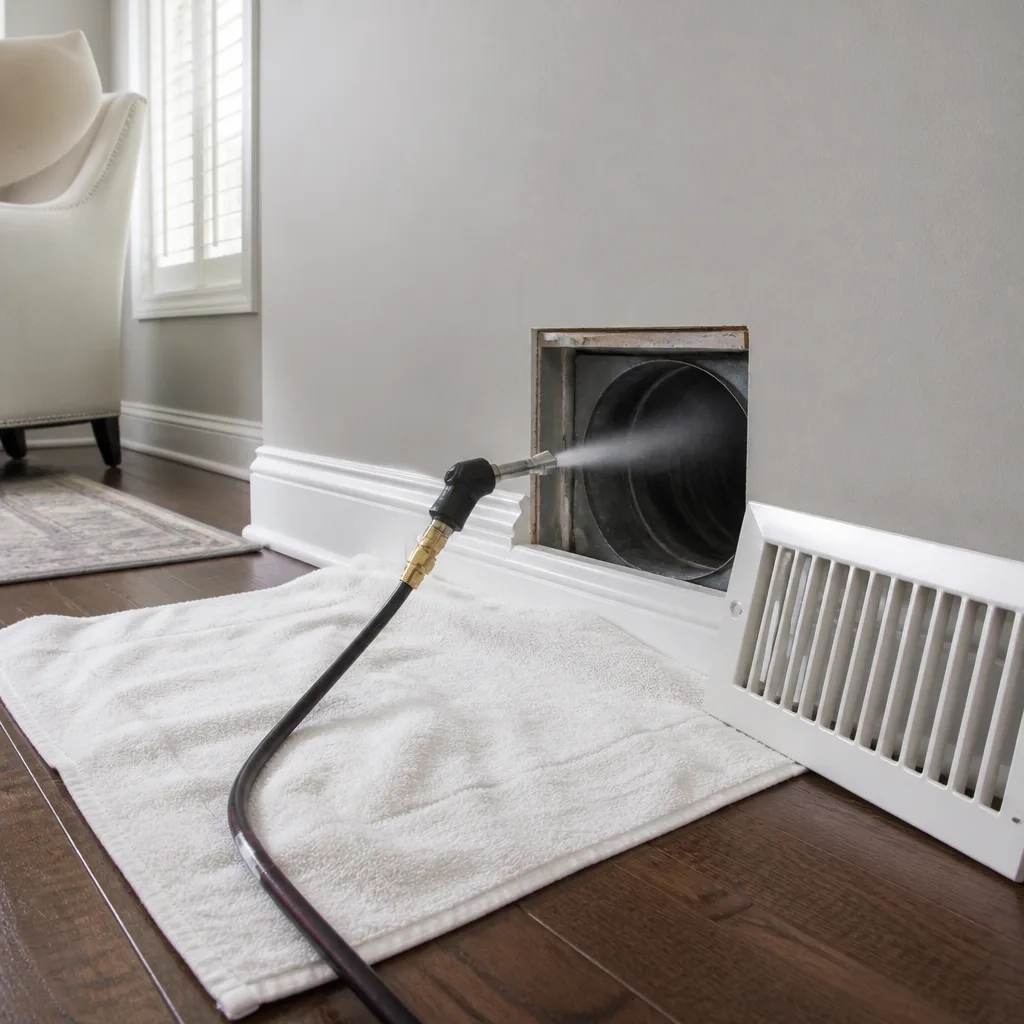 Sanitizing & deodorizing
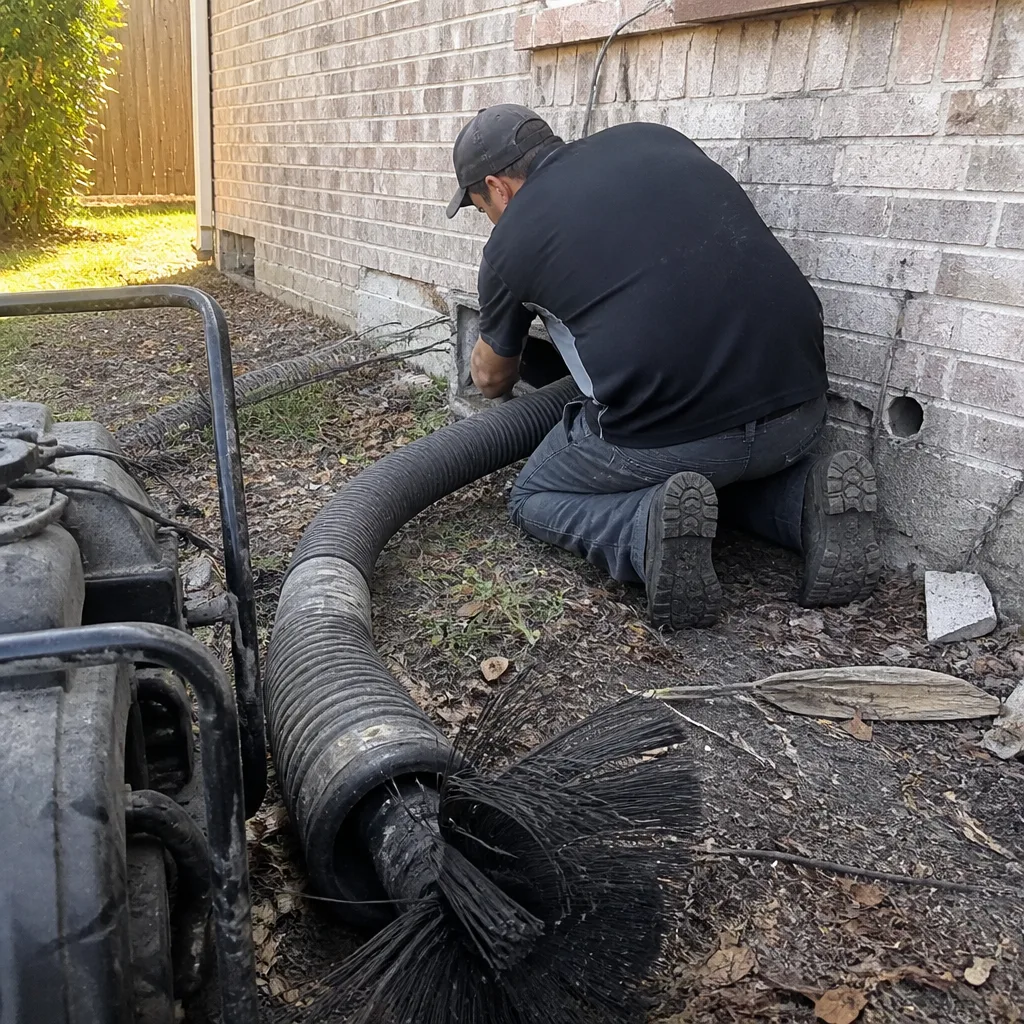
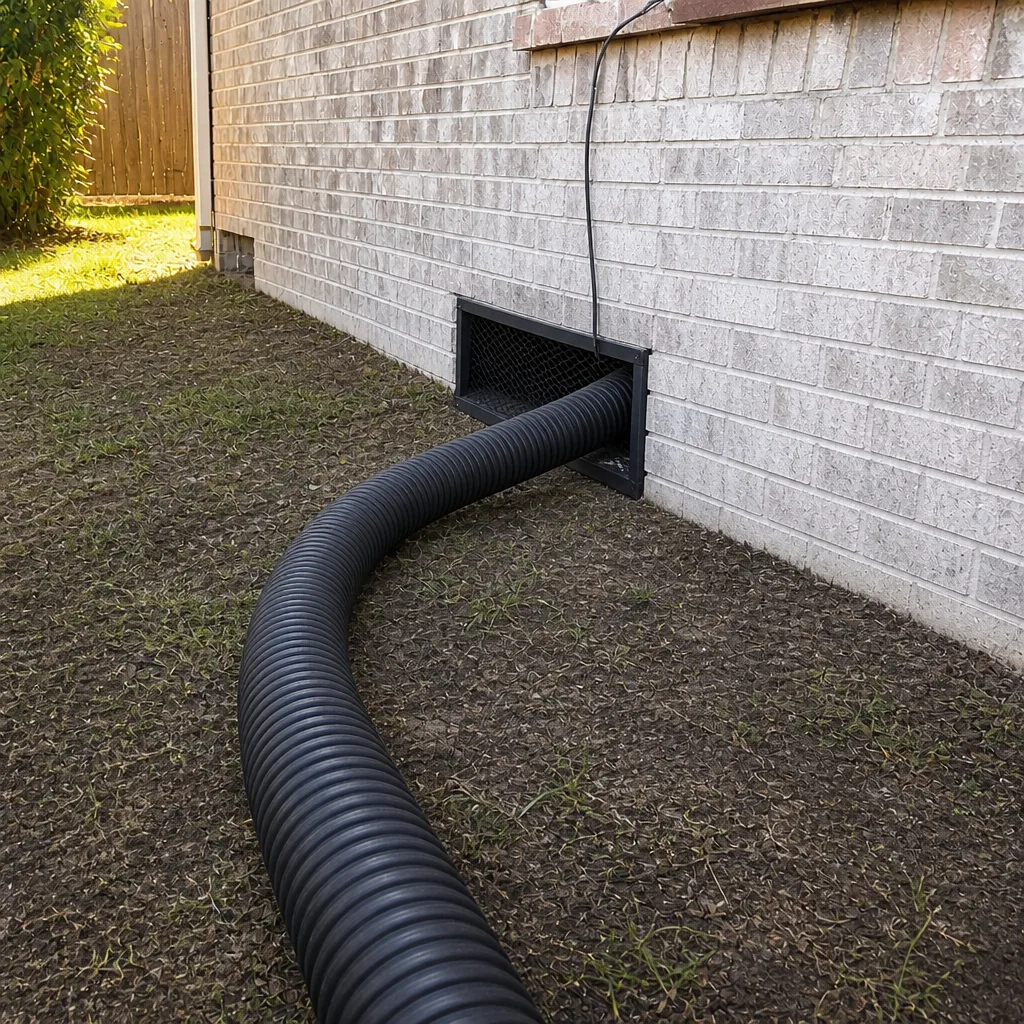
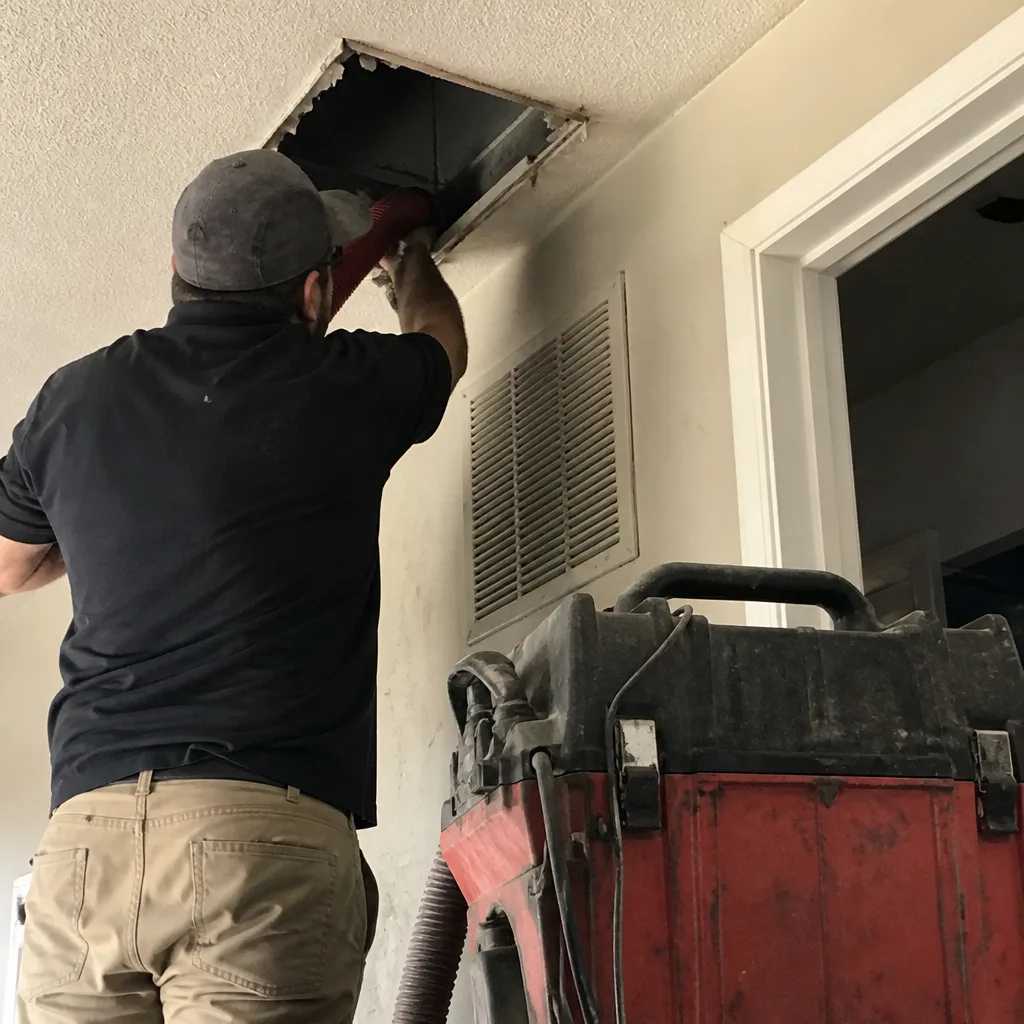
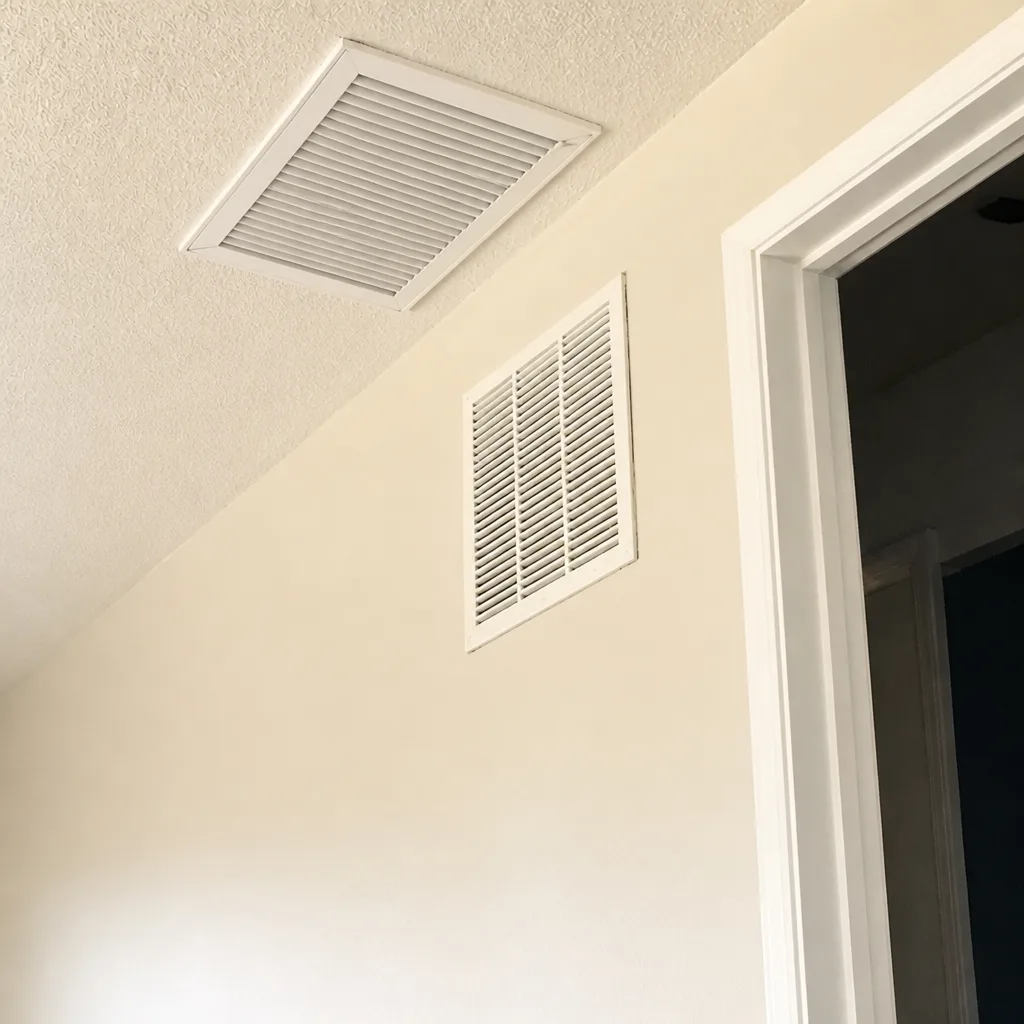
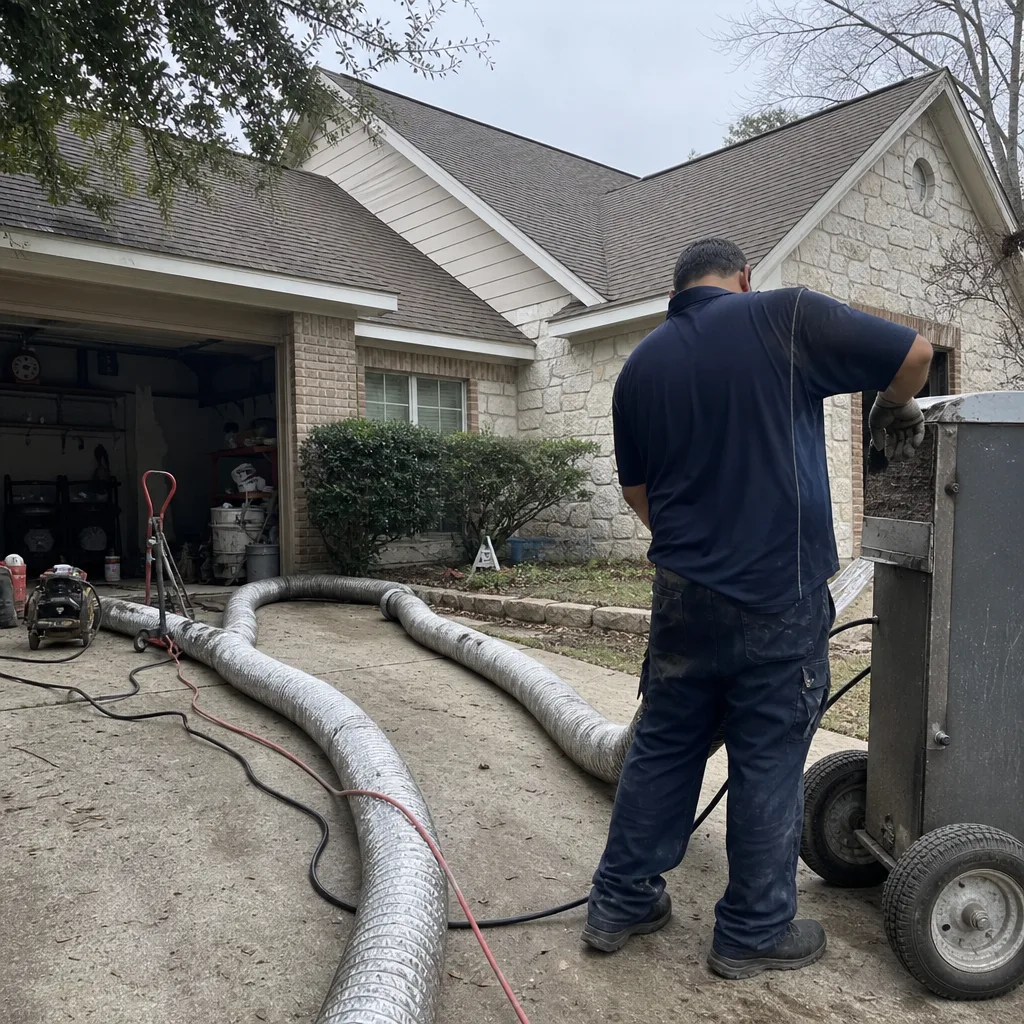
Whole-system duct and dryer vent check with before-and-after photos - you see exactly what came out of your vents
That "$99 whole-house special" is a bait ad - the real number appears once they are in your hallway, or the "clean" is a shop-vac at the register. We photograph the inside of your ducts before and after instead.
Air Duct Cleaning Warning Signs: A College Station Homeowner’s Reference Guide
A musty smell that fades ten minutes after the system kicks on usually isn’t a duct problem at all. It’s a wet coil or a drain pan that the ducts are simply delivering into your rooms, and cleaning the ductwork without fixing the source will have you calling someone back within a couple of months. That single distinction tells you why this guide exists. Most homeowners in College Station read their warning signs as allergy trouble, an aging air conditioner, or a quirk of an older house. In our experience, those signs are the duct system reporting a specific mechanical condition, and once you can name the condition you can describe it clearly to whoever you call. Below you’ll learn how to decode odors, temperature swings, debris types, and bill creep before you ever pick up the phone.
Quick Answer
The main warning signs that your air ducts need professional attention in College Station are persistent musty or stale odors that return every time the system cycles, visible dust or fiber at the supply registers, rooms that never match the thermostat setting, a jump in summer utility bills with no equipment change, and any interior remodel finished in the last 90 days. Odors that appear only at startup and clear quickly usually point to the coil or drain pan rather than the ducts, and that difference changes the fix. Our technicians have up to 10 years of experience reading these signals, and the pattern matters more than any single symptom.
Styles & brands we work with
- Whole-home duct cleaning
- Dryer vent cleaning
- Camera inspection
- Sanitizing & deodorizing
Table of Contents
- How to Tell Duct Odors From Coil, Drain Pan, and Air Handler Odors
- What Uneven Room Temperatures Really Say About Your Ducts
- Reading the Debris at Your Registers: Black Dust, White Fiber, Orange Particulate
- Why Summer Utility Bills Climb When the Equipment Hasn’t Changed
- The Post-Renovation Window: Inspect Within 90 Days
- Your Dryer Vent Is a Fire Risk, and It Belongs on the Same Checklist
- A Step-by-Step Self-Inspection You Can Do This Week
- Common Mistakes to Avoid
- When to Call a Professional
- Frequently Asked Questions
How to Tell Duct Odors From Coil, Drain Pan, and Air Handler Odors
Odor is the most misdiagnosed warning sign in the trade, and the timing of the smell is the clue that separates one cause from another. A duct-origin odor is present whenever air moves through the system and tends to stay consistent for the whole run cycle. An odor that appears in the first minute or two and then clears is almost always coming from moisture sitting on the evaporator coil or standing in the drain pan, and the ducts are just the delivery channel. If you clean the ducts and leave that moisture source alone, the smell returns on the next cooling cycle.
Here’s how to sort them out before you call anyone:
- Time the smell. Note whether it shows up within seconds of startup and fades, or whether it lingers the entire time the blower runs. The first pattern points to the coil or pan, the second toward the ducts or a return that’s pulling air from a damp space.
- Check the location. Walk to several supply registers around your College Station home and smell near each one. A smell at one or two registers only often means debris or moisture in that branch run rather than the whole system.
- Look at the drain pan. Many air handlers sit in the attic or a closet here, and a pan that holds standing water will produce a biological smell the ducts can’t fix. Rust lines near the pan or a clogged condensate line are strong hints.
- Test the “fan only” setting. Run the blower with cooling off. If the odor shows up with the fan alone, the source is in the airstream or the ducts. If it only appears once the compressor runs, the coil is the more likely culprit.
- Rule out a damp return. A return duct that draws from a humid garage or a crawl space will smell musty no matter how clean the supply side is.
Why does the distinction matter so much? Because the prescription is completely different. Duct cleaning removes accumulated debris and biological growth from the interior surfaces of the system. A wet coil, an overflowing pan, or a blocked condensate drain needs the moisture source corrected first, and sometimes a coil cleaning as well. When we look at a College Station system, we’re checking both, because remediation-class extraction like our Abatement Technologies equipment can pull material out of a duct, but it can’t stop a coil from getting wet again. What we won’t do is sell a duct cleaning as a fix for a moisture problem it can’t solve.
One more pattern worth knowing: a smell that only appears when the system has been off for a while, like after a vacation, is often just dust and a little moisture that settled in the plenum. If it clears after a full cycle and doesn’t come back, it usually isn’t a duct problem. If it returns every time, it is.
What Uneven Room Temperatures Really Say About Your Ducts
A room that runs five degrees warmer than the rest of the house in a College Station summer is often a duct problem, but not always, and jumping straight to the ducts without checking the simpler causes costs money. Duct issues show up as temperature swings because the air that leaves the air handler loses its cool before it reaches the register. Leaky duct joints, disconnected flex runs, crushed sections behind drywall, and undersized branch ducts all cause it. Dampers, zoning, thermostat placement, and an aging compressor cause the exact same symptom.
Here’s how to tell them apart, roughly in order of how often each turns out to be the answer:
- Damper position. If your home has manual dampers in the branch ducts near the plenum, one serving a hot room may be partly closed. That’s a five-minute check before anyone touches anything.
- Register airflow. Hold a tissue up to each supply. A room with weak airflow and a warm reading is more likely a duct restriction than a cooling problem. A room with strong airflow that’s still warm is more likely a delivery or equipment issue.
- Duct routing. Long, winding flex runs in a hot attic lose cooling capacity before the air arrives. This is common in homes across College Station where the system feeds second-floor rooms through attic ductwork in July heat.
- Leakage at joints. Look for disconnected or separated flex at the plenum and at each takeoff. Duct tape that’s dried out and peeling is a sign the seal has been compromised.
- Zoning or balancing. A system with a single thermostat serving multiple rooms can starve the rooms farthest from the sensor. A professional air balance may solve it without any duct repair.
- Equipment performance. A compressor that’s low on charge or an air handler with a dirty coil will cool the whole house poorly, not just one room.
What separates a duct diagnosis from a damper or equipment diagnosis is consistency. A duct leakage problem shows the same hot room in the same conditions every day. A damper problem often shows up worse at certain times of day or in certain seasons. If you’ve checked the dampers, confirmed the registers are open and unobstructed, and the same room is still warm, that’s a good point to get the ducts looked at properly. That’s when an air duct cleaning and inspection visit earns its keep, because a technician can trace the actual run rather than guess from a thermometer reading.
Reading the Debris at Your Registers: Black Dust, White Fiber, Orange Particulate
What collects at your registers tells you what’s coming through the system, and the color and texture of that debris point to different sources. A quick visual walk-through takes about ten minutes and gives you a vocabulary to describe the problem before you call. Keep in mind that dust at a register is normal. The question is how much, and of what kind.
Here’s how to read the common types:
- Black or dark gray dust. This is the most common type and usually means ordinary household dust and soot from cooking and candles have accumulated along with lint. In a system with a bad seal or an old filter that’s been bypassing, this dust coats the register grille and the boot behind it. Heavy black buildup at the return is the classic signal for cleaning.
- White or light gray fiber. This often points to fiberglass duct board or the inner liner of flex duct breaking down. If you see it at multiple registers after a recent remodel or a duct repair in the attic, it’s worth an inspection, because interior liner failure is a mechanical condition, not just dirt.
- Orange, brown, or reddish particulate. This can come from rust or oxidation at metal duct sections, from wood dust after a remodel, or from insects. Orange spray foam and sawdust are common in newer College Station construction and remodels, and neither belongs in an airstream.
- Black staining around the register frame. A dark halo on the drywall or ceiling around the grille usually means air is leaking past the seal and pulling dust with it. That’s a duct seal problem, not just a cleaning problem.
- Sand or grit. Visible granular material at a low return can come from the outside if a return is drawing from a garage or an open chase, or from nearby construction dust. Worth checking where that return is drawing from.
- Pet hair or visible lint. A return covered in pet hair means the filter is getting overwhelmed, and you may need a higher-MERV recommendation or more frequent changes.
The reason we ask homeowners to make these observations rather than just say “my vents are dirty” is that the debris type changes what we inspect for. A system with white fiber at the registers needs the liner checked, not just cleaned. A system with orange construction dust after a remodel needs the returns checked for where the debris entered. The cleaning itself, with Rotobrush and Nikro mechanical equipment, handles the extraction, but the diagnosis behind the cleaning depends on what’s actually in the system. Before-and-after photos of your own ducts show you what came out and what was there, so you’re not taking anyone’s word for it.
Why Summer Utility Bills Climb When the Equipment Hasn’t Changed
A utility bill that jumps in a College Station summer without any new appliance, added square footage, or change in habits usually points to one of three things: HVAC efficiency loss, rate increases, or duct leakage. Duct leakage is the one most often overlooked, and it’s the one that fits the pattern best when the bill climbs year over year. A system with leaky ducts loses conditioned air before it ever reaches a room, so the air handler runs longer to hit the thermostat setting. You pay to cool air that’s cooling an attic.
The signs that point toward ducts rather than equipment:
- The bill climbs while comfort stays flat or gets worse. An equipment efficiency problem tends to show up as less comfort and higher bills together, but duct leakage often shows as a longer run cycle with a house that still never quite feels right.
- Certain rooms run consistently hotter. Combine the bill data with the room-by-room check in the previous section. A hot room plus a climbing bill is a classic leakage pattern.
- The system cycles more often. If the air conditioner is starting and stopping more than it used to, or running in shorter but more frequent bursts, short cycling from a leaky duct can be part of the picture.
- You’ve had attic work or a remodel. Any time ductwork in an attic has been disturbed, sealed joints and flex connections can come apart. This is a common cause of gradual leakage that shows up as bill creep.
- No change in filter habits. If you’ve kept up with filter changes and the bill still climbs, the filter isn’t the explanation.
Before concluding the ducts are at fault, rule out the obvious: filter clogging, thermostat settings, ceiling fans, and a dirty outdoor condenser coil. Those cost nothing to check. If they’re all fine and the pattern holds, an inspection can trace the duct runs in the attic and at the plenum connections and show you exactly where air is escaping. A duct cleaning visit worth its name includes a look at the system’s overall condition, not just a pass with a vacuum. The ductwork is part of the system’s efficiency, and treating it like it matters is what separates a real diagnosis from a guess. When a College Station homeowner calls us about a bill that won’t come down, the conversation starts with the ducts and the connections because those are the parts nobody has looked at yet.
The Post-Renovation Window: Inspect Within 90 Days
If you’ve had any interior remodel in the last 90 days, inspect your registers and returns before you see a symptom. That’s the single most useful thing this guide can tell you, and it’s the point where most College Station homeowners come to the problem backwards. They wait for visible dust, a smell, or a bill increase, and by then fine construction dust has already been cycling through the system for months. Drywall dust, sawdust, insulation particles, and spray foam fragments all get pulled into the return during framing and finish work. The filter catches some, but a lot gets past it into the blower, the coil, and the ducts.
Here’s the sequence we recommend:
- Right after the contractor pulls out, change the filter. It’s almost certainly loaded with drywall dust. If you didn’t change it during the work, change it immediately after.
- Look at every supply register. A thin film of fine white or orange dust at multiple registers means debris has reached the duct runs.
- Check the return grille and the space behind it. If the return is visibly coated, material has gotten past the filter into the air handler.
- Look at the attic duct runs if you can see them. Openings, disconnected flex at the plenum, and crushed runs are common after trades have been working up there.
- Schedule an inspection within 90 days. The reason for the 90-day window is that fine construction dust that sits in a duct with any moisture has time to support biological growth, and the longer it’s there the more a real duct cleaning has to remove.
One local note: College Station has a steady stream of interior remodels and new construction in established neighborhoods, and the ductwork in those homes can be newer, older, or a mix depending on additions. A remodel in a home that’s been reworked over the years often leaves behind mismatched duct sections, undersized returns, and partially sealed joints. When we inspect after a remodel, we’re not just asking “is it dirty?” We’re asking whether the duct system still works the way it should. That’s where duct repair, not just cleaning, comes into play.
Your Dryer Vent Is a Fire Risk, and It Belongs on the Same Checklist
Dryer vents are a separate system from the ductwork that heats and cools your house, but they belong on the same inspection checklist for one plain reason: the fire risk is real and preventable. Lint accumulation in a dryer vent is a documented fire hazard, and the vent is one of the few parts of a home where a maintenance failure can start a fire inside a wall or a crawl space. We treat dryer vent cleaning as a fire-risk service, not an add-on.
Warning signs to watch for:
- Clothes take longer than one cycle to dry. If a normal load needs a second run, airflow is restricted.
- The dryer feels hot to the touch or the top of the machine is noticeably warm during a cycle.
- The outside vent flap doesn’t open fully or barely moves when the dryer runs. This is one of the clearest visual signs.
- Lint is visible around the outside vent hood or has collected behind or under the dryer.
- A musty or burning smell near the dryer or laundry room during or after a run.
- The vent run is long, has multiple 90-degree turns, or empties onto the roof. These setups collect lint faster than a short, straight vent.
Why does lint burn? It’s highly combustible, and the heat a dryer produces is enough to ignite it once it builds up in a hot run. The vent also needs to stay clear of nests and obstruction, both of which reduce airflow and raise the temperature inside the vent. Cleaning the dryer vent is a mechanical job with real tools, and it’s separate from duct cleaning, but it’s the same philosophy: get the restriction out, verify airflow, and show the homeowner what was removed. We keep before-and-after photos of the vent run so the homeowner actually sees the difference. In a College Station home where the laundry room sits in the middle of the house with a long vent run, this matters more, not less.
A Step-by-Step Self-Inspection You Can Do This Week
You don’t need tools to get a clear read on your system, and the information you gather here is exactly what a technician can use. Set aside twenty minutes, walk the house, and write down what you see. Here’s the sequence we suggest:
- Change the filter and note the date. A filter that’s loaded in half the usual time is a sign of extra debris in the system or a leak bypassing it.
- Smell test at startup. Run the system and time how long any odor lasts. Under two minutes and gone means the coil or pan; present the whole run means the ducts or a damp return.
- Walk every supply register. Note airflow strength and debris color at each one. Write down which rooms are weak and which are strong.
- Inspect the return grille. A return that’s visibly coated means material has gotten past the filter. Note the color and texture.
- Check the drain pan and condensate line if you can safely see the air handler. Standing water or a clogged line needs attention before any duct cleaning.
- Look at visible attic ductwork from a safe standing position. Note disconnected flex, crushed runs, or dried-out tape. Don’t climb around the attic; note what you can see from a safe spot and leave the rest.
- Test the outside dryer vent flap while the dryer runs. If it doesn’t open fully, that vent needs cleaning.
- Check for the 90-day remodel window. If any interior work happened recently, put a duct inspection on the calendar now, not later.
Write down what you find and take photos at each register. That’s the whole inspection. What turns this from a list into a diagnosis is someone with professional equipment tracing the system and reading the results, and that’s where we come in with the Bedrock Air Duct Cleaning team. One more safety note: if your inspection takes you anywhere near the air handler or the electrical connections on the furnace, stop and leave that part to a professional. The air handler and its wiring are not a DIY area, and the same goes for the gas line if your system uses one. The self-inspection is about what you can see and smell from a standing position, not what you can take apart.
See the difference
 Before
 After
 Before
 After
 Before
 After
Common Mistakes to Avoid
- Assuming the ducts are the source of a smell that actually comes from the coil or pan. Cleaning the ducts without fixing the moisture source sends the smell right back. Test the startup timing first, because the fix depends on it.
- Waiting for symptoms after a remodel. The 90-day window exists for a reason. Fine construction dust has time to settle and support growth the longer you wait, and a filter change alone doesn’t clear the runs.
- Reading dust at the registers as a single problem. Black dust, white fiber, and orange particulate point to different sources, and treating all three the same leads to the wrong service. Describe the color and texture when you call.
- Blaming the air conditioner for a summer bill jump before checking the ducts. Leaky duct joints and disconnected flex runs can run up a bill for years without a single equipment fault, and a cooling tune-up will never find them.
- Skipping the dryer vent because the ducts were cleaned. The dryer vent is a separate system and a real fire risk. If it’s been more than a couple of years, put it on the same visit.
- Assuming a duct cleaning will fix uneven rooms. Damper position, zoning, and equipment performance cause the same symptom. Check the simple causes first, then get a professional opinion on the ducts.
- Never looking behind the return. The return grille and the space behind it tell you whether debris has reached the blower, and that’s the one part of the system most homeowners never check.
When to Call a Professional
Call a professional when the same symptom returns after you’ve handled the simple checks. A musty odor that comes back every cooling cycle, a room that stays hot after you’ve verified dampers and airflow, black or white debris coating multiple registers, a bill that climbs every summer with no equipment change, or any interior remodel in the last 90 days: those are all good reasons to schedule an inspection. Call right away if you see standing water near the air handler, disconnected flex duct in the attic, or a dryer vent that won’t open fully. Those are either active moisture problems or fire risks, and neither improves with time. Bedrock Air Duct Cleaning offers free estimates in College Station, and our technicians have up to 10 years of experience reading these signals. Call (833) 588-6184. We answer 24/7. Fast dispatch from 7am to 7pm, Sunday through Friday, and we’re closed Saturday.
Frequently Asked Questions
Most homes in College Station do well with air duct cleaning every three to five years, and some go longer. What shortens the interval is a specific event: an interior remodel in the last 90 days, a pet-heavy household, a return that’s pulling from a dusty space, or a system that’s had attic work. The honest answer is that the calendar matters less than the signs. If your registers are coated, your system smells on every cycle, or the bill is climbing, the system is telling you it’s time regardless of how many years it’s been. If you’re unsure, a free estimate costs you nothing and gives you a professional read. Call (833) 588-6184 for an exact quote.
Cleaning the registers doesn’t reach the problem, because the register grille is the last inch of the system, not the source. The debris that causes smells, airflow restriction, and bill creep accumulates in the duct runs, at the plenum, and at the boots behind the register. A vacuum on the grille takes off the dust you can see and leaves everything behind it. That’s why the professional part is the mechanical extraction along the full run, not the visible surface. A free estimate from our team tells you what’s actually in the system. Call (833) 588-6184.
Prices are set per system, not per vent, and every job is quoted by a written estimate agreed before work starts. The reason we work that way is to answer the industry’s biggest complaint: a low starting number that turns into a much larger invoice once the technician is on site. A coupon price for a system isn’t a real price for a system. Ask any company for a flat price per system in writing, with the scope described, and for before-and-after photos of your own ducts so you can see what was removed. Call (833) 588-6184 for a free estimate and a written price.
Cheap quotes usually reflect a single blower-and-vacuum pass, often with consumer-grade equipment, that doesn’t reach the full duct run. Professional cleaning uses purpose-built mechanical equipment, like Rotobrush and Nikro systems, that scrubs the duct surface, and remediation-class extraction, like the Abatement Technologies tools we carry, that pulls material out of the system rather than stirring it up. That equipment costs more to own and run, and it does more work. The question worth asking isn’t which price is lower, it’s which price covers actual cleaning of the full system. Call (833) 588-6184 for a written estimate.
You know it was done when you see the evidence: before-and-after photos of your own ducts, not stock images, and a written scope of what was cleaned. Ask for photos of the returns, the plenum, and a few supply runs before and after. A company confident in its work will show you. The equipment matters too, because a job done with remediation-class extraction leaves a different result than a single pass with a shop vacuum. We take photos of the system before we start and after we finish, and we leave them with the homeowner. Call (833) 588-6184 for a free estimate.
Dryer vent cleaning is a separate service, and it needs its own visit because the dryer vent is a different system entirely. It’s still a fire risk, and lint accumulation is the documented cause. If it’s been more than a couple of years since the vent was cleared, or the outside flap doesn’t open fully when the dryer runs, it’s overdue. Many College Station homeowners schedule College Station duct cleaning and dryer vent service together because both are airflow systems, but they aren’t the same job. Call (833) 588-6184 to book both and get one written estimate.
Duct cleaning can help when the source of the odor is in the ducts, but not when it’s coming from a wet coil or drain pan. That’s why we test for the moisture source first. A smell that clears within a couple of minutes of startup is usually the coil, and cleaning the ducts alone won’t fix it. A smell that stays for the whole cycle is more likely duct-origin, and cleaning with remediation-class extraction can help. Honeywell and Aprilaire air-quality platforms are part of the downstream picture once the ducts are clean, and we understand how those systems interact with the ductwork. Call (833) 588-6184 for a free estimate and a straight answer on the cause.
The Bottom Line
Most duct warning signs get misread, and the cost of misreading them is a fix that doesn’t fix anything. An odor that fades fast is a coil or pan issue, not a duct issue. A hot room is a duct, damper, or equipment question, and the simple checks come first. Debris color and texture tell you what’s in the system, a summer bill jump often traces to duct leakage, and the 90 days after a remodel are the window when an inspection is most useful. Dryer vents belong on the same list because the fire risk is real. Our technicians have up to 10 years of experience reading these signals, and we use professional-grade equipment to do the work. Call (833) 588-6184 for a free estimate. We answer 24/7. Fast dispatch from 7am to 7pm, Sunday through Friday.
Written by the team at Bedrock Air Duct Cleaning.