
Last updated November 15, 2026
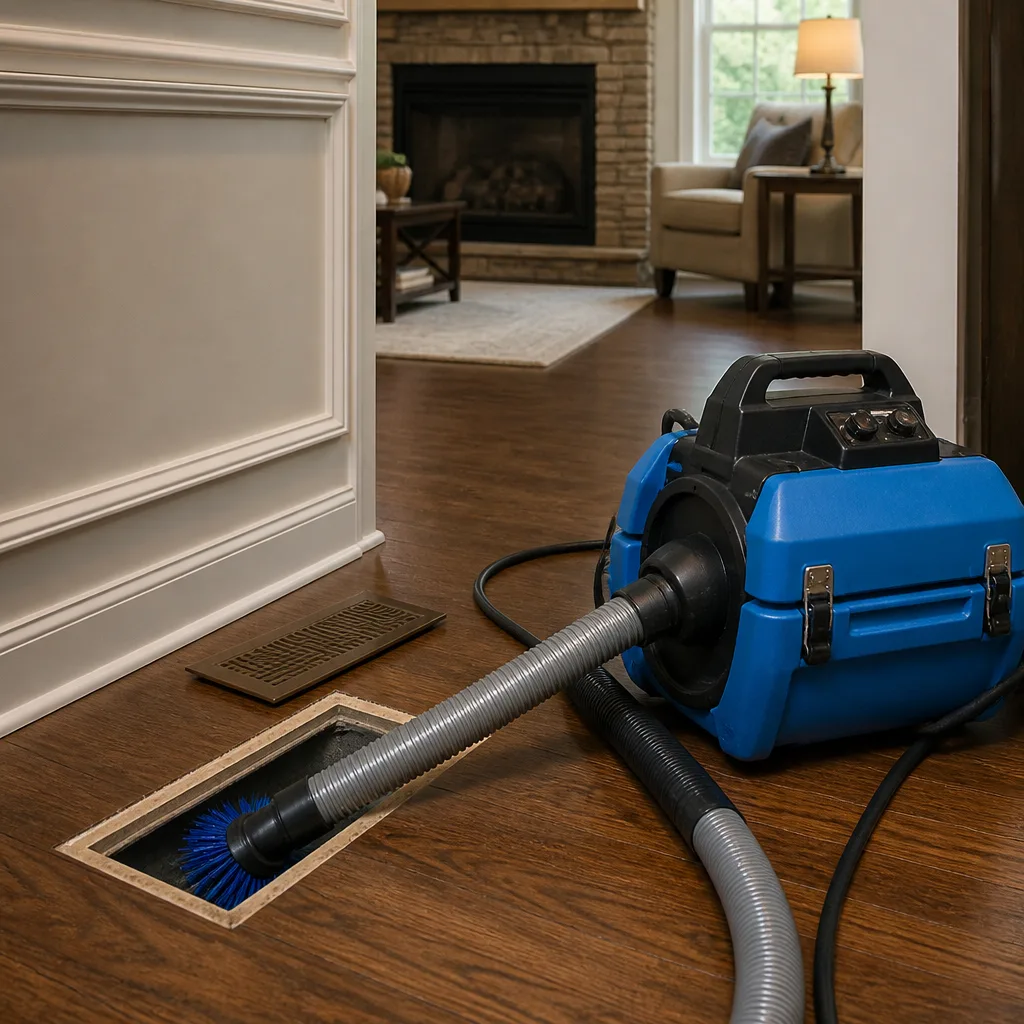 Whole-home duct cleaning
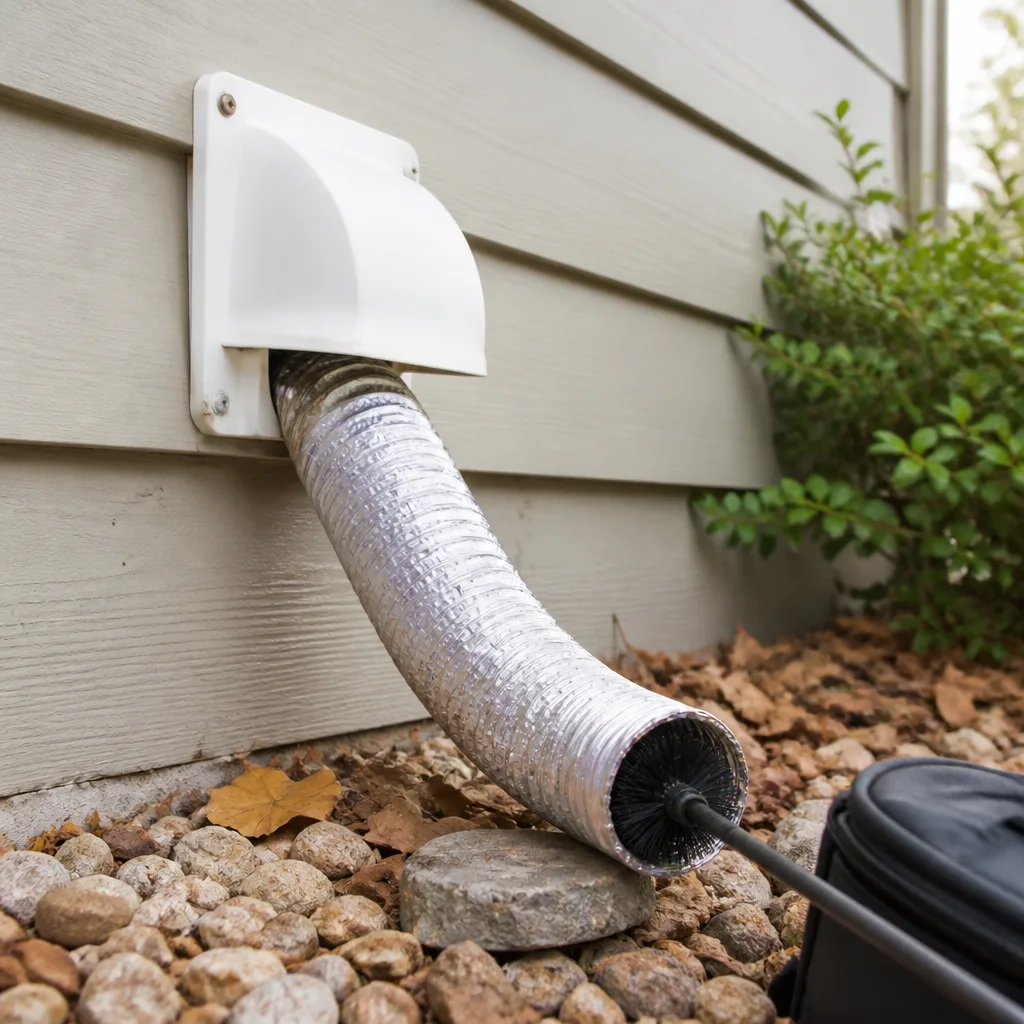 Dryer vent cleaning
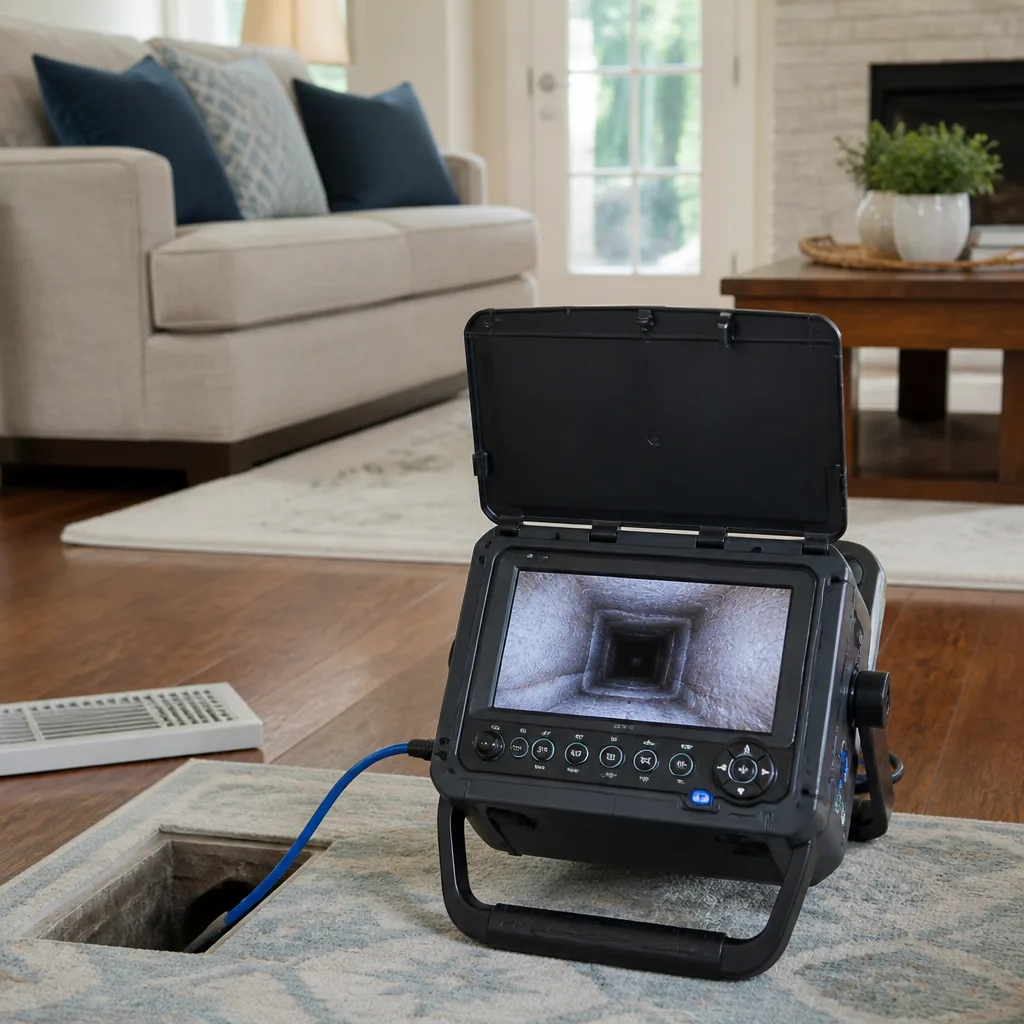 Camera inspection
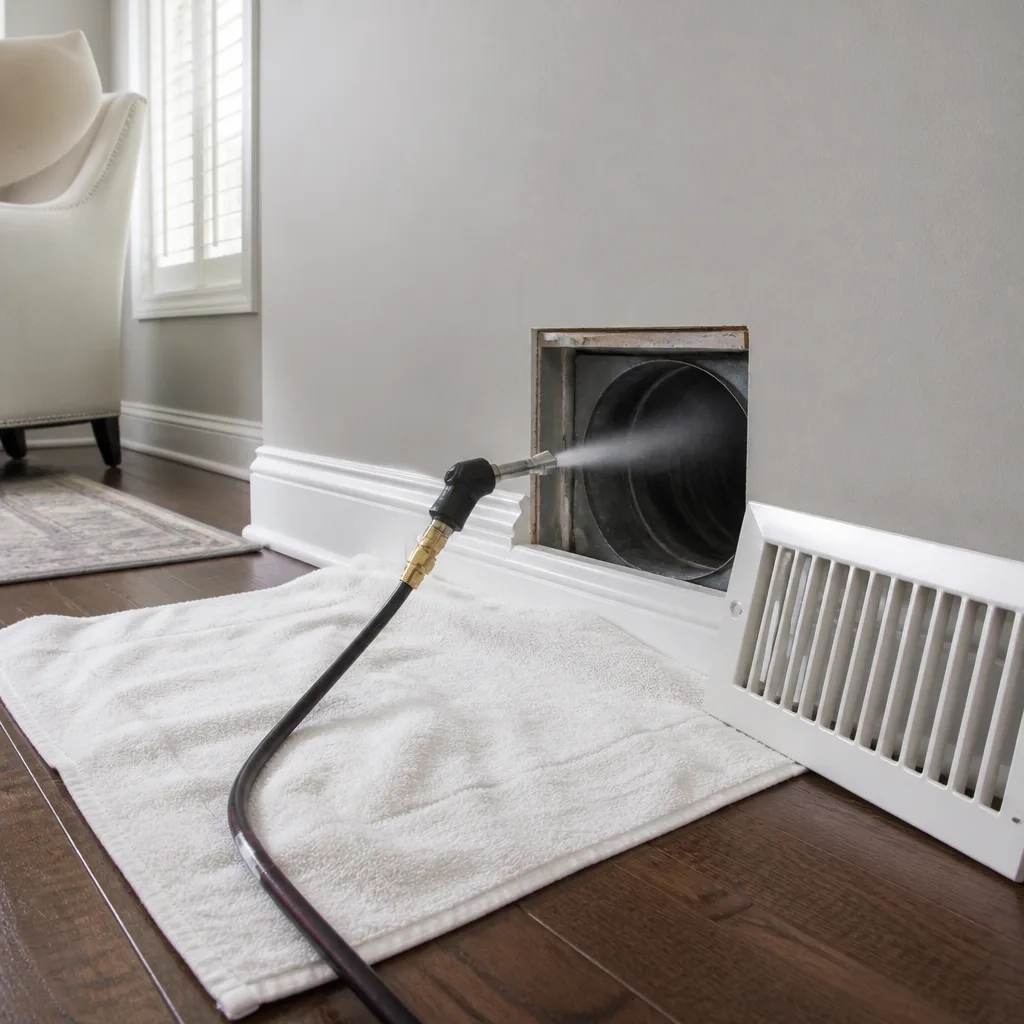 Sanitizing & deodorizing
Whole-system duct and dryer vent check with before-and-after photos - you see exactly what came out of your vents
That "$99 whole-house special" is a bait ad - the real number appears once they are in your hallway, or the "clean" is a shop-vac at the register. We photograph the inside of your ducts before and after instead.
Choosing the Right Air Duct Cleaning Brand: A Buyer’s Guide for College Station
Here’s a fact that surprises most homeowners: nobody licenses air duct cleaning in Texas. There’s no state exam, no mandatory equipment list, no inspector who checks a company’s work before it starts. So when a van pulls into your driveway with a recognizable national logo on the door, that logo tells you almost nothing about the machine inside it. Franchise models license a name and a playbook to local operators, and the person running the wand in your College Station home may have learned the trade a few weeks ago. This guide reframes the whole question. Instead of asking which brand is best, you’ll learn the three technical benchmarks that actually separate a real duct cleaning from a cosmetic pass, and how to verify them before you book.
Quick Answer
The “best” air duct cleaning brand in College Station isn’t a national name – it’s whichever local company can prove its equipment class, its agitation method, and its process. Ask what machine they run (a commercial system like Rotobrush, Nikro, or Abatement Technologies equipment, or a shop vacuum with a hose), ask how they agitate the dust before extracting it, and ask for photos of your own ducts before and after. A company that answers those three questions clearly is a company worth hiring.
Styles & brands we work with
- Whole-home duct cleaning
- Dryer vent cleaning
- Camera inspection
- Sanitizing & deodorizing
Table of Contents
- Why the National Franchise Logo Doesn’t Mean Much
- The Three Technical Benchmarks That Actually Matter
- How to Read Google Reviews the Right Way
- What Local Companies With Commercial Equipment Deliver
- How to Verify Equipment Before You Book
- What’s Different About Ducts in College Station
- Judging a Company by What It Refuses to Skip
- What a Proper Cleaning Job Looks Like, Step by Step
Why the National Franchise Logo Doesn’t Mean Much
Franchise air duct cleaning companies sell territories. Someone buys the rights to a region, gets a two-week crash course, buys a starter kit, and puts the brand name on a van. The name on the truck and the skill of the person using the equipment have very little to do with each other. That disconnect is the single biggest misunderstanding in this industry.
The equipment problem is worse than the training problem. Many franchise starter packages include a portable blower and vacuum unit and a rotating brush head, which is fine as far as it goes. But it isn’t the class of equipment a commercial HVAC contractor reaches for. It’s consumer-grade hardware dressed up as professional service. When the machine can’t generate meaningful negative pressure or agitate caked dust off the duct walls, the crew can spend two hours in your home and leave a film of debris exactly where it started.
None of this is a knock on every franchise operator. Some run excellent operations. The point is that the brand isn’t evidence either way. You have to look past it.
What you’re trying to verify is whether the company stands behind a process, not a logo. A company doing air duct cleaning professionally should be able to describe its equipment by name and explain why it chose that machine. If the answer is vague, that’s your answer.
What a Franchise License Actually Buys
- A name and a marketing package – not a standardized equipment fleet.
- A short initial training – measured in weeks, not in a formal certification.
- A territory – which means the operator you get depends on where you live, not how good the company is.
- No guarantee of equipment class – some franchises carry good gear, some don’t.
The Three Technical Benchmarks That Actually Matter
Forget brand names for a moment. Every credible duct cleaning operation, national or local, has to do three things well: pull the loosened dust out under sustained negative pressure, agitate the dust off the duct surfaces before extraction, and follow a recognized process standard that keeps the work honest. If a company can’t speak to all three, it’s selling a vacuum pass.
1. Negative Pressure Capacity
Negative pressure is the whole game in duct cleaning. The machine has to pull the air through the system so that dislodged dust travels toward the vacuum instead of puffing out of your registers and into the room. Professional units generate far more of it than a portable shop vacuum ever will. Remediation-class negative air and HEPA filtration equipment, the same class of tools used in mold and contaminant abatement, is the gold standard. Abatement Technologies equipment in particular is built for exactly this kind of containment work, which is why professionals trust it. A company using that class of equipment is pulling debris out, not stirring it around.
2. Agitation Method
Dust clings. It bonds to duct walls with a thin film of moisture and settles into corners, especially in the long runs and flex duct that are common in central Texas homes. Suction alone won’t break it loose. You need mechanical agitation – rotating brush systems or high-pressure air whips that scrape the surface while the vacuum is running. Rotobrush systems are the industry-standard answer here, and Nikro equipment is another name commercial contractors rely on. If a company only vacuums and never agitates, the dust that stays behind is the dust that matters.
3. Process Standard Compliance
The recognized consulting standard in this industry, developed by NADCA (the National Air Duct Cleaners Association), describes the correct sequence: contain, agitate, extract, verify. Companies that follow it can explain their steps in that order. Companies that don’t will describe one step – usually “we vacuum it out.” Ask any bidder to walk you through their process in sequence. The answer tells you whether they’ve ever heard of a standard.
How to Read Google Reviews the Right Way
Google reviews are useful for duct cleaning, but not the way most people use them. Reading a four-star average tells you almost nothing. Reading what the reviewers actually emphasize tells you everything.
Here’s the split to watch for. Customer-service-focused reviews talk about the people: “friendly,” “on time,” “polite,” “explained everything,” “the technician was great.” Those are fine qualities. They’re also what you’d say about a plumber who fixed nothing. Process-focused reviews talk about the work: “showed me before-and-after photos of my ducts,” “pulled out debris I could see on the camera,” “asked about my dryer vent as a fire risk,” “used a commercial machine, not a shop vac.” Those are the reviews you want to read twice.
Look, too, for reviews that mention what happened after the visit. If a homeowner says “our allergies were better within a week” that’s interesting but vague. If a reviewer says “the dust on my ceiling fans stopped building up” or “my registers stay clean now,” that’s a process signal – something actually got extracted.
Also watch for the bait-and-switch pattern in reviews: low teaser price quoted on the phone, then a much larger invoice once the technician is standing in the living room. A company that runs on that model will have the pattern in its reviews whether the star average hides it or not.
What Review Language Signals
- Process-focused: “before-and-after photos,” “camera inspection,” “commercial equipment,” “they showed me what they pulled out.”
- Customer-service-focused: “polite,” “on time,” “friendly” – nice but not evidence of work quality.
- Red flags: “price went up when they arrived,” “in and out in twenty minutes,” “still dusty afterward,” “couldn’t show me any photos.”
What Local Companies With Commercial Equipment Deliver
This is where the difference gets concrete. A locally operated company that has invested in remediation-class equipment can do things a franchise with a consumer-grade starter kit simply cannot.
The biggest one is containment. Negative air machines and HEPA filtration mean the dust that comes off your ducts stays in the machine instead of circulating through your living room while the crew works. That matters in any home, but it matters a great deal more in homes with asthma, allergies, young children, or pets. A portable vacuum can’t create that kind of seal.
The second is depth of extraction. Commercial systems agitate and extract in one coordinated pass, which means the duct wall actually gets cleaned rather than dusted. Where a consumer unit pulls surface lint, a Rotobrush or Nikro system gets the bonded film off.
The third is a complete scope. A company that treats duct cleaning as one service in a system can identify and address the related problems a one-service crew will leave behind – a dryer vent choked with lint, a section of crushed flex duct, a return that’s pulling from a dirty crawlspace. If your company doesn’t offer dryer vent cleaning and duct repair as part of its scope, it’s only ever going to solve a third of your problem.
How to Verify Equipment Before You Book
You don’t have to accept anyone’s word. Here’s the step-by-step verification we’d recommend to any homeowner, and it takes about ten minutes on the phone.
- Ask what specific equipment they run. Brand names, not categories. “A commercial duct cleaning system” is a category. “Rotobrush” or “Nikro” is a system.
- Ask how they agitate the duct walls. If the answer is brushes or air whips plus a vacuum running simultaneously, you’re talking to a professional. If the answer is “we vacuum it,” keep calling.
- Ask about negative pressure and containment. Do they use a negative air machine or HEPA filtration while working? Where does the exhaust go?
- Request photos of the equipment. Any legitimate company can send a photo of its machine. If they can’t or won’t, that’s a disqualifier.
- Ask whether they photograph your ducts before and after. This is the single easiest way to verify the work actually happened. If they say yes, ask to see a sample from a past job.
- Ask them to walk you through the process in order. Contain, agitate, extract, verify. If they can’t name the sequence, they don’t have one.
- Ask what happens if the photos show the job wasn’t done. A company confident in its process will have a clear answer.
Answers That Should Disqualify a Bidder
- “We just use a really strong shop vacuum.”
- “We don’t need to agitate – the suction does the work.”
- “We don’t take photos; you can trust us.”
- “The price on the phone is a starting point.”
- “We don’t do dryer vents – call someone else.”
Any one of those is enough reason to keep shopping. Two or more and you’re not talking to a duct cleaning company – you’re talking to a sales operation.
What’s Different About Ducts in College Station
Every market has its own quirks, and College Station is no exception. The local housing stock shapes what a duct cleaning job actually involves, and a company that doesn’t know that isn’t going to give you a good job even if its equipment is solid.
Our summers are long and hot, and the AC runs hard for months. That means more dust and debris get pulled through the return system, more condensation forms inside the ductwork at the transition points, and the film of settled dust has more time to build up before anyone notices it. Homes here also tend to run more humid than the national average indoors during peak season, which affects how dust clings to flex duct in particular. A company that knows College Station understands that flexible duct in a hot, humid attic is a different cleaning job than rigid duct in a dry climate.
College Station also has a lot of construction in the new-build neighborhoods on the edges of town. New construction leaves a genuinely nasty load in the ducts: drywall dust, sawdust, framing debris. If you’ve just moved into a new home in College Station, your ducts need attention sooner than a homeowner in an established neighborhood would. A national franchise dispatching from out of town may not know what to look for. A locally operated company will.
Finally, this is a college town, which means a lot of rental properties and a lot of turnover. Property managers know that duct condition and dryer vent condition are the two things tenants complain about most and the landlord checks least. That’s a market where College Station property managers need a company they can call back season after season and trust to do the same work every time.
Judging a Company by What It Refuses to Skip
A company’s scope tells you what it thinks about your home. A single-service operation that cleans ducts and nothing else has decided that everything outside the duct isn’t its problem. That’s a fine business model. It’s not the business model that leaves your system healthy.
Three services matter for a complete job:
- Air duct cleaning – the extraction work itself, done with commercial agitation and negative pressure.
- Dryer vent cleaning – treated as the fire hazard it genuinely is, not as an upsell. Lint accumulation in a dryer vent is a documented fire hazard, and the vent is one of the most overlooked components in a home.
- Duct repair – because a cleaning pass doesn’t fix a crushed flex section, a disconnected run, or a return pulling from an unconditioned attic.
A company covering all three is a company that has thought about the whole system. A company offering only one is going to hand you a cleaning receipt and a list of problems it can’t solve. When we look at a job for Bedrock Air Duct Cleaning, we’re looking at all three parts at once, because a cleaning that ignores a broken connection or a choked dryer vent hasn’t solved the problem.
The equipment itself reinforces the scope. Rotobrush and Nikro systems belong to the cleaning phase. Abatement Technologies negative air and HEPA equipment belong to the containment phase. Honeywell and Aprilaire air quality platforms tell you what happens downstream of the duct. Guardsman-associated protection signals point at long-term preservation. Every piece of that stack is aimed at a complete job, not a single service visit.
What a Proper Cleaning Job Looks Like, Step by Step
If you want to know whether the crew that shows up is doing the work correctly, here’s the sequence a professional company runs. You can watch for it as it happens.
- Inspection. Before anything runs, the technician inspects the accessible ductwork. That includes checking register boots, main trunks, and any flex sections that might be crushed or disconnected.
- Containment setup. Negative air equipment and HEPA filtration go in first so that dust pulled from the ducts doesn’t escape into the living space.
- Register by register agitation. The crew works through each supply and return, agitating the duct wall with brushes or air whips while the vacuum is running.
- Extraction at the main trunk. The loosened debris collects at the central point and gets pulled out of the system.
- Dryer vent cleaning (if included). Lint is removed from the vent line, and the technician verifies airflow at the exterior vent.
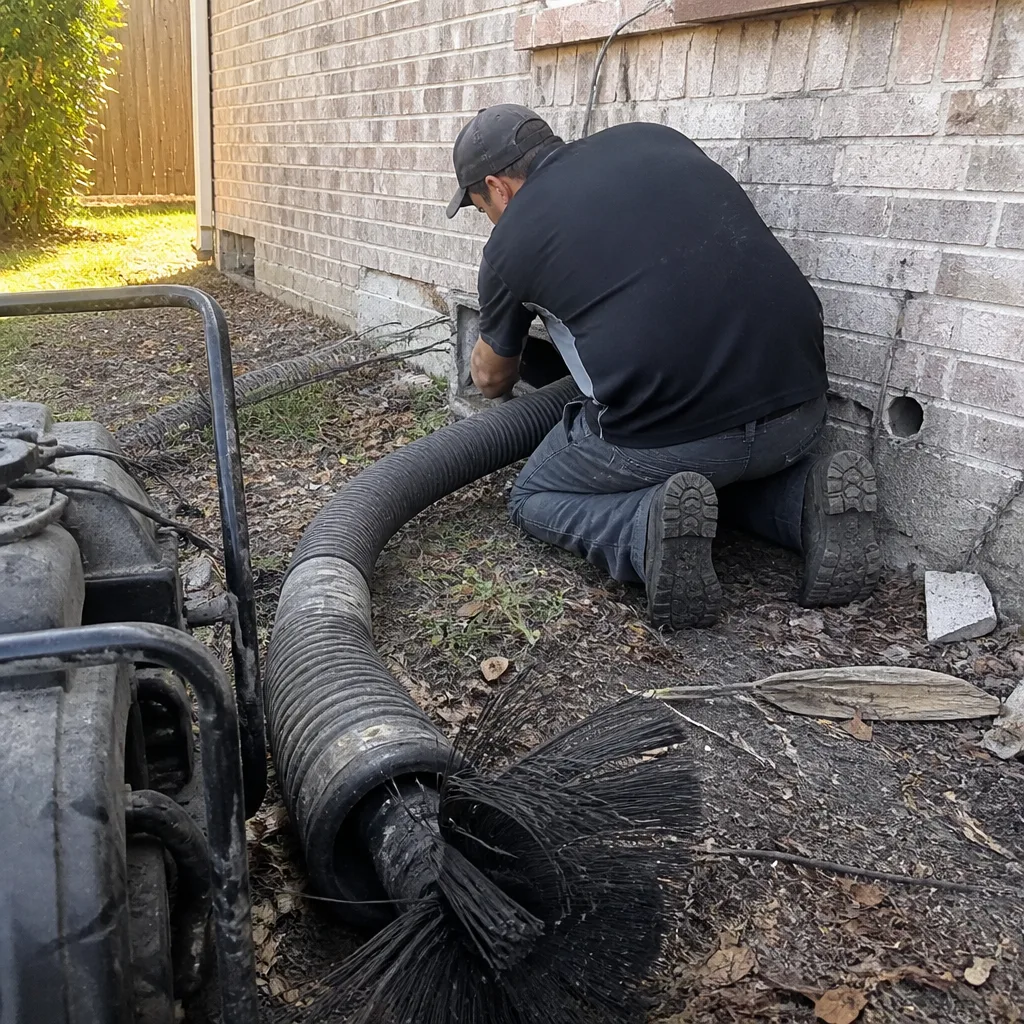
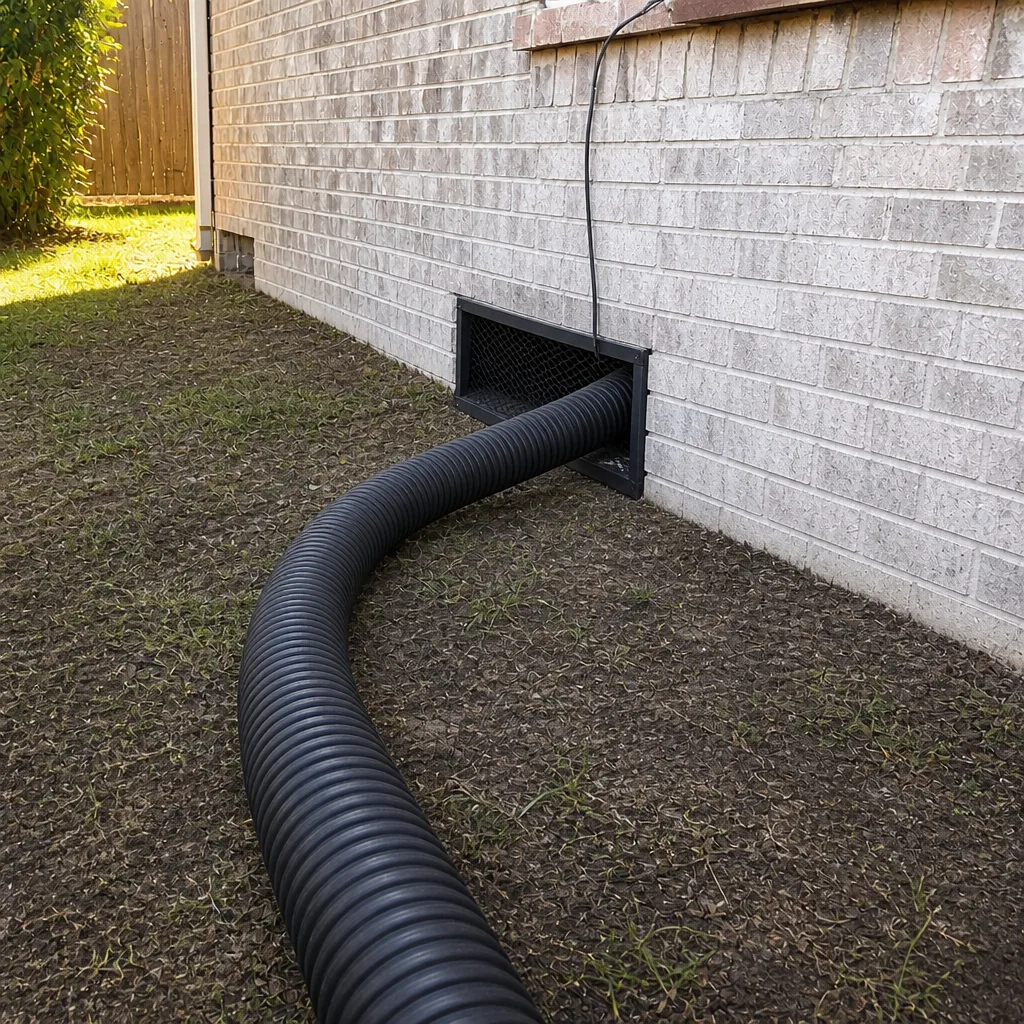
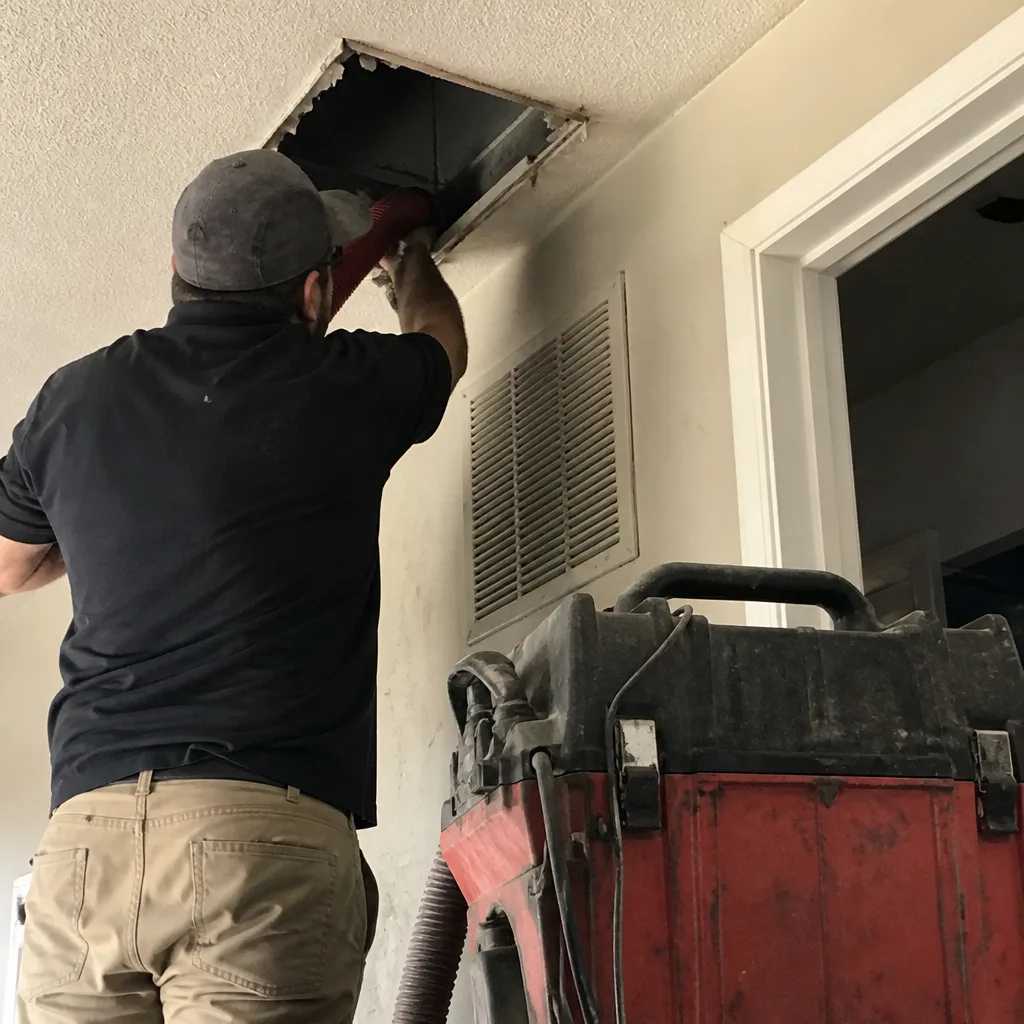
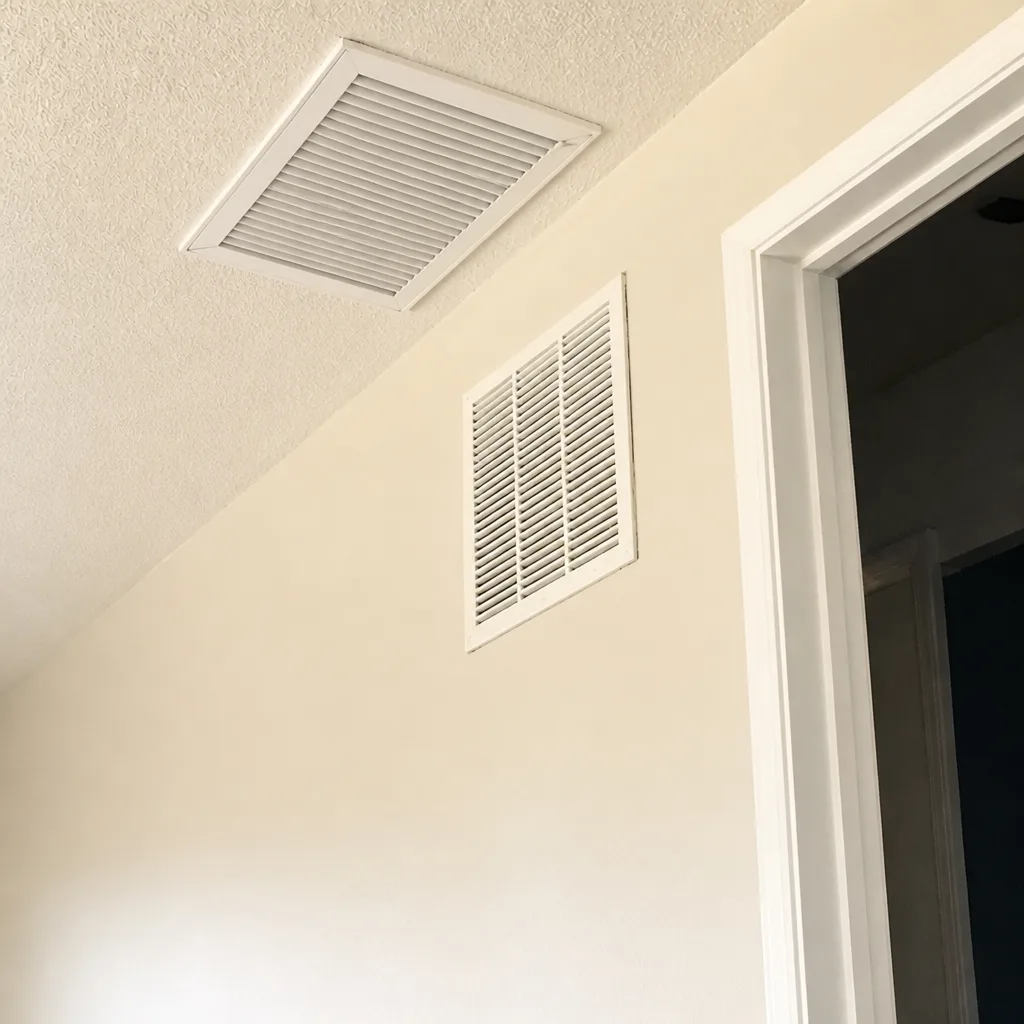
- Before-and-after documentation. Photos of your ducts, taken at the same points before and after the work. This is your verification.
- Repair recommendations. Anything found during inspection – crushed flex, disconnected runs – gets flagged with a clear estimate for repair.
That’s the sequence a professional-grade company runs. A consumer-grade crew runs a much shorter version: plug in, vacuum, unplug, leave. The difference is visible in the photos.
Common Mistakes to Avoid
- Choosing on price alone. The low advertised rate in this industry has a reputation for a reason. That starting number becomes a much larger invoice once the technician is on site, and the work is often a single vacuum pass. Pay for equipment class and process, not a phone-quote number.
- Trusting the logo on the van. A recognizable franchise name says nothing about the training of the person using the equipment. Ask what machine is arriving, not whose brand name is on it.
- Skipping the dryer vent. A cleaning job that leaves the dryer vent choked with lint hasn’t addressed one of the biggest fire risks in the home. Ask whether dryer vent cleaning is included or offered, and treat a “no” as a real gap.
- Not asking for photos. If you never see before-and-after images of your own ducts, you have no way to verify the work. Any legitimate company can produce them.
- Ignoring duct repair. Cleaning a duct system with a disconnected run or a crushed flex section is wasted effort. The dust returns through the break. Ask whether the company inspects for repair needs.
- Assuming a new build has clean ducts. In the new construction around College Station, ducts often carry drywall dust and framing debris that should be extracted before the home is occupied. Don’t wait.
- Reading the star rating instead of the review content. A four-star average tells you almost nothing. Reading what reviewers actually say about process tells you everything.
See the difference
 Before
 After
 Before
 After
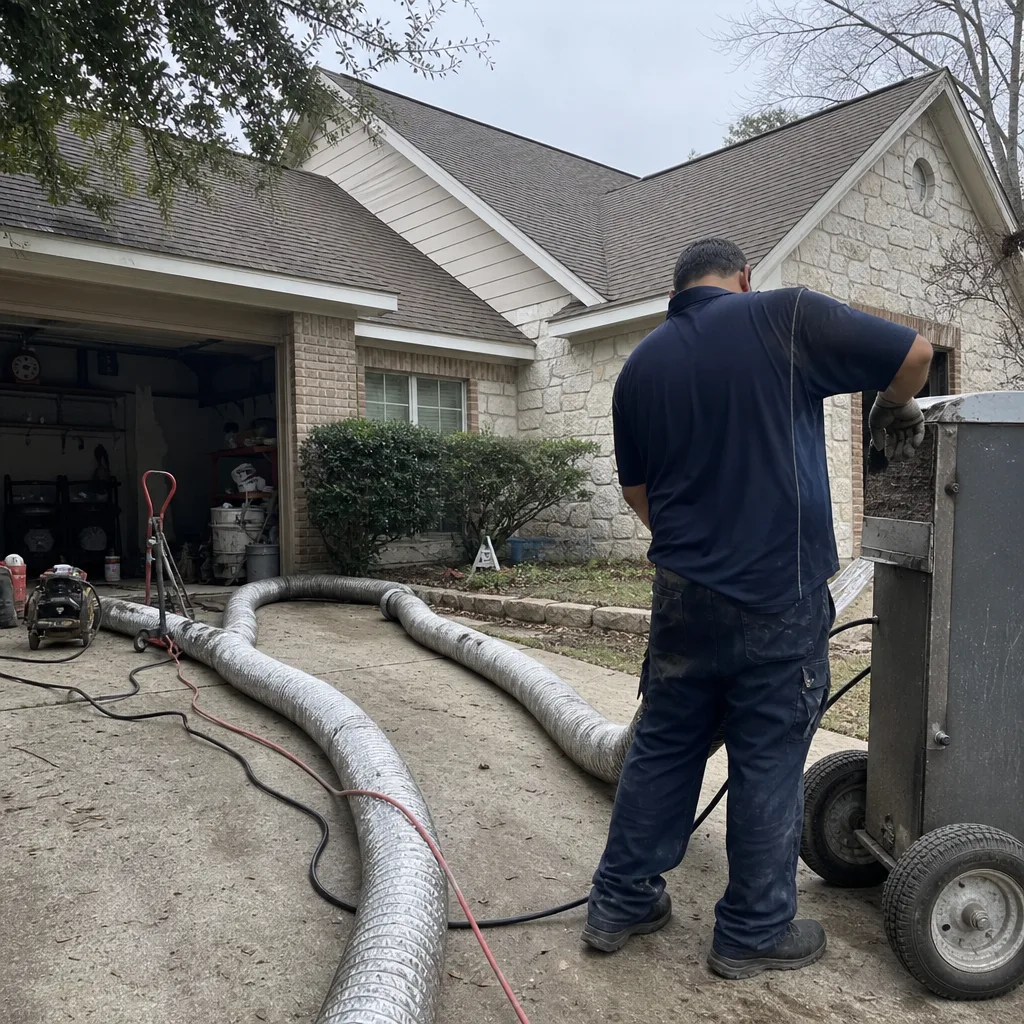 Before
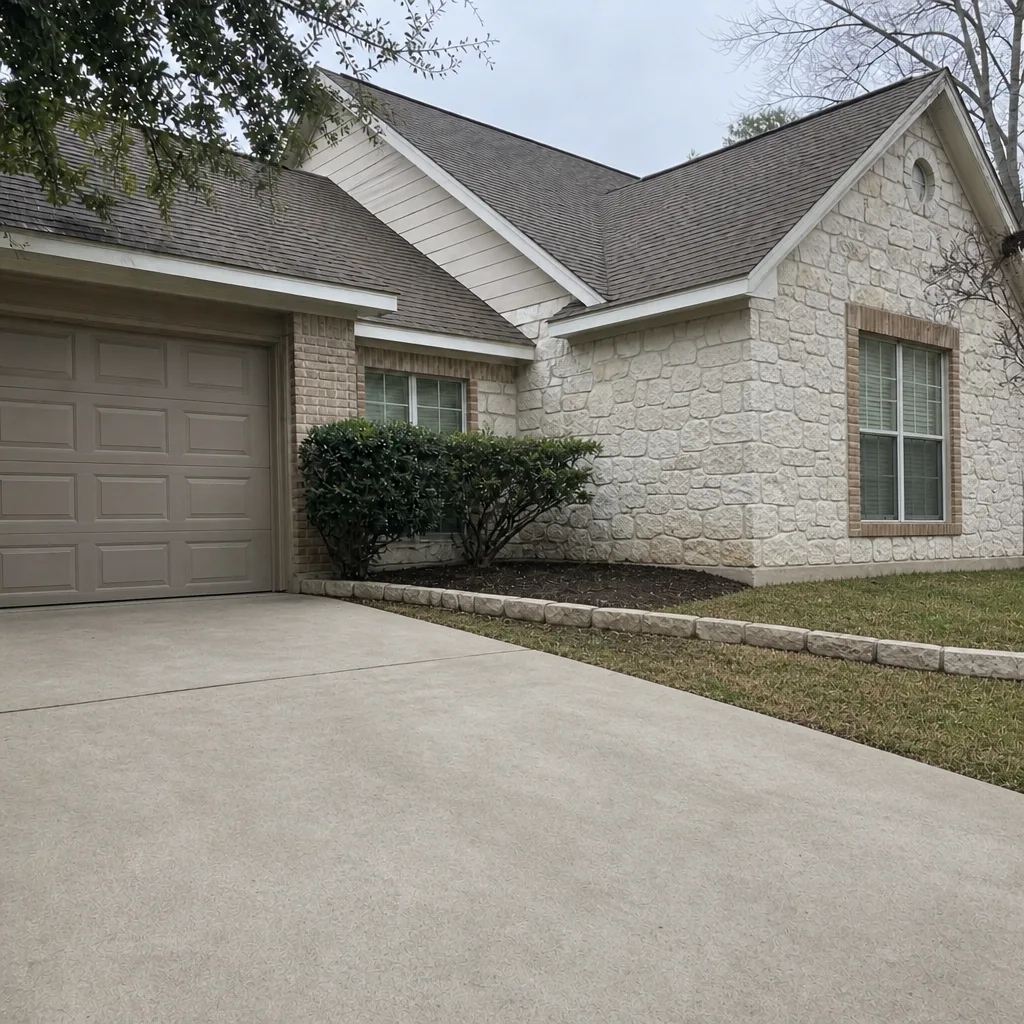 After
When to Call a Professional
You don’t need to guess. There are clear moments when a professional-grade duct cleaning is worth the call. You’ve recently moved into a home, especially a new build in the College Station area, and you don’t know what’s in the ducts. You’re seeing visible dust blow out of the registers when the system kicks on. Someone in the home has allergies or asthma that seem tied to the household air. Your dryer takes noticeably longer to dry a load, which points to a lint-clogged vent and a real fire risk. You can see visible debris in the return grille. Or you’ve just had major renovation work done and the ducts pulled construction dust.
Bedrock Air Duct Cleaning offers free estimates in College Station – call (833) 588-6184. We answer 24/7. Fast dispatch from 7am to 7pm, Sunday through Friday.
Frequently Asked Questions
Residential duct cleaning in College Station is priced per job, not per vent, because every home’s duct layout is different. The honest approach is a free estimate on site that sets a flat price for the whole system before any work starts. That’s the number that matters. A phone-quote teaser that turns into a bigger invoice on arrival is the pattern to avoid. Call (833) 588-6184 for an exact quote – estimates are free.
Usually the cheaper quote is a different service. Consumer-grade equipment with a shop vacuum and a single pass costs a company much less to deploy than remediation-class negative air and agitation equipment, and the work reflects that. The low number also often isn’t a final price; it’s the start of a negotiation with a technician standing in your home. Ask what equipment class the company uses before comparing two quotes.
Before-and-after photos of your own ducts, taken at the same points. That’s the standard. A company using professional equipment can produce photos of the register boots and the main trunk from before and after the cleaning. If you never see photos, you have no way to verify. Ask to see a sample before you book, and confirm the photos of your own home will be provided at the end.
Most homes in College Station benefit from cleaning every few years, sooner if there’s recent renovation, a new build, pets, or an allergy concern in the household. It’s not an annual service for a typical home. What actually changes the recommendation is the home’s history: a new build or a recent remodel often needs attention immediately, while an established home with no renovation can wait longer.
Yes, if the dryer is taking longer to dry loads or the vent hasn’t been cleaned recently. Lint accumulation in a dryer vent is a documented fire hazard, and the vent is often the most overlooked duct in the house. Treating dryer vent cleaning as a fire-risk service rather than a cosmetic add-on is the right framing, and a complete duct company should offer it as part of its scope. Call (833) 588-6184 for an estimate that includes it.
It depends entirely on the specific operator and equipment, not on the brand type. A local company with commercial-class equipment and a defined process will out-perform a franchise with consumer-grade gear, and the reverse can also be true. What matters is whether the company can name its equipment, explain its agitation method, and show you before-and-after photos. The brand name is the least useful piece of information in that list. Call (833) 588-6184 for a free estimate and ask us directly.
Cleaning alone typically doesn’t require a permit, but repair work that involves structural changes or replacement of components can trigger permitting requirements. The right move is to ask the company how they handle permits for repair work, and to check with the city’s building department if the scope is more than a clean-out. A professional company will know the answer for the College Station area.
Removing a heavy accumulation of settled dust, pollen, and debris from the ductwork reduces what’s available to circulate through the home. That’s a real effect, but it isn’t a medical claim; it’s simply what happens when the reservoir of debris gets smaller. Households that see the most meaningful difference tend to be the ones where the ducts were genuinely overdue for cleaning. The best way to know where your ducts stand is an inspection.
The Bottom Line
In a state with no licensing requirement and no mandatory equipment standard, “brand” is only meaningful when the company behind it can answer three questions clearly: what equipment class do you operate, how do you agitate the duct walls, and do you provide before-and-after photos of my own ducts. Anyone who can answer all three is a serious professional. Anyone who can’t is selling a vacuum pass with a logo on the van. Ask the questions, request the photos, and treat the answers as the real credential. Our technicians have up to 10 years of experience, and we’d rather walk you through our equipment than our marketing.
Call (833) 588-6184 for a free estimate. We answer 24/7. Fast dispatch from 7am to 7pm, Sunday through Friday.
Written by the team at Bedrock Air Duct Cleaning.