
Last updated November 15, 2026
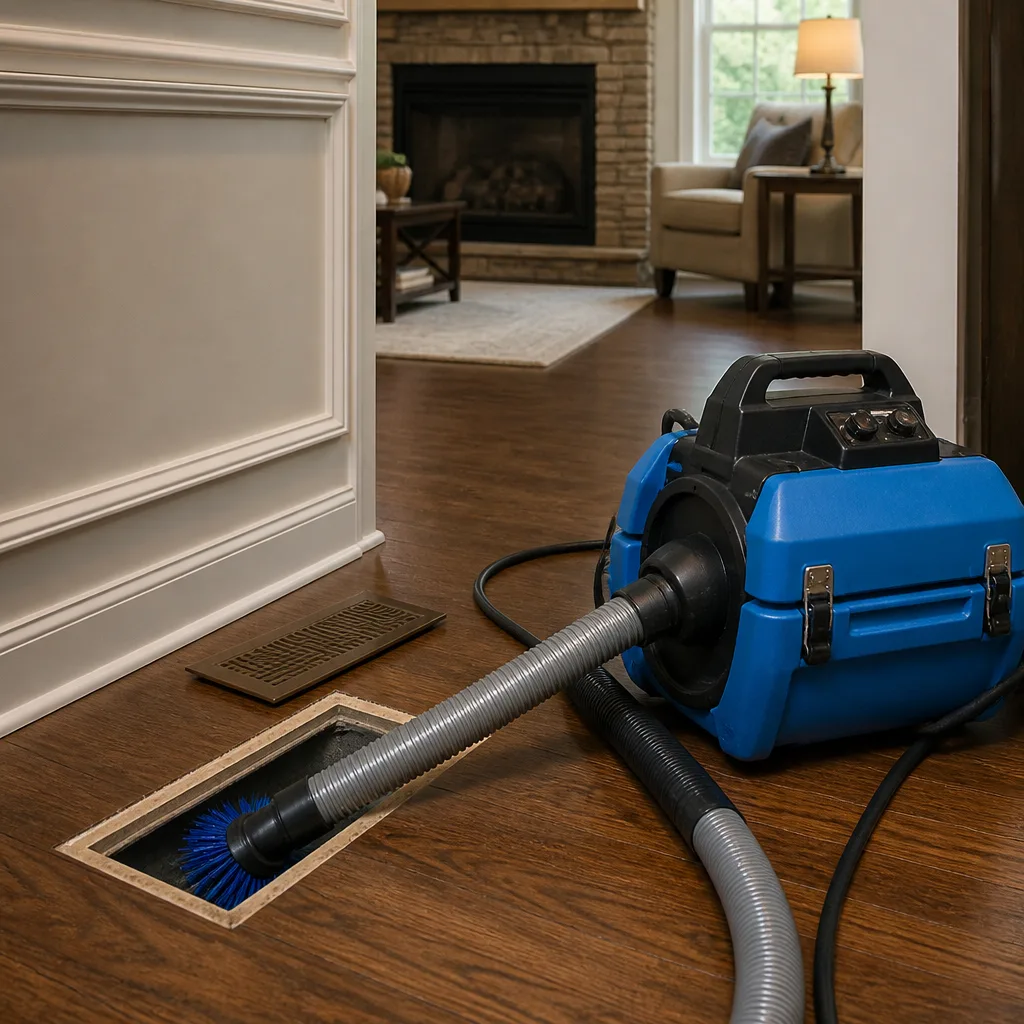 Whole-home duct cleaning
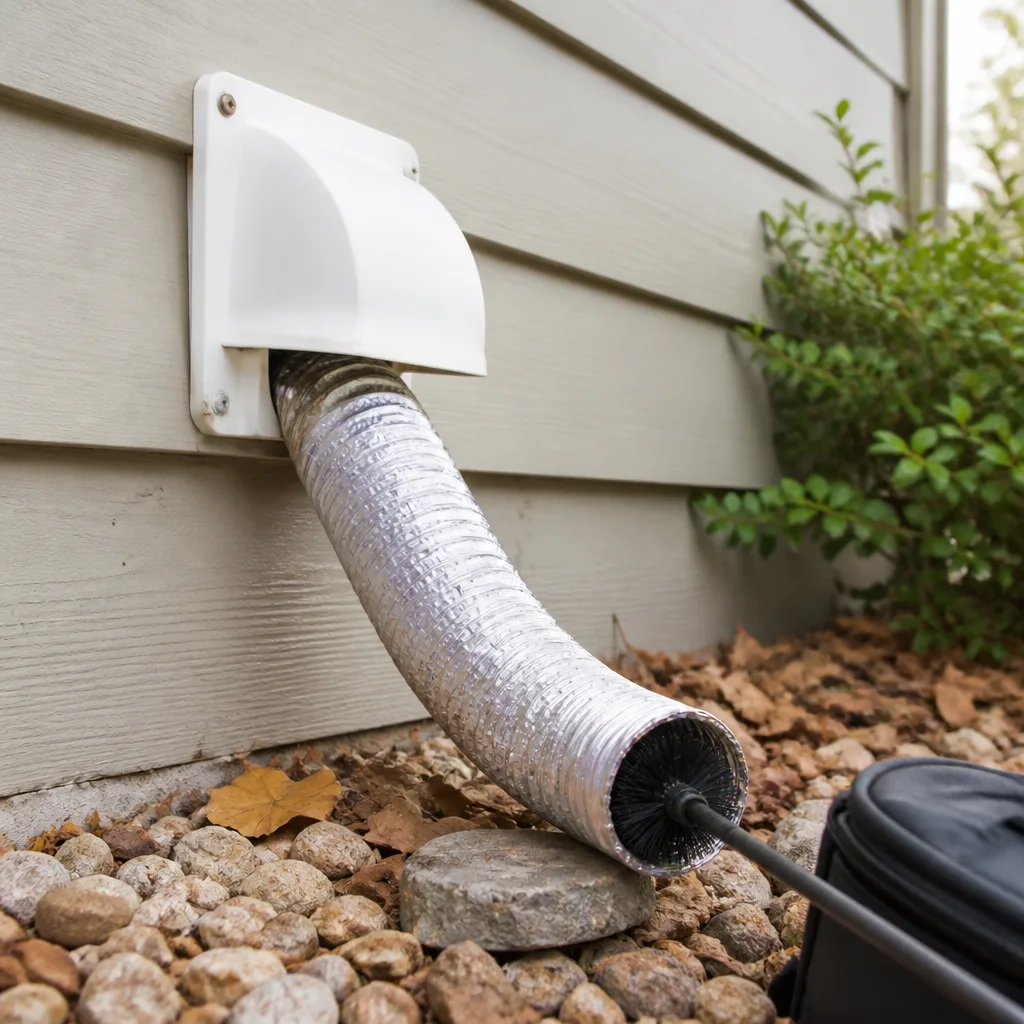 Dryer vent cleaning
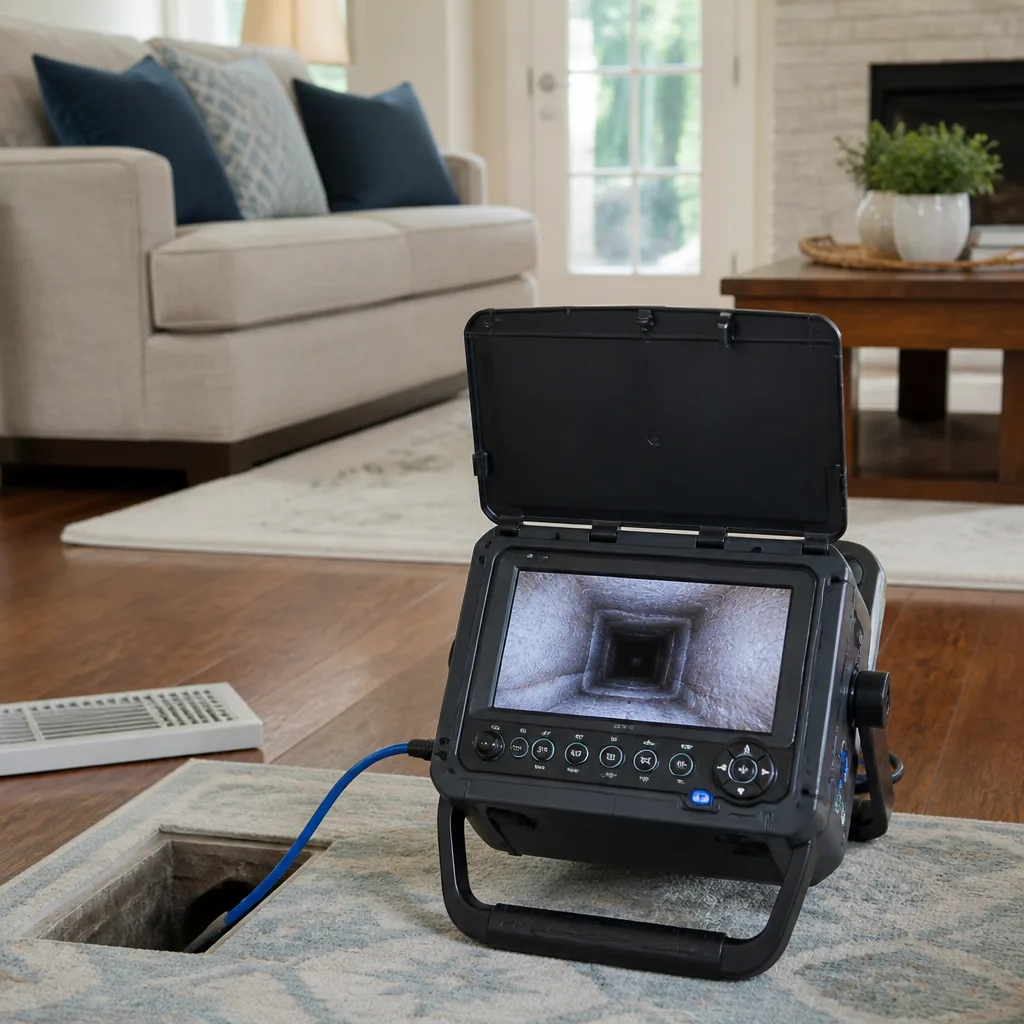 Camera inspection
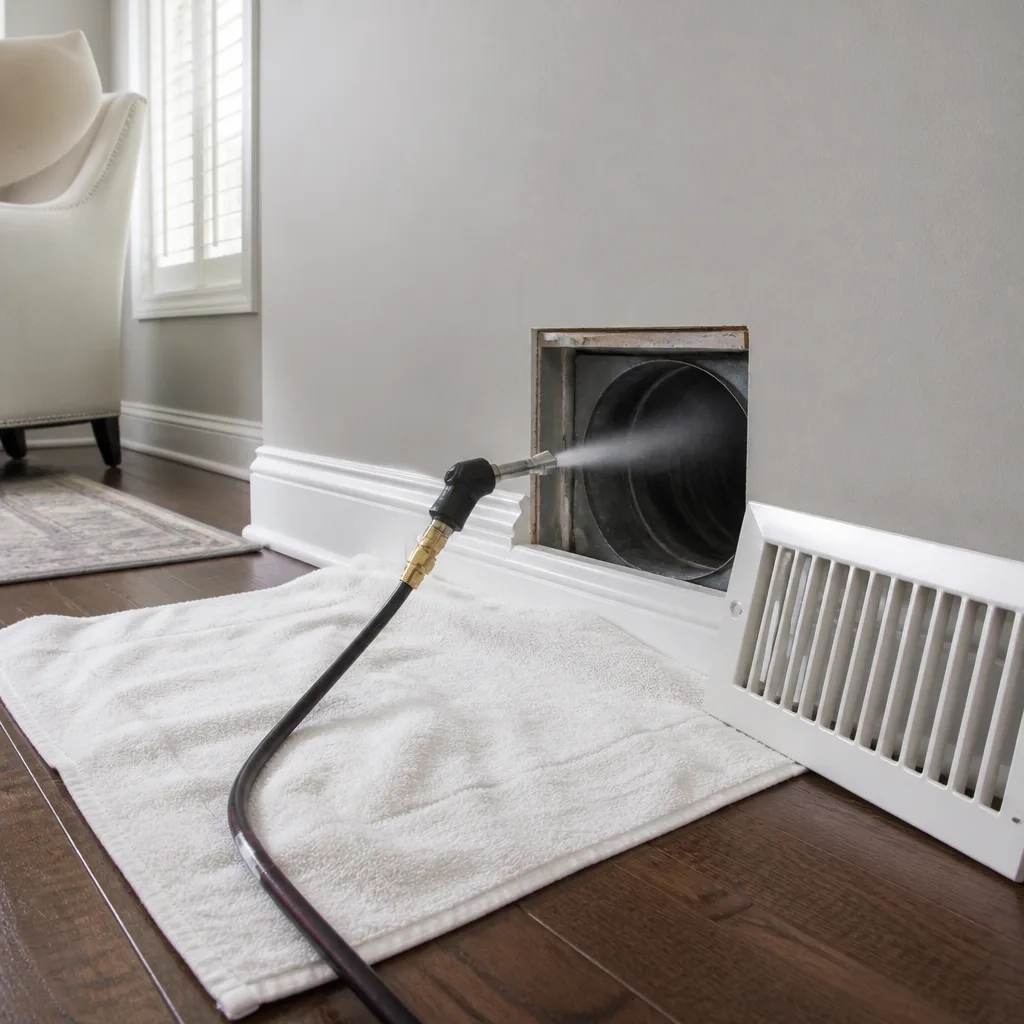 Sanitizing & deodorizing
Whole-system duct and dryer vent check with before-and-after photos - you see exactly what came out of your vents
That "$99 whole-house special" is a bait ad - the real number appears once they are in your hallway, or the "clean" is a shop-vac at the register. We photograph the inside of your ducts before and after instead.
Air Duct Cleaning Maintenance Checklist for College Station Homeowners
If your MERV-8 filter is loading up in under three weeks during Brazos Valley allergy season, your ducts aren’t the problem. Your filtration is starving the system, and every cabinet gap and return chase is pulling unfiltered air past the coil. Most duct cleaning checklists stop at “change your filter and schedule a cleaning.” That’s the easy part. The harder part is everything that happens between visits, and in College Station’s pollen load and humidity swings, the between-visit work is what decides whether a cleaning lasts two years or gets undone in eighteen months. This guide walks through the whole cycle: filter intervals tuned to this climate, do-it-yourself checks at the register boots, attic and crawl space access points on pier-and-beam and slab homes, and when a duct blaster check is worth the money versus waiting.
Quick Answer
A working air duct maintenance checklist for College Station homes covers four things on a schedule: filter changes calibrated to the spring pollen load (often every 30 to 60 days from March through May, not the 90 days printed on the package), a visual check of accessible register boots for moisture streaking, a seasonal coil rinse and condensate line flush, and a professional duct cleaning every two to three years with a duct blaster or blower door check at the mid-point. The checklist matters more than the cleaning itself because recontamination is the norm, not the exception.
Styles & brands we work with
- Whole-home duct cleaning
- Dryer vent cleaning
- Camera inspection
- Sanitizing & deodorizing
Table of Contents
- Why a Cleaning Doesn’t Stay Clean in College Station
- Filter Selection and Change Intervals for Brazos Valley Air
- How to Inspect Register Boots for Moisture Streaking
- Attic and Crawl Space Access Checks for Pier-and-Beam and Slab Homes
- When to Schedule a Duct Blaster or Blower Door Check
- Seasonal HVAC Tasks That Protect Duct Cleanliness
- The 12-Month Maintenance Timeline
- What a Professional Cleaning Actually Involves
Why a Cleaning Doesn’t Stay Clean in College Station
A duct cleaning resets the system. It does not keep it reset. In our experience working homes across College Station, we see the same pattern: a thorough cleaning removes years of accumulated dust, pollen, and construction debris, and then within a year the homeowner is back where they started because nothing upstream changed. The ducts are downstream of the filter, the coil, the return chase, and the cabinet seals. If any of those four are compromised, the cleaned ducts become the settling chamber for everything the system pulls in.
College Station has a particular set of drivers. Spring pollen from live oaks, pecans, and the surrounding pastureland loads the return side hard from roughly March through May. Then the summer humidity arrives, and the system runs long cycles that pull warm, moist attic air through every gap in the air handler cabinet and duct collar. That moisture doesn’t turn to dust; it turns to a sticky film inside the ducts that catches the next round of pollen. By fall, the film has dried and flaked, and the cycle restarts.
Add College Station’s construction pace. New neighborhoods and infill projects leave drywall dust and framing debris in return chases for years after the certificate of occupancy. Homes near the Texas A&M campus that see high tenant turnover often go multiple filter cycles without a change, which pushes dust straight past a loaded filter and into the coil. That’s the point where a cleaning alone won’t fix it, and an air duct cleaning has to be paired with a filter and seal correction to hold.
This checklist is built around those drivers. It assumes the cleaning is done correctly and asks a different question: what does the homeowner do between visits to keep the result from collapsing?
Filter Selection and Change Intervals for Brazos Valley Air
Filter selection is the single highest-leverage decision in duct maintenance, and it’s the one most College Station homeowners get wrong in both directions. The instinct after a cleaning is to buy the highest MERV rating on the shelf. That can be a mistake. A filter rated too high for a residential blower restricts airflow, the system runs hotter and longer, and static pressure climbs until the cabinet gaps start leaking unfiltered air into the return. The filter becomes the least of the problems.
The other mistake is running a MERV-4 fiberglass panel because it’s cheap and “lets the system breathe.” It does breathe. It also passes most of the spring pollen straight through to the coil, which is exactly the surface you don’t want coated.
How to pick a filter for a College Station home
- Start with the filter slot depth and the manufacturer’s stated maximum MERV for the air handler. Most residential systems here are rated for MERV 8 to MERV 11. Don’t guess; check the label inside the cabinet door.
- Choose MERV 8 for standard 1-inch slots. It catches pollen, mold spores, and most of the fine dust that loads a return without over-restricting a 1-inch filter.
- Choose MERV 11 to MERV 13 only if you have a 4-inch or 5-inch media cabinet, or the manufacturer confirms the higher rating for your blower. Thicker media handles higher ratings without the pressure penalty.
- Skip washable electrostatic filters unless the manufacturer specifically calls for one. They load unevenly and often get reinstalled wet.
Change intervals calibrated to College Station seasons
- March through May (pollen peak): check the filter every two weeks and change when it’s visibly gray or the edges are matted. Many homes here need a change every 30 days during this window, not 90.
- June through September (long run cycles): every 30 to 45 days. The system runs more hours, so the filter loads faster regardless of outdoor pollen.
- October through February: every 60 to 90 days on a MERV 8, sooner if you run the heat heavily or have pets.
- After any renovation, move-in, or major cleaning: change the filter immediately after the work, then again two weeks later. Drywall dust keeps circulating long after the crew leaves.
Write the change date on the filter edge with a marker. It’s the simplest habit that keeps the interval honest, and it’s the one thing a technician can check in five seconds on the next visit.
How to Inspect Register Boots for Moisture Streaking
Register boots are the metal or plastic transition between the duct and the room, and they’re the earliest place a moisture problem shows up visually. If you learn to read them, you’ll catch a drain pan or coil issue weeks before it becomes a duct cleaning problem. The check is simple and takes about ten minutes per register.
- Look at the boot face and the drywall around it. Any dark streaking, water staining, or a tide line at the edge of the boot is worth investigating. Clean dust is gray and even. Moisture staining is darker, patchy, and often has a defined border where the water stopped.
- Check for rust at the seams. Rust on a galvanized boot means sustained moisture, not a one-time spill. That points upstream.
- Wipe the inside of the boot with a white paper towel. A light gray film is normal. A dark, smeary, or tacky film means moisture is combining with dust, which is the condition that grows biological material inside the duct.
- Smell the register with the system running. A musty or “wet basement” smell is the second indicator, and it often shows up in the rooms closest to the air handler first.
- Check the supply closest to the air handler in the attic or closet. If the primary supply boot is wet or stained, the coil or drain pan is the likely source. Stop there and get it looked at.
What you’re looking for is the transition from “dusty” to “damp.” Dust is a cleaning issue. Damp is a moisture issue, and cleaning damp ducts without fixing the source is throwing money at a symptom. In College Station’s summer humidity, a partially clogged condensate line or a pan that isn’t draining cleanly will push moisture into the supply plenum, and from there into every boot downstream.
Attic and Crawl Space Access Checks for Pier-and-Beam and Slab Homes
College Station has a mix of housing stock, and the access checks differ by foundation type. Both matter for duct maintenance because the ducts on the other side of the access point are the ones most likely to be damaged, disconnected, or pulling attic air.
Attic access (all homes with attic-mounted air handlers)
- Inspect the flexible duct connections at the plenum. Look for sagging runs, kinked sections, and collars that have separated from the trunk. A disconnected collar in the attic pulls 130-degree summer air straight into the supply and pushes dust and insulation fibers into the rooms.
- Check the duct insulation jacket for tears. The outer jacket is not the duct; it’s the vapor and thermal barrier. A torn jacket lets condensation form between the jacket and the inner duct core, which is a common source of moisture staining at the boot.
- Look at the platform and the deck. Any water staining on the plywood under the air handler is a drain pan or overflow issue, not a duct issue, but it will drive duct contamination if left alone.
- Confirm the attic hatch seals. An unsealed hatch pulls hot, dusty attic air into the return chase every time the system cycles.
Crawl space access (pier-and-beam homes)
Pier-and-beam homes on the older streets of College Station often have duct runs in the crawl space. The checks there are about ground moisture and pest intrusion, not just duct condition.
- Check the vapor barrier. A torn or incomplete ground cover lets soil moisture rise into the crawl space, and the ducts sitting in that damp air condense on the outside of the insulation jacket.
- Look for rodent or insect activity near the ducts. Rodents pull insulation from duct jackets for nesting. A torn jacket in the crawl space is often the first sign.
- Confirm the ducts are supported. Sagging runs trap debris at the low point, and that trapped debris is exactly what a duct cleaning is meant to remove.
- Check access point seals when you close up. A crawl space hatch that doesn’t seat pulls soil air up into the living space and into the return.
On slab homes, the check shifts to the wall chases and the closet air handler. Look for water staining on the closet floor and around the return grille, and confirm the closet door has a proper louver or return path so the system isn’t starving for air.
When to Schedule a Duct Blaster or Blower Door Check
A duct blaster and a blower door are two different tests, and College Station homeowners often conflate them. A blower door measures how leaky the house is as a whole. A duct blaster pressurizes just the duct system and measures how much air escapes from it. Both matter for duct maintenance, and both tell you something a cleaning alone cannot.
When to schedule a duct blaster check
The mid-cycle point is the right time, which usually means 12 to 18 months after a professional cleaning. Don’t wait for the next full cleaning. A duct blaster at the mid-point tells you whether the system is losing air into the attic or crawl space faster than it should, and whether the cleaning is holding or the leaks are pulling new dust in. It also catches disconnected collars and torn trunks that a visual check would miss behind insulation.
When to schedule a blower door check
A blower door check is worth the money when you’re deciding between two paths: seal the envelope and see how much filtration and return sizing needs to change, or accept the envelope as-is and size the filter and return to compensate. In our experience, older College Station homes with original windows and doors often run leaky enough that the return is pulling from the envelope rather than the living space. A blower door test quantifies that. Combine it with a duct blaster if you’re planning any renovation that touches the HVAC or the envelope.
When to skip both and just schedule a cleaning
If the ducts haven’t been cleaned in more than three years, or there was a renovation or water event, skip the testing and clean first. Testing a heavily contaminated system tells you about leaks, not about the reason the system is loaded. Clean first, then test at the mid-point.
Seasonal HVAC Tasks That Protect Duct Cleanliness
The HVAC tasks on the checklist aren’t duct cleaning tasks in the strict sense. They’re the upstream work that determines whether the duct cleaning holds. Most are simple, and skipping them is the most common reason a cleaned system recontaminates fast.
Coil rinse timing
Rinse the evaporator coil before the cooling season starts, not in the middle of it. In College Station, that means late March or early April, before the pollen peak. Rinsing in midsummer means the coil is coated with pollen within weeks. A clean coil drains condensate evenly and doesn’t hold the moisture film that turns dust into biological growth. If the coil is accessible and the manufacturer allows it, a technician can rinse it during the pre-season service visit.
Condensate line flush schedule
Flush the condensate drain line every 30 to 60 days during cooling season. A partially clogged line backs water into the pan, and a pan that doesn’t drain cleanly pushes humidity into the supply plenum. That’s the single most common upstream cause of moisture staining at the boot in College Station homes. The flush is a homeowner task: pour a cup of distilled white vinegar or plain water down the access port if one is provided, and don’t force anything down a line you can’t see. If it backs up, call a technician.
Seasonal register and grille cleaning
Vacuum the return grille face monthly during pollen season with a brush attachment. The grille is the first restriction the air hits, and a loaded grille forces the system to pull harder past the filter, which increases leakage at the cabinet gaps. This is a five-minute task and it extends filter life meaningfully.
Return chase seal check
Once a year, check the return chase for gaps at the cabinet and the wall penetrations. A bead of mastic on the visible seams is a homeowner-safe check; a technician should handle anything inside the air handler cabinet or the attic. Sealing the return is the single most effective recontamination control aside from filter discipline.
Dryer vent check
The dryer vent is a separate system, but it’s on the same maintenance rhythm and the stakes are higher because lint is a documented fire hazard. Check the outdoor vent flap monthly for reduced airflow and clean the flexible transition behind the dryer every six months. A professional dryer vent cleaning every one to two years clears the full run, including the transitions and elbows that a homeowner can’t reach.
The 12-Month Maintenance Timeline
This is the checklist compressed into a calendar. It assumes a professional duct cleaning is either current or scheduled; adjust the year-one entries if the system is overdue.
- Late February or early March: change the air filter, then rinse the evaporator coil (or schedule the service) before the pollen season arrives.
- March through May: check the filter every two weeks, vacuum the return grille monthly, and inspect the accessible register boots for moisture streaking.
- April: flush the condensate line, confirm the attic hatch seal, and check the dryer vent flap for airflow.
- June: flush the condensate line again, check the filter, and walk the attic or crawl space for tears in the duct jacket.
- July and August: monthly condensate flush, monthly filter check, register grille vacuum.
- September: schedule the duct blaster or blower door check if the last cleaning was 12 to 18 months ago. Otherwise note the date for the spring.
- October: filter change, dryer vent check, and a full visual walk of every accessible register. Any new moisture streaking is worth a professional look.
- November through February: filter change every 60 to 90 days, annual return chase seal check, and a walk of the attic or crawl space.
If you have an Aprilaire or Honeywell air-quality control in the system, add a review of its settings at the start of each season. Those controllers do work only if the settings match the season, and the humidistat or fan schedule often drifts from where it was originally set.
What a Professional Cleaning Actually Involves
A professional duct cleaning is not a single vacuum pass at the closest register. It’s a mechanical cleaning of the full system with negative pressure to contain what’s loosened, followed by a visual verification, and it’s the kind of work that determines how long the checklist above can hold the result. At Bedrock Air Duct Cleaning, the difference is the equipment class. We use Rotobrush and Nikro mechanical cleaning systems built for commercial and professional use, and Abatement Technologies negative-air and HEPA equipment, the same class of tools used in professional remediation work. That matters because a consumer-grade blower loosens dust without capturing it, and the dust lands back in the ducts once the machine leaves.
A complete visit covers the three things that make up the duct system lifecycle: the cleaning itself, the dryer vent, and any actual duct repair the inspection uncovers. We treat the dryer vent as a fire-risk service, not an afterthought. We work with Honeywell and Aprilaire air-quality platforms, so the technician understands how the downstream controls affect what reenters the ducts. If a register boot shows moisture streaking, we can identify whether the source is the coil, the drain pan, or a torn jacket. Duct repair is offered where a disconnected collar, a torn trunk, or a failed seal is the true cause of a recontamination pattern. One flat price per system is agreed before work starts, never a per-vent price, and we provide before-and-after photos of the ducts so you can see what was actually done.
Our technicians have up to 10 years of experience. For more on how we approach residential Bedrock Air Duct Cleaning work and what a full-system service looks like, the link goes straight to the service overview.
Common Mistakes to Avoid
- Running the highest MERV filter the store sells. A MERV-13 in a 1-inch slot over-restricts the blower on most College Station systems and forces unfiltered air past the cabinet gaps. Match the rating to the slot depth and the manufacturer’s spec.
- Trusting the “90 days” on the filter package. That interval is meaningless in Brazos Valley spring pollen. Check the filter itself; if it’s matted, it’s done, regardless of the calendar.
- Cleaning the ducts and leaving the return chase open. A cleaned system with an unsealed return pulls attic or closet air every cycle, and the ducts are downstream. Seal the chase or the cleaning is a round trip.
- Ignoring moisture streaking at the register boots. Homeowners often wipe the streaking and move on. That’s the earliest indicator of a drip pan or coil issue, and addressing it now is far less expensive than the duct repair it leads to.
- Skipping the condensate line flush. A partly clogged line in College Station’s summer humidity drives moisture into the supply plenum and into every boot downstream. The flush takes a few minutes.
- Choosing a low-bid, single-pass cleaner. A blower-only pass loosens dust without HEPA containment, and much of it settles back into the system. Ask what equipment a company uses and whether it includes negative air or HEPA filtration.
- Waiting until the ducts are visibly dirty to test the system. A duct blaster or blower door check at the mid-point catches leaks and disconnected collars long before the next cleaning. Waiting means the leaks have already recontaminated the ducts.
See the difference
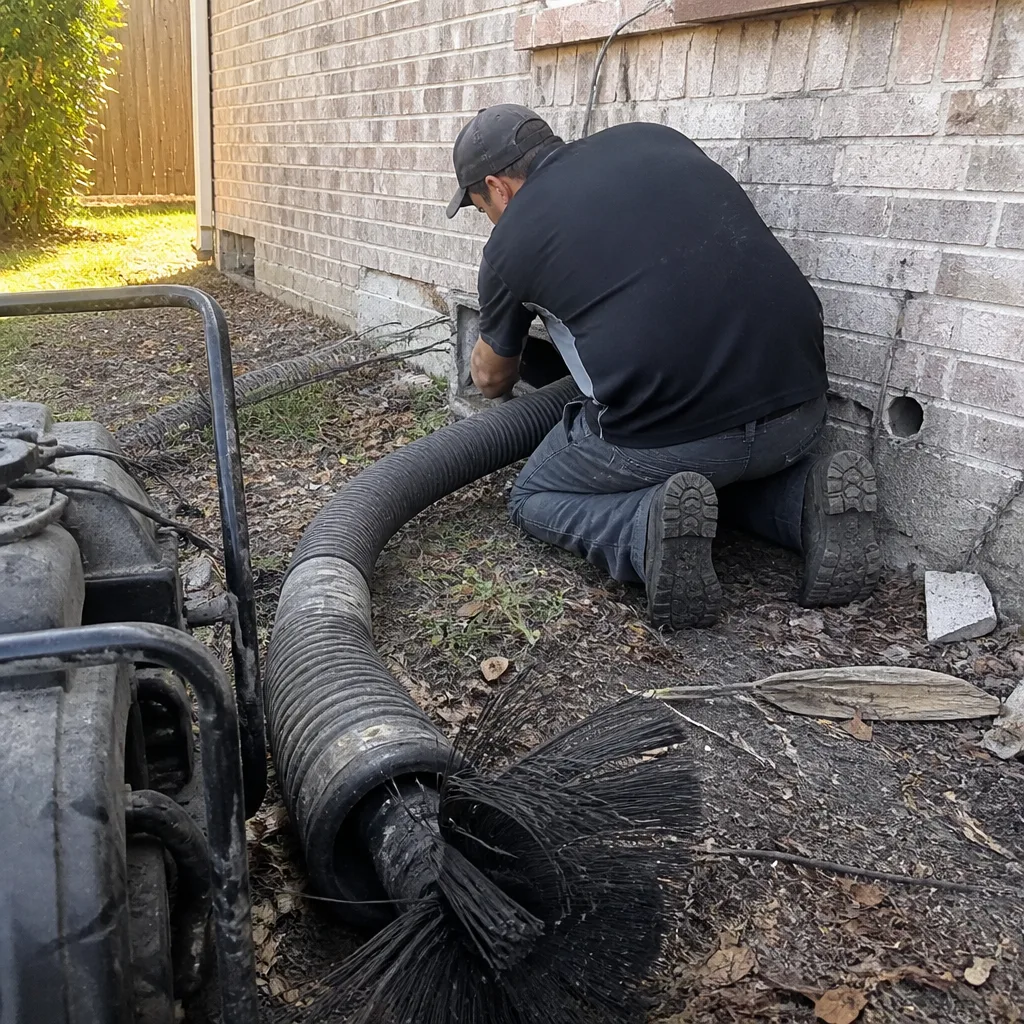 Before
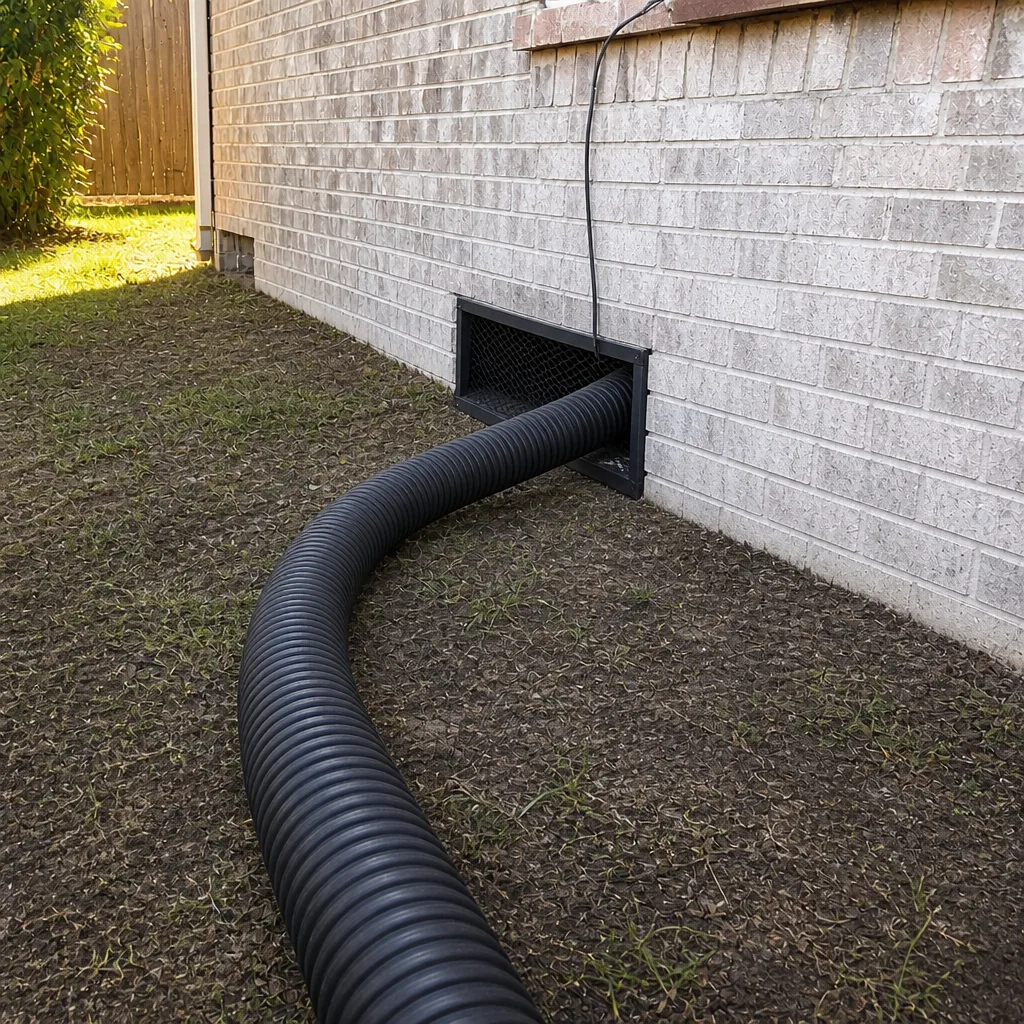 After
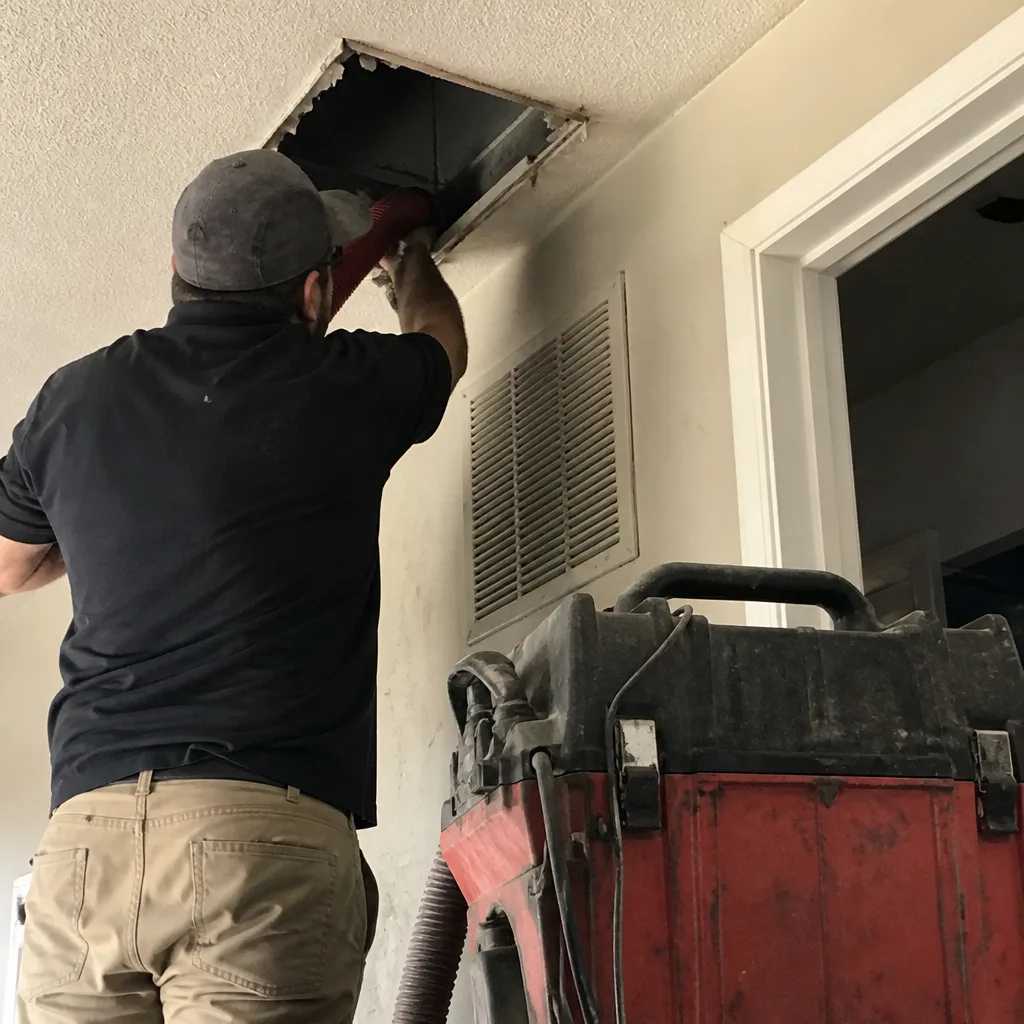 Before
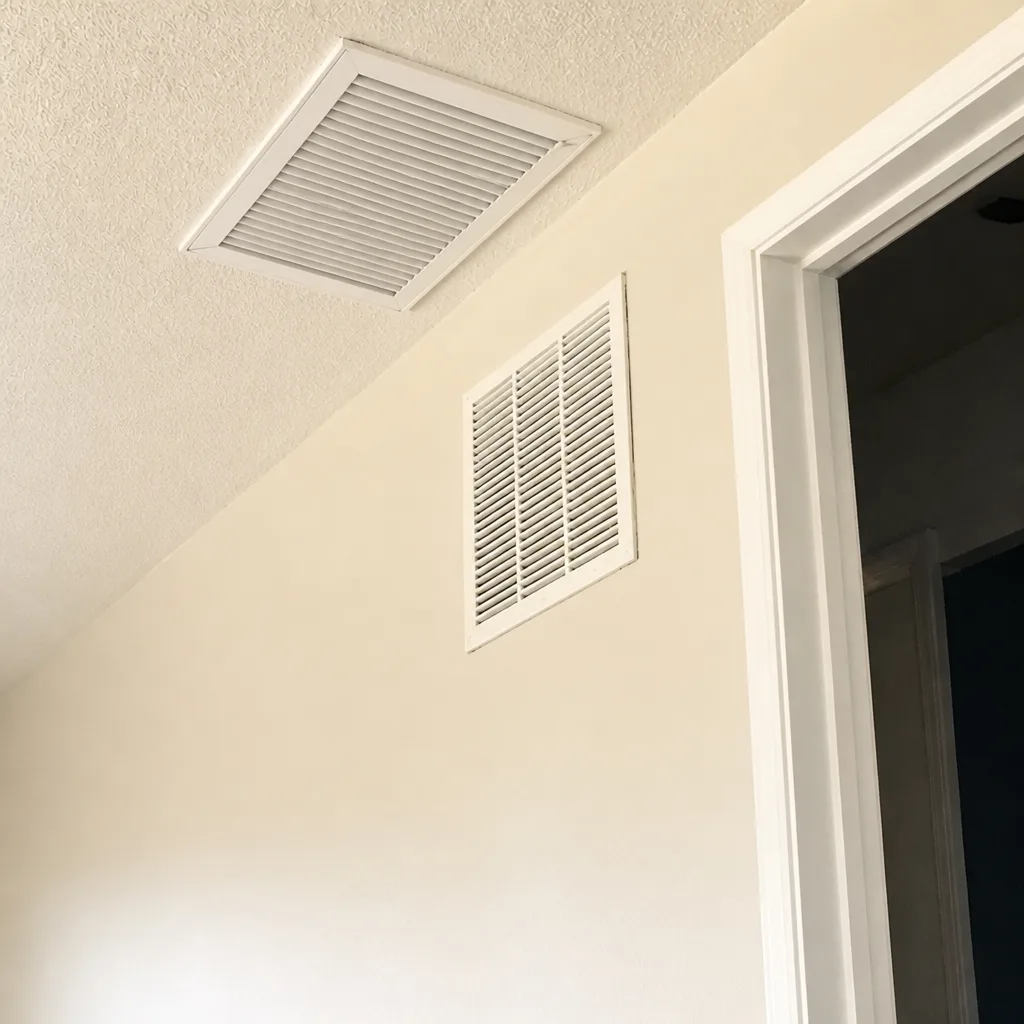 After
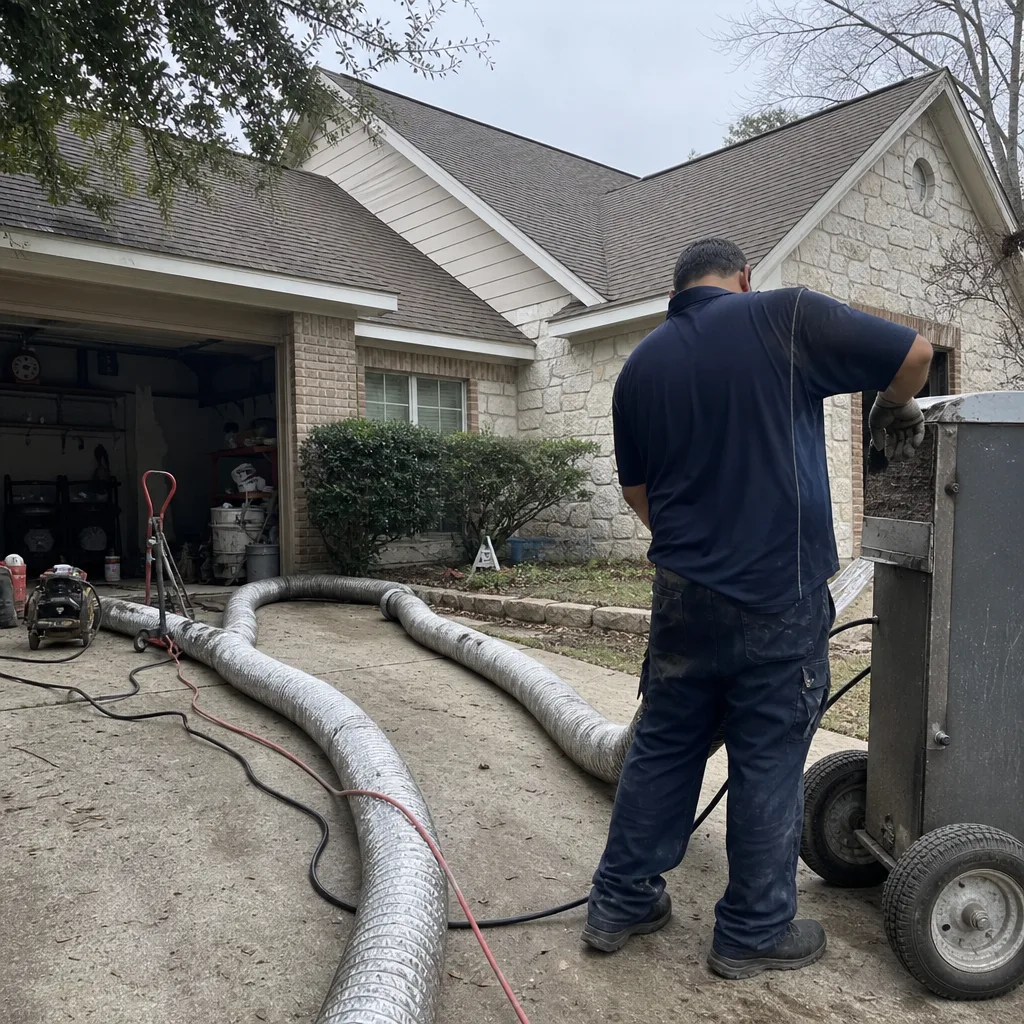 Before
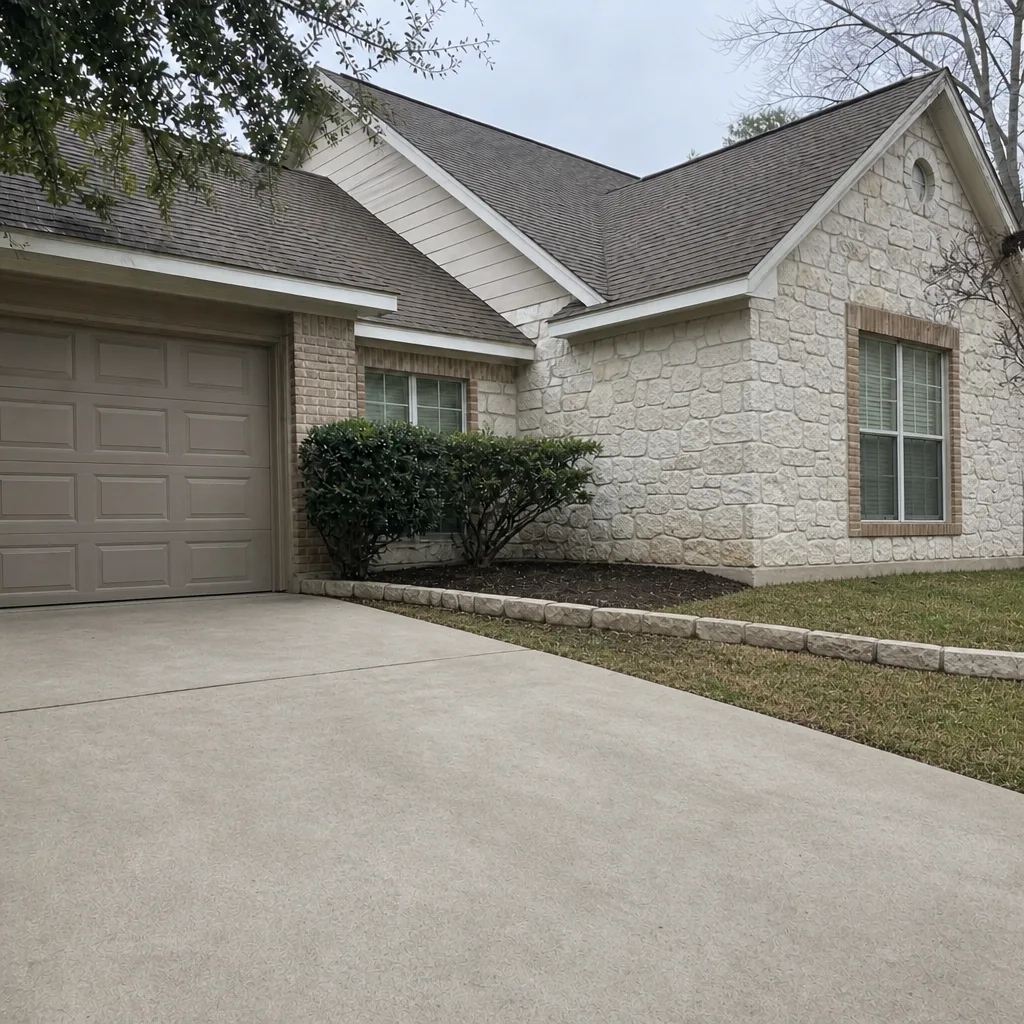 After
When to Call a Professional
Call a professional when the checklist stops being a checklist and turns into a repair question. That means: moisture streaking at more than one register boot, a musty smell that returns within a month of a cleaning, a filter that loads in under three weeks even after correct sizing, visible sagging or disconnected flex duct in the attic or crawl space, a dryer that takes two cycles to dry a load, or the ducts simply haven’t been cleaned in more than three years. Any of those is the point where a technician with the right equipment needs to inspect. Bedrock Air Duct Cleaning offers free estimates in College Station – call (833) 588-6184. We answer 24/7. Fast dispatch from 7am to 7pm, Sunday through Friday.
Frequently Asked Questions
Every two to three years for most homes, and every 18 to 24 months for homes with pets, recent renovations, or high tenant turnover. The climate matters: College Station’s spring pollen load and long summer run cycles age a duct system faster than a mild-climate home of the same age. If the filter is loading quickly and the register boots show streaking, the interval is shorter. Call (833) 588-6184 for an exact quote – estimates are free.
A whole-system cleaning typically runs a few hundred dollars for a standard single-family home, with the exact figure set per job by the written estimate. We don’t quote per-vent prices or teaser coupons, because the invoice should match the estimate. We agree one flat price per system before work starts, and we provide before-and-after photos of your ducts. Call (833) 588-6184 for an exact quote – estimates are free.
Because they’re a different service. A low-bid crew with a single blower and no negative-air containment removes surface dust from the access points and leaves the rest of the system carrying the loosened debris. We use Rotobrush and Nikro mechanical cleaning equipment and Abatement Technologies negative-air and HEPA equipment, and we treat the return chase, the supply boots, and the dryer vent as part of the job. Call (833) 588-6184 for an exact quote – estimates are free.
Ask for before-and-after photos of your own ducts, not stock images. A professional company will provide them and will show you what was removed. We do this on every job. It’s also worth asking which equipment a company uses: if they can’t name their machine or explain how they contain the debris, that tells you what to expect. Call (833) 588-6184 for an exact quote – estimates are free.
After, at the mid-point of the cycle, which means 12 to 18 months later. Testing a heavily contaminated system tells you how leaky it is, not how much dirt it’s holding, and the cleaning is the priority. The mid-point test tells you whether the cleaning is holding and whether a duct repair is worth scheduling now instead of waiting for the next visit.
Yes. Crawl space duct runs see ground moisture and rodent activity that attic runs don’t, so the vapor barrier, insulation jacket, and duct support checks are on a tighter schedule. On slab homes, the wall chases and the closet air handler are the higher-risk areas. Both types should have the dryer vent checked on the same rhythm because the fire hazard is the same.
For homeowners who want the broader context on how a full service visit is structured, the College Station page covers what we look at. A single air duct cleaning resets the system, and a dryer vent cleaning removes a documented fire risk. Both are on the same cycle, and neither is worth much without the filter and moisture discipline above. A duct repair belongs in the same visit if a torn collar or disconnected run is the actual cause of the contamination, and we assess that as part of the estimate.
The Bottom Line
A duct cleaning is a reset, not a permanent fix. In College Station, the result holds for years if the filter interval is tuned to the pollen load, the register boots are checked for moisture streaking, the attic or crawl space access points are walked seasonally, and the condensate line is flushed on schedule. Skip those and the cleaned system recontaminates within 18 months, and the next cleaning starts from the same place. The checklist above is the between-visit work that makes the cleaning last. If you’d rather have a technician look at the whole picture, the estimate is free. Call (833) 588-6184. We answer 24/7. Fast dispatch from 7am to 7pm, Sunday through Friday.
Written by the team at Bedrock Air Duct Cleaning.