
Last updated November 15, 2026
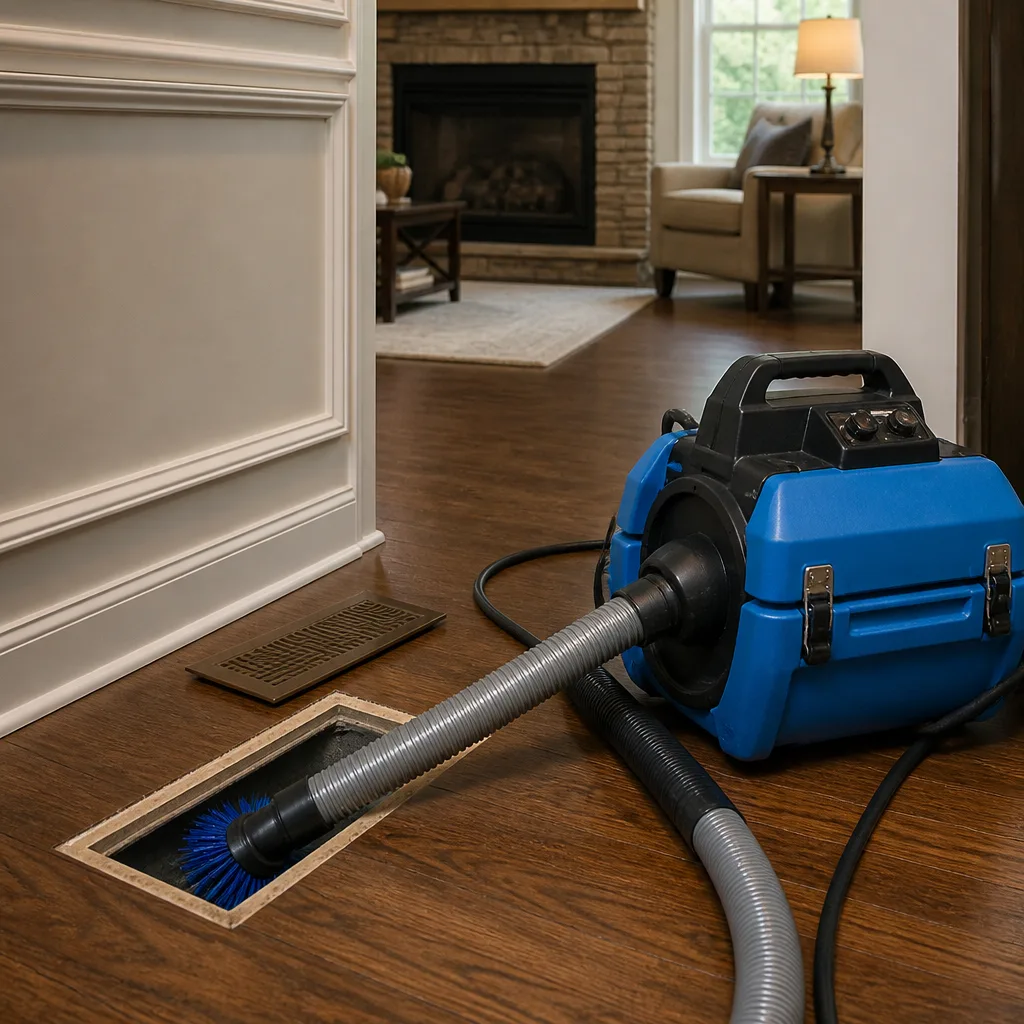 Whole-home duct cleaning
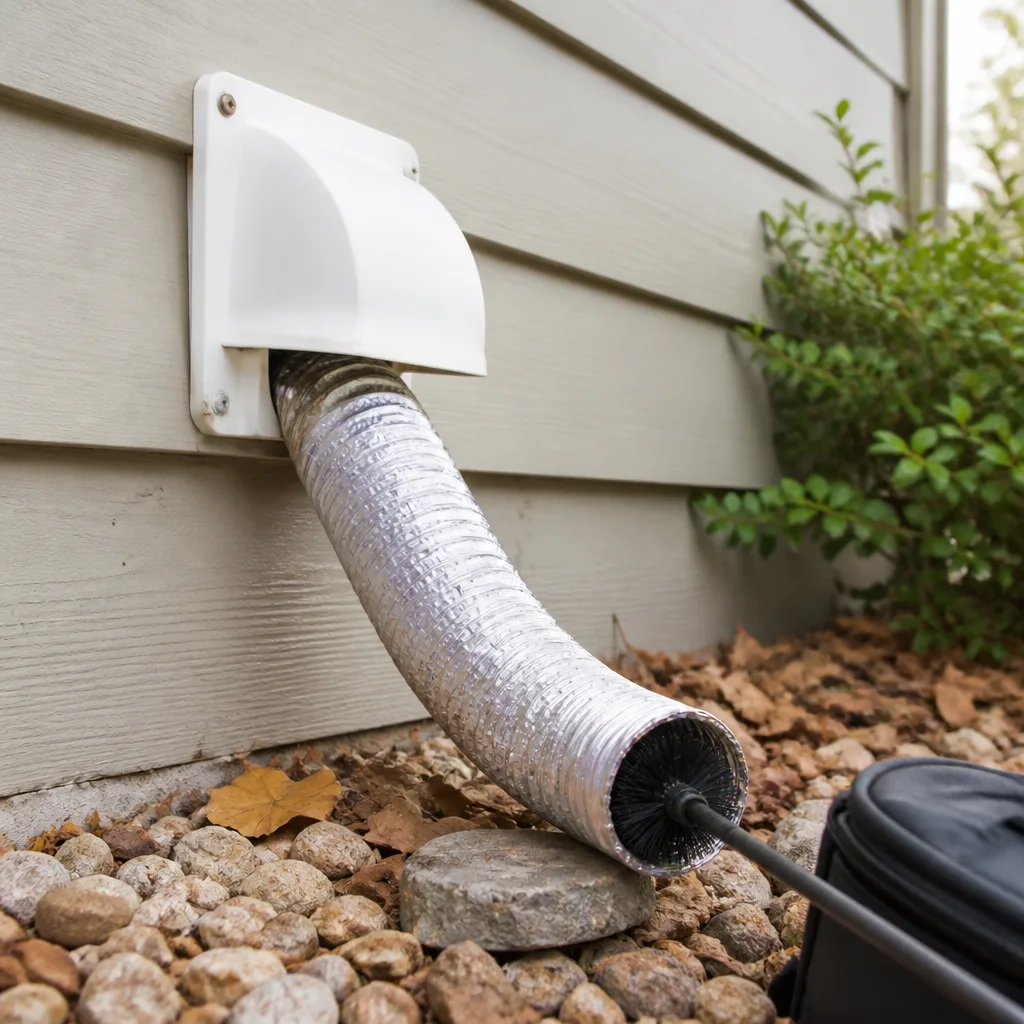 Dryer vent cleaning
 Camera inspection
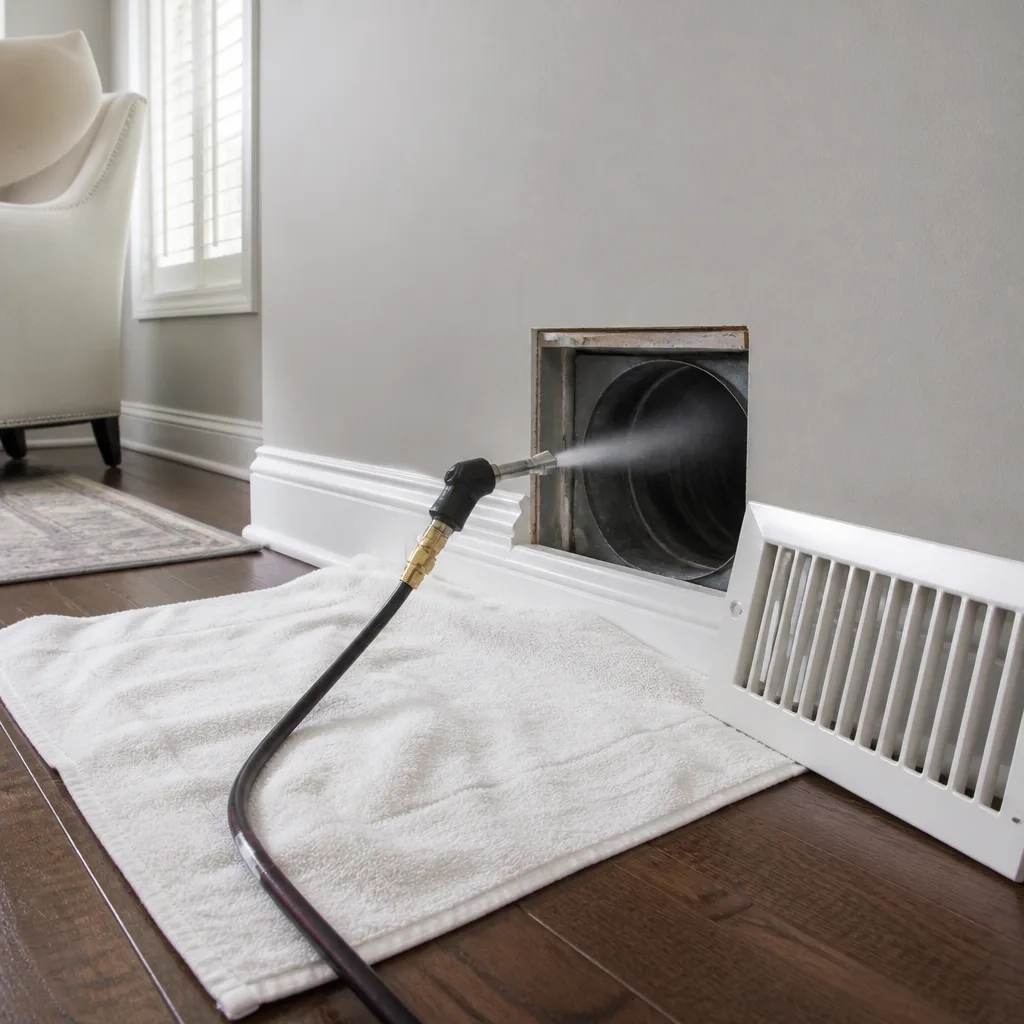 Sanitizing & deodorizing
Whole-system duct and dryer vent check with before-and-after photos - you see exactly what came out of your vents
That "$99 whole-house special" is a bait ad - the real number appears once they are in your hallway, or the "clean" is a shop-vac at the register. We photograph the inside of your ducts before and after instead.
Seasonal Air Duct Cleaning Care for College Station: Year-Round Homeowner’s Guide
Most homeowners treat duct cleaning as a once-a-decade chore, something to schedule when the air smells strange or a technician happens to mention it. That thinking works in a climate with four gentle seasons. College Station doesn’t have those. What we have is a long, punishing cooling season, a short but intense pollen window, and two transition periods where a homeowner can get ahead of the system or fall behind it. The misconception worth correcting up front: ducts don’t load up at a steady rate. Contamination comes in seasonal waves, and each season deposits a different kind of debris. Miss a wave and the next one piles on top of it. This guide walks through what each part of the year does to a home’s duct system in College Station, and how to sequence the work so nothing compounds.
Quick Answer
Seasonal duct care in College Station means working with the local climate’s actual rhythm: clear pollen and light debris in spring before the cooling season pulls it in, clean in late summer after months of near-constant run time, treat the fall heat-on as a diagnostic moment rather than a catch-up moment, and check duct runs after winter cold snaps for condensation or loose connections. Homeowners here typically need a full mechanical cleaning every one to two years, not the five-to-seven-year intervals that national guidelines assume for milder climates. The exact interval depends on filter discipline, pets, and how hard the system works.
Styles & brands we work with
- Whole-home duct cleaning
- Dryer vent cleaning
- Camera inspection
- Sanitizing & deodorizing
Table of Contents
- Why College Station’s Climate Breaks the Standard Cleaning Schedule
- Spring (March-May): Pollen Season and Filter Strategy
- Summer (June-September): Attic Heat and Duct Integrity
- Fall Transition (October-November): The First Heat-On
- Winter (December-February): Cold Snaps and Condensation
- Building Your 12-Month Duct Calendar
- Common Mistakes to Avoid
- When to Call a Professional
Why College Station’s Climate Breaks the Standard Cleaning Schedule
College Station averages more than 240 days a year above 70°F. That single number reshapes everything about duct maintenance. In a cooler climate, an HVAC system cycles on and off throughout the day, and the duct system gets real rest. Here, from roughly May through September, the system runs almost continuously. Air moves through the ductwork constantly, carrying fine dust, pollen fragments, pet dander, and lint, and depositing each of them on the liner walls. The system never parks long enough for that accumulation to settle and stay put.
That means the buildup rate here is genuinely different from the buildup rate in, say, the upper Midwest, where a national cleaning-interval guideline was probably written. Those guidelines assume a system that rests a good part of the year. A College Station system rarely gets that.
There’s a structural factor too. Much of the housing stock around College Station sits on slab foundations, with the supply and return ducts running overhead through the attic rather than beneath the floor. This attic routing is common in Texas, and it puts the ductwork in the hottest part of the house during the cooling season and the coldest part during a winter cold snap. The ducts are, in effect, exposed to the worst of both extremes.
One more local variable: duct material. Flexible insulated duct, which dominates residential construction in this region, has a spiral wire core and an inner liner. That liner is where debris adheres, and once a thin film of dust bonds to it through hundreds of run hours, a single pass from a shop-vac-style setup won’t lift it. Mechanical cleaning with professional equipment will.
This is bedrock-level work. The duct system is the part of a home’s air quality and comfort that sits out of sight, and the schedule you keep with it determines what the house breathes and how hard the HVAC equipment has to work. That’s why we built our business around it.
Spring (March-May): Pollen Season and Filter Strategy
Brazos Valley spring brings a short, intense pollen window, driven largely by oak and cedar. Pollen particles are small enough to ride in through the return-side filter, and small enough to pass through a cheap filter untouched. What makes spring critical for the ducts isn’t the pollen that stays in the air; it’s the pollen that gets pulled into the return duct, misses the filter, and bonds to the duct walls during the first hot stretches when the air conditioner starts running daily.
The sequence matters here. If a home’s ducts already carry a season or two of accumulation going into spring, running the system through pollen season only compounds it. Clearing the system before the cooling season starts is a smarter order of operations than clearing it after.
Filter strategy: the upgrade that prevents duct loading
- Match filter rating to the equipment, not to the maximum available. A high-MERV filter increases airflow resistance. On some older air handlers that means the blower strains. A licensed HVAC contractor can tell you the ceiling your unit can handle.
- Upgrade during pollen season, not year-round. A higher particle-capture filter through March, April, and May pulls more pollen out before it reaches the duct walls. Dropping back to a standard filter once the pollen window closes keeps static pressure in check for the rest of the year.
- Change more often than the box says. During heavy pollen, a filter loads fast. A filter that’s visibly gray in four weeks was doing its job. Change it.
- Check the filter size and fit. A poorly seated filter lets air bypass around its edges, sending unfiltered air straight into the duct run. That gap defeats the purpose.
We’ve seen a lot of return plenums with Honeywell and Aprilaire filter cabinets, and those platforms are worth understanding if a home already has one. A quality filter cabinet that seals properly is a better defense against duct loading than an upgraded filter stuffed into a leaky slot.
Spring is also the right window for a professional assessment if the ducts haven’t been cleaned recently. The system is about to enter its long run, and knowing what it’s carrying gives you a baseline.
Summer (June-September): Attic Heat and Duct Integrity
If you’ve ever been in a College Station attic in August, you know the number. Attic temperatures routinely exceed 95°F. For an overhead duct run in a slab-foundation home, that attic is where the ducts spend the summer, and it matters more than most homeowners realize.
How sustained heat affects flex duct
Flexible duct assemblies rely on their insulation and outer jacket to hold temperature. That jacket is a plastic and foil laminate. Years of high attic heat make it brittle and prone to cracking, especially where the run bends or where it’s stretched across a truss. A cracked jacket is a leak. In a closed attic, that’s less about losing conditioned air and more about pulling hot, dusty attic air into the supply run or pushing conditioned air out into the attic.
A second heat effect matters more for cleaning. Debris adhesion on duct liner walls accelerates with heat. The inner liner of flex duct, and the sheet-metal walls of trunk lines, become slightly more adhesive to fine dust when they’re warm, and the constant air movement plates the dust in place. By the end of a summer in College Station, a duct system that started the season lightly dusted can end it with a bonded film that needs mechanical scrubbing rather than a vacuum pass.
What to watch for through summer:
- Uneven room temperatures. A room that ran cold in April but can’t keep up by August may have a supply run that’s lost ground or a leak in the attic branch.
- Rising dust around supply vents. A faint gray haze at the supply registers points to dust being pushed out of the system into the room.
- A musty smell right after the unit cycles. This usually points to moisture or microbial growth somewhere in the system, and it deserves investigation rather than air freshener.
- Higher cooling bills without a change in usage. That’s a symptom, not a diagnosis, but it’s a signal worth acting on.
Late summer through early fall is the ideal window for a full mechanical cleaning. The system has just finished its heaviest run, the accumulation is at its peak for the year, and clearing it before the fall transition means the system starts the shoulder season clean. That’s how professional air duct cleaning is sequenced in a way that actually fits the local pattern.
Fall Transition (October-November): The First Heat-On
Most homeowners treat the first heat-on of the season as a relief. The gas or electric heat kicks on, warm air comes through the registers, and the house settles in. What actually happens on that first heat-on is more useful than that. It’s the best diagnostic moment in the whole year.
When the heating element or heat exchanger warms the duct run for the first time in months, it drives off whatever has accumulated on the duct walls during the cooling season. Any moisture that settled in the system gets liberated as a smell. That first musty airflow through the registers is the system telling you what it’s carrying. It’s not a coincidence, and it’s not something to mask with a plug-in.
The wrong response is to ignore it and turn the thermostat up. The right response is to treat it as the signal it is and act on it while the weather is still mild.
What the first heat-on tells you
- A brief dusty or “hot” smell at the vents. Normal for a handful of cycles, especially if dust has settled on a heat exchanger. If it persists past a few cycles, that’s a signal.
- A musty, mildew, or “old basement” smell. This points to microbial growth or held moisture somewhere in the ducts or the air handler. Get it checked.
- A metallic or burning smell. This can be equipment-related. Turn the system off and call an HVAC technician. Duct cleaning doesn’t address a failing component.
- No smell at all, but noticeably weaker airflow from some vents. Usually a duct issue: a disconnected run, a crushed section, or a damper problem.
Fall is also the perfect time to schedule the cleaning you didn’t do in late summer. The transition window is short in College Station, and once the first sharp cold snap hits, the calendar fills. Getting on the schedule in October puts the work ahead of the cold-weather period, which is when you want a clean system carrying heat.
Fall is for duct repair, too
Not every duct problem is a cleaning problem. A crushed flex run in the attic, a disconnected joint, or a supply boot that’s come loose from a floor register will undercut every cleaning effort. A proper assessment now catches these before the heating season reveals them as cold rooms. Our full Bedrock Air Duct Cleaning service line includes repair alongside cleaning precisely because these problems run together.
Winter (December-February): Cold Snaps and Condensation
College Station winters are mild, and that’s what makes the occasional sharp cold snap worth paying attention to. Most of the time, the duct system is running a heat cycle that’s cool relative to summer cooling operation, and there’s no extraordinary stress. Then a genuine cold snap moves through, and the situation changes for a few days.
The risk isn’t frozen ducts. It’s condensation. When warm, humid indoor air contacts a cold surface, moisture drops out. If a duct run passes through a cold attic or across a cold exterior wall during a sharp cold spell, the outer surface of the duct can get cold enough to condense. That’s especially true in a home with a humidifier running, cooking moisture, or a busy household. Over the following days and weeks, that moisture can permeate a duct jacket, work its way into insulation, and create conditions favorable for microbial growth on the inner liner.
What to check after a cold snap:
- Moisture or staining on the exterior of duct runs. If a visible run in the garage or attic shows dampness, that’s a symptom worth investigating.
- A new musty smell after the cold spell passes. Condensation in ducts leaves a smell that shows up in the first few days of normal operation afterward.
- Loose duct connections. Temperature swings expand and contract metal and plastic. Joints that were tight in October can loosen by February. A disconnected or partially separated run lets hot air into the attic and colder air into a room.
- Pest entry through gaps. A loose duct boot or a gap in the attic ductwork is a small-animal entry point. It’s worth a look in winter.
This is also where professional-grade extraction matters. If a duct system has picked up moisture damage or microbial growth over a winter, a light cleaning pass won’t address it. Remediation-class extraction with negative air and HEPA filtration, the approach Abatement Technologies equipment is designed for, is what’s needed. Not every home will have this issue, but the ones that do deserve it handled correctly.
Winter is also the season for dryer vent attention
Lint accumulates in a dryer vent year-round, and cold, dry winter air doesn’t change that. What changes is how much laundry a household runs through in the cooler months. If a household is cooking inside more, running the heat, and doing more laundry, the dryer works harder. Lint is a documented fire hazard, and a dryer vent that’s never been cleared is a risk that compounds quietly. We treat dryer vent cleaning as a fire-safety service, not an upsell, and it belongs on a College Station homeowner’s winter checklist.
Building Your 12-Month Duct Calendar
The right approach for a College Station home running an HVAC system with slab-foundation ductwork through the attic is a calendar organized around what each season does to the ducts, not a generic “clean every five years” rule. Here’s how we think about it, and the calendar steps below are written to be read straight through as a year.
January-February: Post-cold-snap checks
- After any hard freeze, walk the garage and attic duct runs if you can safely access them. Look for dampness on duct exteriors, sagging insulation, or disconnected joints.
- Do a musty-smell test on the first warm day after a cold spell. If it lingers past a few cycles, get it looked at.
- Schedule dryer vent cleaning if it hasn’t been done within the year. This is the fire-risk item and it doesn’t fix itself.
- Note any rooms that ran cold in January. That list is the diagnostic starting point for the fall.
March-May: Pollen strategy and pre-cooling cleaning
- Upgrade to a higher-MERV filter for the pollen window. Check your air handler’s rating before going to a high MERV.
- Change the filter on a short interval through March, April, and May. Watch for visible loading rather than relying on a calendar.
- If the ducts haven’t been cleaned in over two years, schedule a cleaning before the cooling season gets heavy. Spring cleaning here means getting ahead of the load, not catching up.
- Verify filter fit. A gap at the filter frame defeats the whole upgrade.
June-September: Cooling season and system monitoring
- Walk the supply registers once a month. Look for dust streaks on ceilings and walls right around the vents, which point to a supply leak.
- Change filters on the interval the local load requires, not the one printed on the box.
- Listen for new whistling or rattling from the ductwork. Either usually points to a leak or a loose damper.
- Schedule the full mechanical cleaning for late August or September. The system has just finished its heaviest run, so the cleaning catches peak accumulation.
October-November: First heat-on assessment
- Pay attention to the first few heat cycles of the season. The smell tells you about the system’s condition.
- Schedule a professional assessment if the ducts weren’t cleaned in late summer. Fall is the second-best window of the year for this work.
- Check any duct repair items identified earlier: crushed runs, disconnected joints, damaged boots.
- Walk the attic duct runs during a cooling-off week (before the cold returns) if they’re safely accessible.
December: Closed-loop planning
- Review the year’s notes on cold rooms, odd smells, and airflow issues.
- Plan next spring’s filter purchase and any duct repair items.
- Book any cleaning needed for late winter or early spring before the calendar fills.
This is a working calendar, not a permanent one. A home with pets, multiple occupants, or allergy-sensitive family members usually needs to shift the intervals tighter. A home with a well-sealed filter cabinet and disciplined filter changes can often stretch them. The right answer comes from a proper assessment of the actual system.
What to expect during a professional cleaning
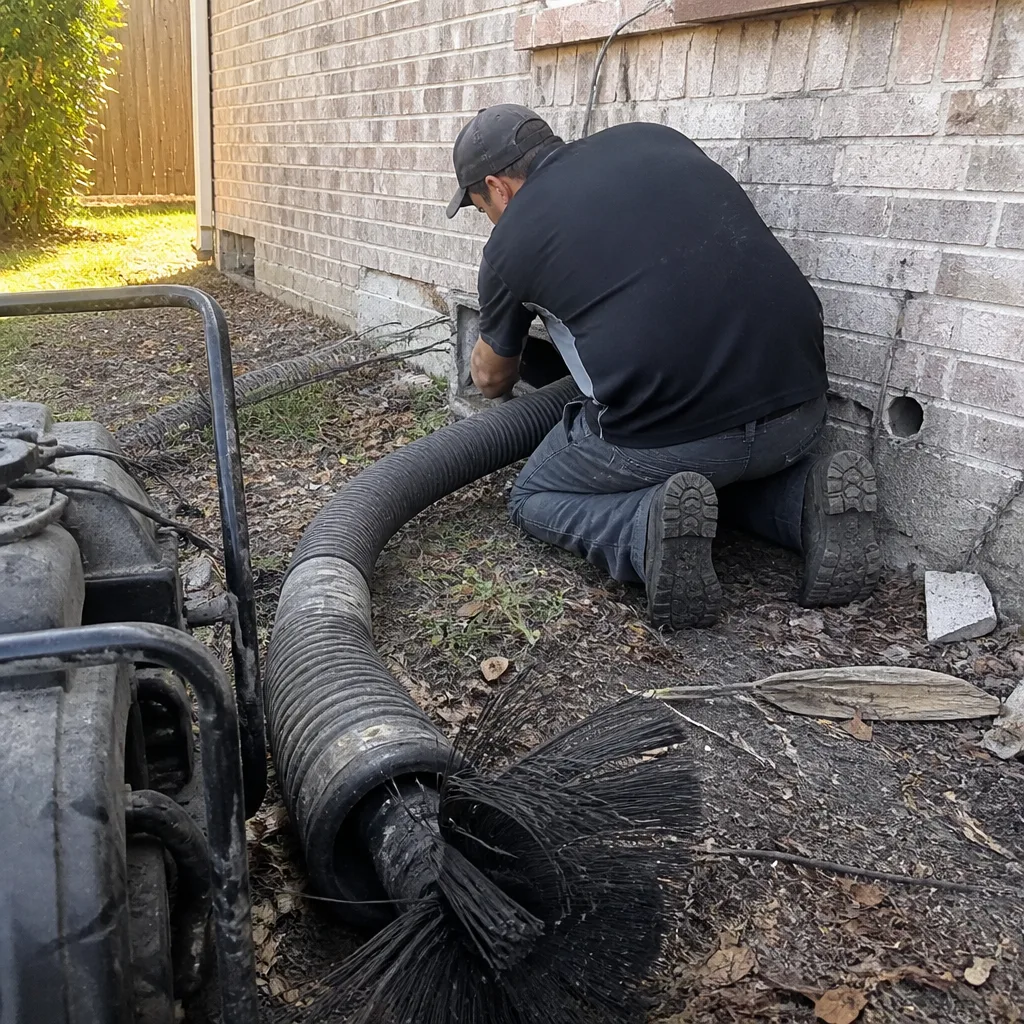
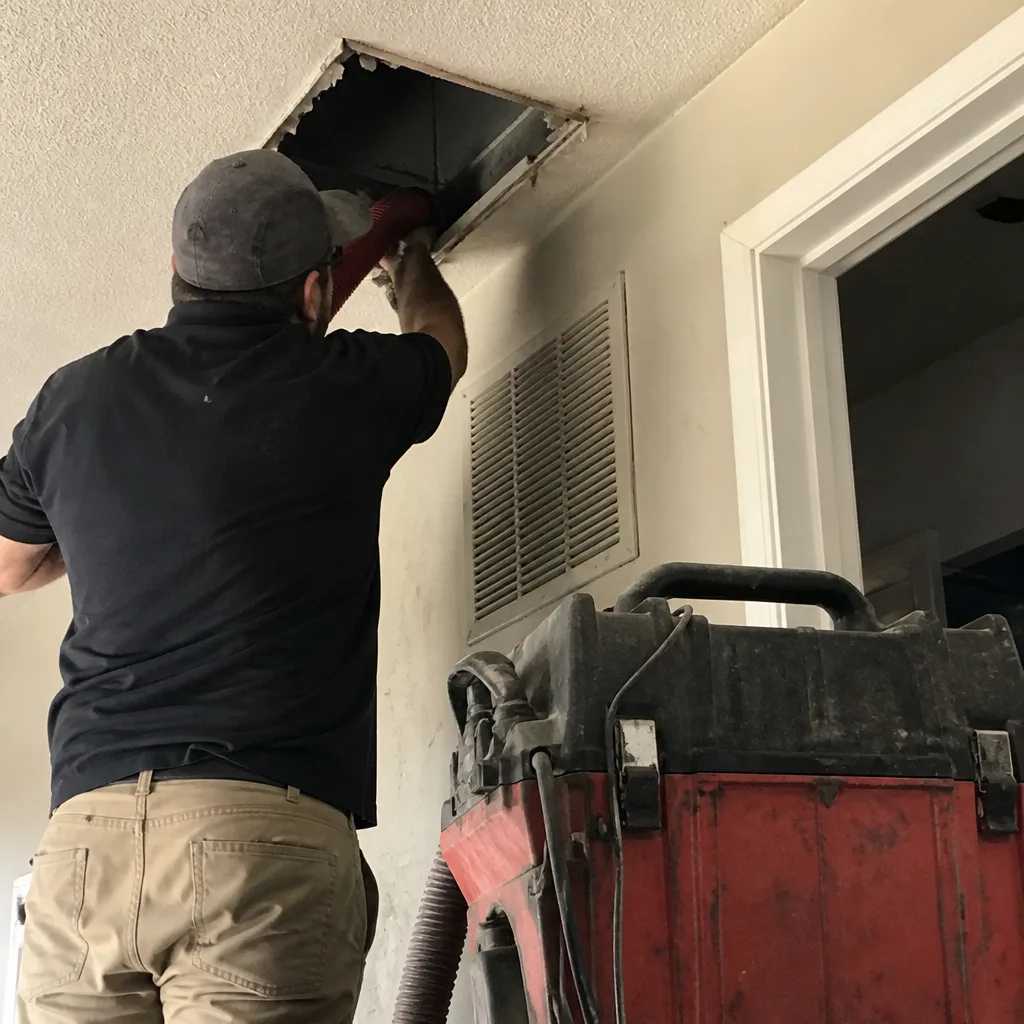
A full mechanical cleaning of a residential duct system involves more than a hose at the supply registers. Using Rotobrush and Nikro equipment means the technician is working the duct walls with brushes and air whips sized for the diameter of the run, pulling the freed debris to a HEPA-filtered vacuum. The supply and return trunk lines, individual branch runs, the air handler cabinet, and the blower compartment (with the right precautions around the equipment) all get addressed. Before-and-after photos of the duct interior tell you exactly what was there and what came out.
If the assessment turns up microbial growth or contamination in the duct system, remediation-class processing with Abatement Technologies negative-air equipment is the appropriate response. Not every cleaning becomes a remediation, but knowing when it’s needed is part of doing the work properly.
Common Mistakes to Avoid
- Assuming national cleaning guidelines apply here. Guidelines written for milder climates assume a system that rests part of the year. A College Station system runs most of the year, and the accumulation rate follows. Most homeowners here need cleaning more often than the generic advice suggests.
- Using the first heat-on as an excuse to turn up the thermostat rather than as a signal. The smell that comes out of the vents on the first heat cycles of the season tells you what the system is carrying. Ignoring it lets a small problem become a bigger one.
- Skipping the return duct. Most dust and debris enters the system through the return. A cleaning that only touches the supply runs and the registers doesn’t address where the load actually accumulated.
- Ignoring attic duct integrity through the summer. A brittle or cracked duct jacket in a 95°F-plus attic is pulling hot, unfiltered attic air into the system. Cleaning won’t fix that. Repair has to come first, or alongside it.
- Assuming a single cleaning pass is enough on a heavily loaded system. A bonded layer of dust on the duct walls doesn’t come off with a light vacuum. It needs mechanical agitation, which is why professional-grade equipment (rather than a consumer blower) is the difference between “the vents look cleaner” and “the ducts are actually clean.”
- Treating the dryer vent as a separate, optional item. Lint accumulation in the dryer vent is a documented fire hazard, and it’s a system problem, not a minor convenience issue. It deserves a spot on the calendar rather than waiting until the dryer starts taking two cycles to finish a load.
- Neglecting the filter fit while upgrading the filter rating. A high-MERV filter in a leaky slot protects the air handler, not the ducts. Air bypass around the filter edges is where the loading happens.
When to Call a Professional
Some duct work is a homeowner’s to handle: filter changes, visual checks of accessible duct runs, and observation of what the system does at each transition. But several situations call for professional assessment. Persistent musty smells after a few cycles of heat or cooling are worth investigating. Visible dust patterns around every supply register suggests a system-wide issue rather than a single leak. Noticeably weaker airflow from some rooms can point to a disconnected or crushed run that only a camera and proper equipment will reveal. Any condensation or visible moisture on duct exteriors after a cold snap deserves a look before it becomes microbial growth. And a dryer that takes longer than it should to dry a load is a fire-safety signal. In each of these cases, an experienced technician with the right equipment can tell you what’s actually happening before it becomes a bigger job. Our technicians have up to 10 years of experience with this kind of assessment. Bedrock Air Duct Cleaning offers College Station homeowners free estimates on duct cleaning, dryer vent cleaning, and duct repair. Call (833) 588-6184. We answer 24/7. Fast dispatch from 7am to 7pm, Sunday through Friday.
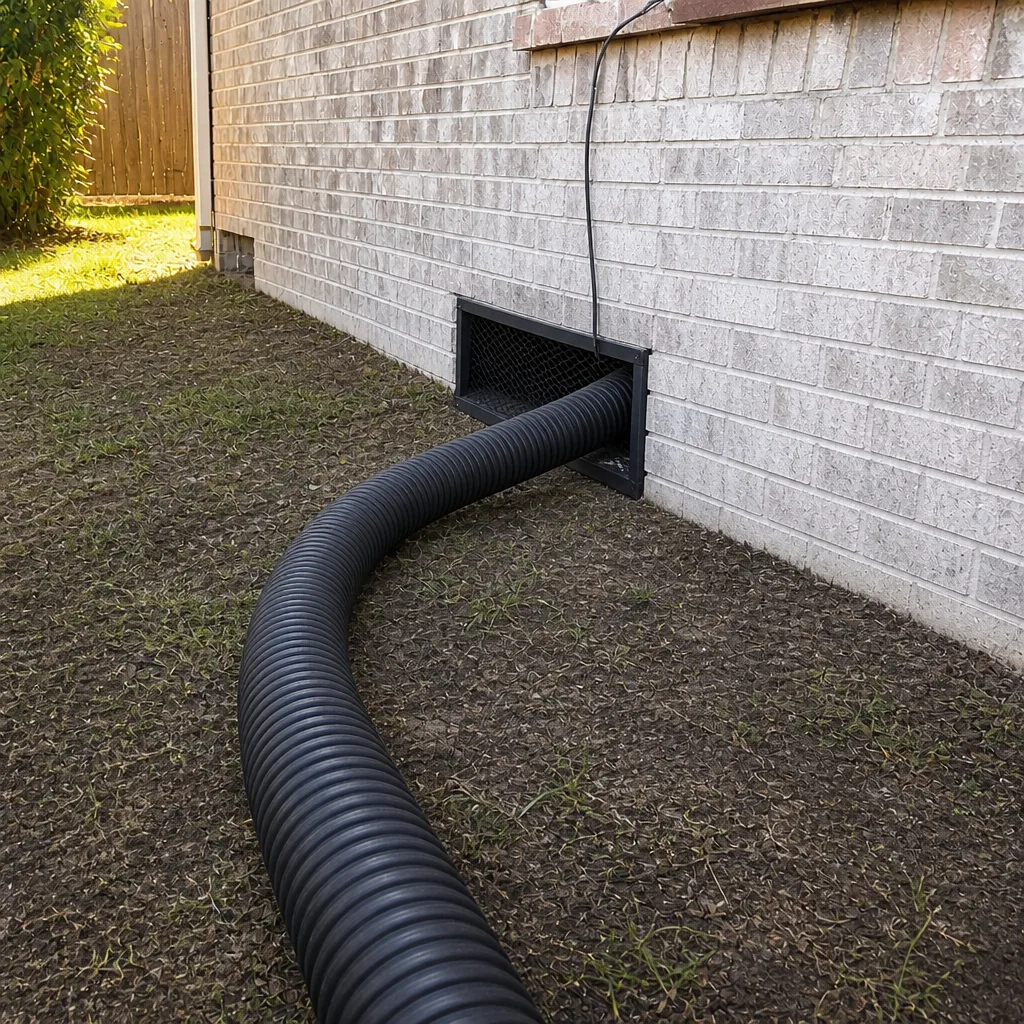
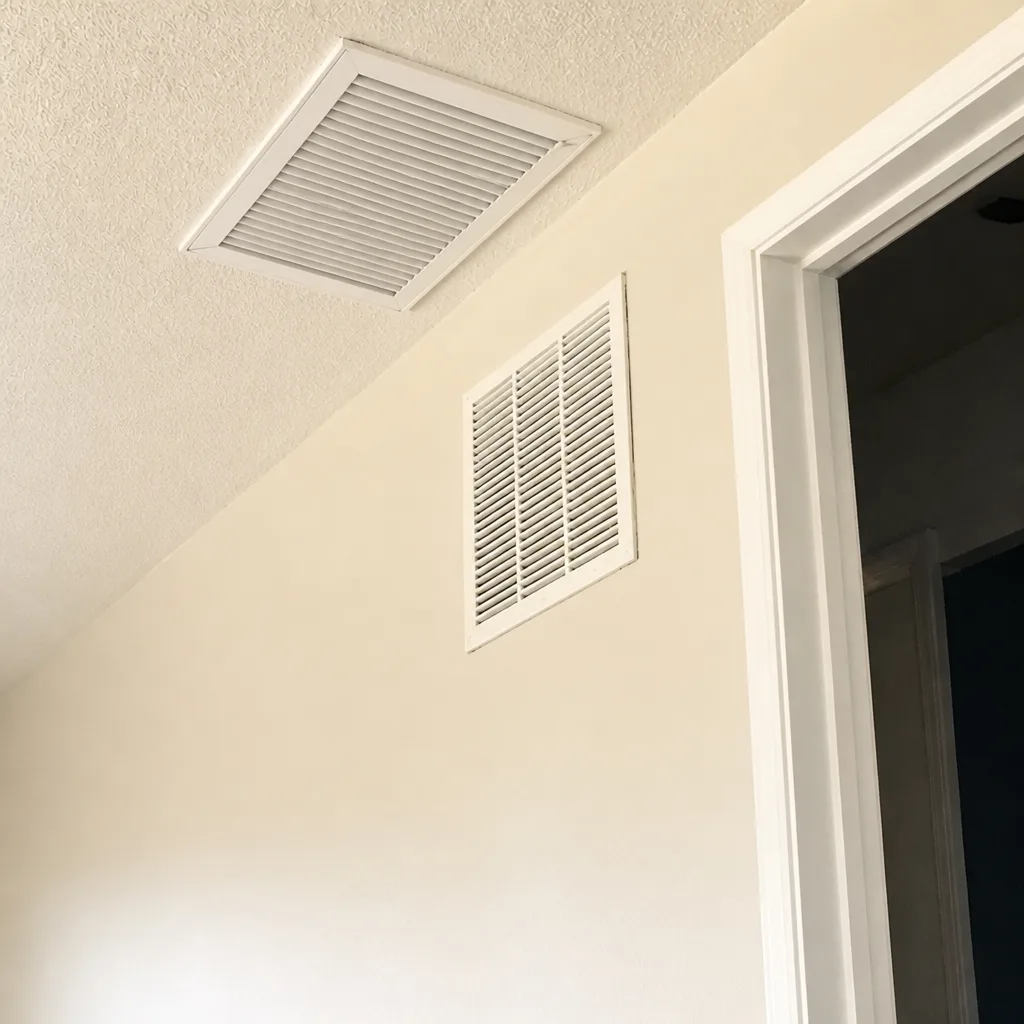
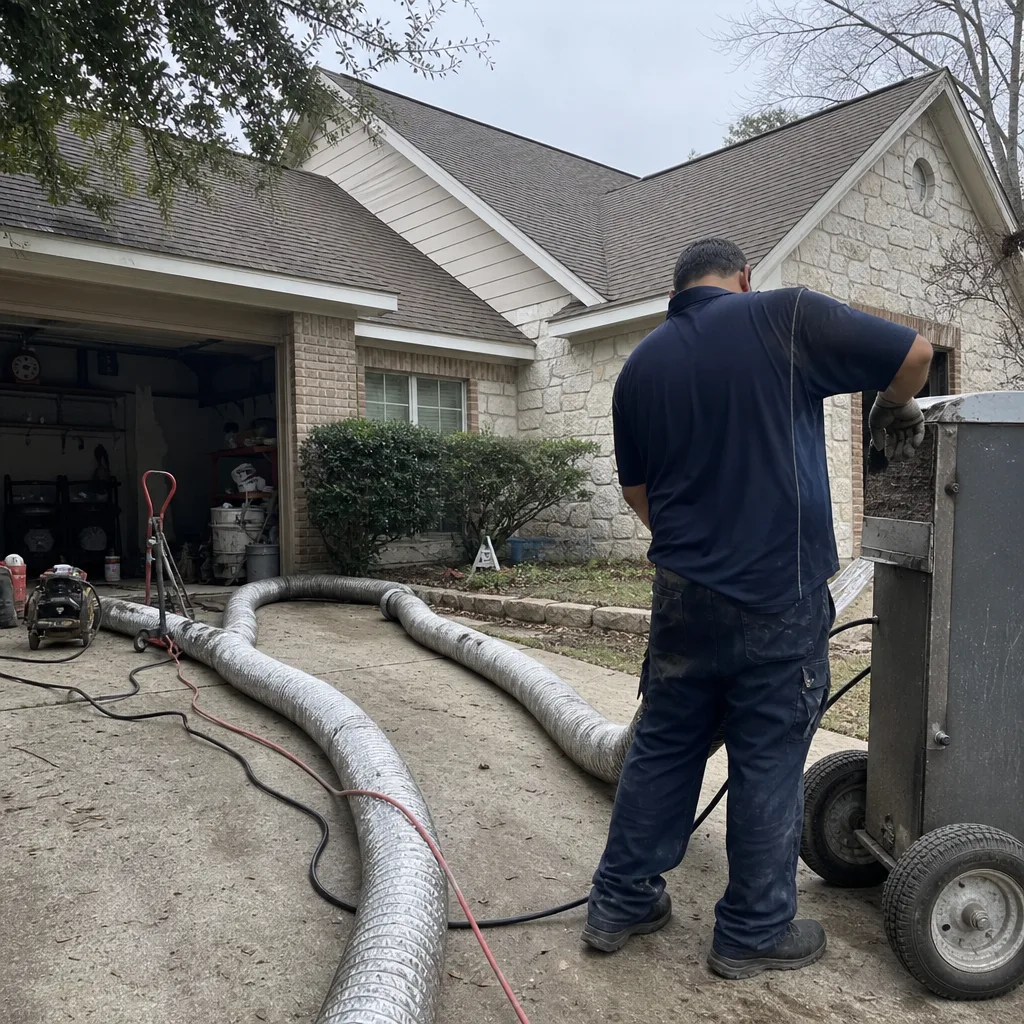
See the difference
 Before
 After
 Before
 After
 Before
 After
Frequently Asked Questions
Most College Station homes need a full mechanical cleaning every one to two years, tighter than the three-to-five-year intervals common in milder climates. That’s because the HVAC system runs almost continuously for most of the year, so duct-wall accumulation builds faster. Homes with pets, allergy-sensitive family members, or a history of heavy dust may need the shorter end of that range or shorter still. The best way to know is an assessment from someone who can actually look inside the duct runs.
Yes, especially during the oak and cedar window in March through May. Pollen that slips past the filter and enters the return duct bonds to duct walls during the first daily cooling cycles. Once it’s bonded, a light cleaning pass won’t lift it. A higher-MERV filter during the pollen months (matched to your equipment’s airflow capacity) is the best defense, and cleaning before the pollen window keeps an already-loaded system from compounding.
Attic temperatures in College Station routinely exceed 95°F in summer, and that heat does real damage to overhead flex duct. The outer jacket becomes brittle and prone to cracking, and the inner liner becomes more adhesive to fine dust and debris. Over several years, both effects compound. Walking the attic runs (when safely accessible) once a year and getting a professional assessment of duct condition every couple of years is a reasonable defense.
Yes, take it seriously. A brief dusty smell on the first cycle is normal. A musty or mildew smell that persists past a few heat cycles points to moisture or microbial growth, and needs investigation. A burning smell is a different issue; turn the system off and call an HVAC technician. Duct cleaning handles the microbial/musty problem, but it doesn’t substitute for a repair of a failing component.
Clean after any HVAC repair or equipment replacement rather than before. A technician working on the air handler, replacing a blower, or installing new equipment can dislodge debris and introduce new dust into the system. Cleaning afterward ensures the duct system starts clean with the new or repaired component in place. If you’re doing both, sequence them accordingly.
Most residential duct cleanings fall in the range a homeowner budgets for a home maintenance project, with the final price set per job by a written estimate after the technician sees the system. The variables that change the price are the size and layout of the duct system, the number of branch runs, whether the ducts pass through an attic or crawlspace, and whether any repair work is needed. We don’t quote per-vent prices or offer low coupon figures that grow once the technician is on site. Call (833) 588-6184 for a free estimate.
Low quotes usually reflect a limited scope: a consumer-grade vacuum pass that touches the registers and maybe the trunk lines, but doesn’t mechanically agitate the duct walls, doesn’t address the return duct, and doesn’t include equipment-grade HEPA filtration. The debris that’s bonded to the duct liner is what makes duct cleaning worth doing, and you need professional equipment (Rotobrush, Nikro, or equivalent) to lift it. The right question isn’t “what’s the lowest price” but “what equipment and scope are included.”
Before-and-after photos of the duct interior are the standard. A professional cleaning company can show you what the ducts looked like before the work and what they looked like after. If a company can’t produce that, that’s a red flag. Beyond the photos, the technician should be able to explain exactly what was cleaned: which trunk lines, which branch runs, the air handler, and the blower (with proper precautions). The answer should be specific, not vague.
The Bottom Line
Duct maintenance in College Station runs on the local climate’s calendar, not on a national guideline. Spring is a pollen fight and a pre-cooling cleaning window. Summer is a long, punishing run that loads the system and stresses attic ductwork. Fall is the season of the first heat-on, which is the best diagnostic signal a homeowner gets all year. Winter is the condensation check and the dryer-vent fire-safety check. A 12-month calendar that hits these transitions properly is more useful than any single cleaning.
When it’s time to do the actual work, the equipment and the scope matter as much as the calendar. Mechanical cleaning with Rotobrush and Nikro, remediation-grade extraction with Abatement Technologies, and proper duct repair done alongside the cleaning – that’s the complete duct system care a College Station home actually needs.
Call us at (833) 588-6184 for a free estimate. We answer 24/7. Fast dispatch from 7am to 7pm, Sunday through Friday.
Written by the team at Bedrock Air Duct Cleaning.